Against All Odds: The Landlords Fighting Britain's Last Stand
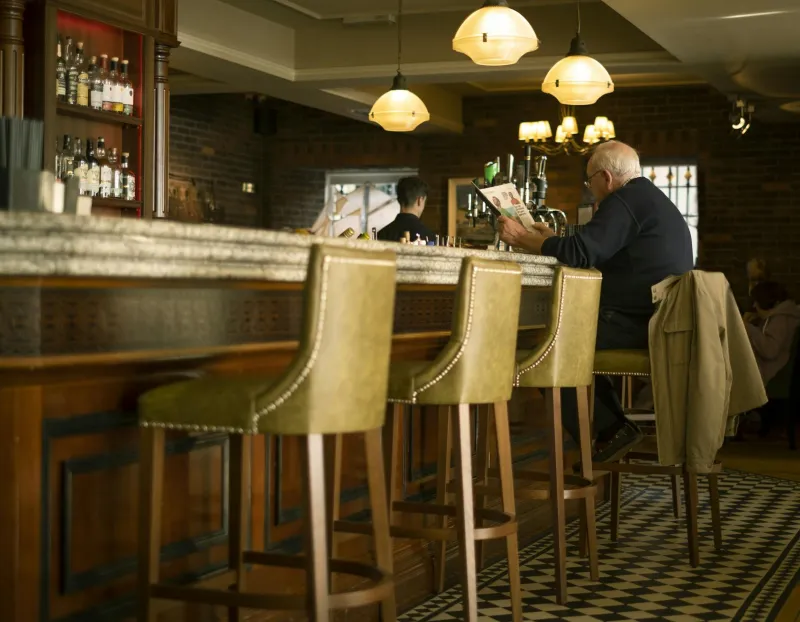
The Last Stand at The Railway Arms
At half past seven on a Tuesday evening, Dave Morrison unlocks the doors of The Railway Arms in Middlesbrough knowing full well that he might serve fewer than a dozen customers all night. The electricity bill alone costs more than he'll take behind the bar, but he flicks the switches anyway, fires up the pumps, and settles in for another evening of stubborn optimism.
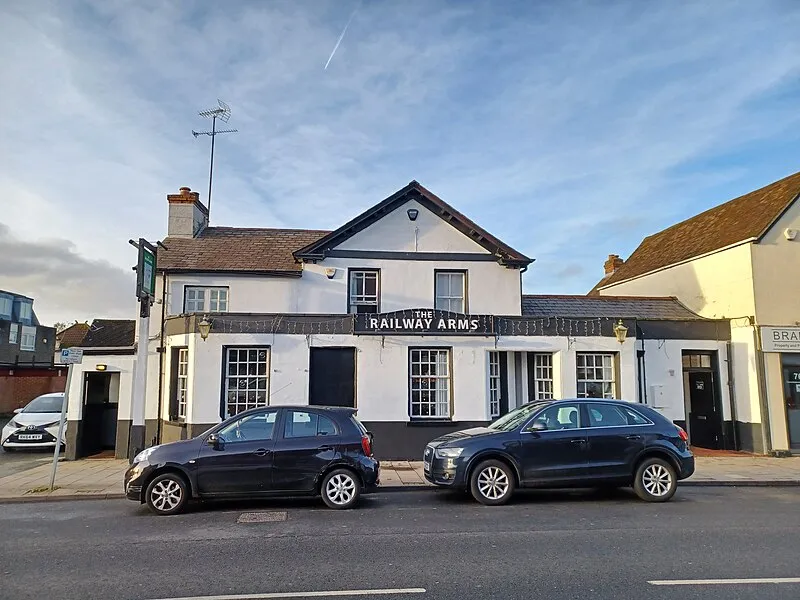 Photo of The Railway Arms, via Wikidata/Wikimedia Commons
"My accountant thinks I'm barmy," Dave admits, polishing glasses with the methodical precision of someone who's been doing this for thirty-four years. "He's shown me the numbers a hundred times. Says I'd be better off putting the money in premium bonds and getting a job at B&Q. But he doesn't understand – this isn't just a business. It's a calling."
The Railway Arms has been serving the same terraced streets since 1887. Dave's grandfather drank here. His father met his mother at the Christmas party in 1962. The pub holds the memories of five generations, and Dave Morrison has appointed himself their guardian, even if it's slowly bankrupting him.
The Mathematics of Devotion
Across Britain, stories like Dave's are playing out in market towns and city suburbs, coastal villages and industrial estates. The Campaign for Real Ale estimates that 14,000 pubs have closed since 2001, but for every closure, there's a landlord like Dave who refuses to surrender.
Sarah Jenkins runs The Lamb & Flag in a Shropshire village where the post office closed in 2019 and the last shop shuttered six months ago. She's the final commercial enterprise standing, serving a community of 340 people who increasingly rely on Amazon deliveries and trips to the nearest superstore twelve miles away.
"The pub's become the village hall, the corner shop, and the community centre rolled into one," she explains, serving afternoon tea to a group of pensioners who meet here every Thursday because there's nowhere else to go. "I cash cheques for people, take in parcels, let the parish council use the back room for meetings. Last month I helped organise a funeral wake for someone I'd never met because their family had nowhere else to turn."
Sarah's books make grim reading. She's subsidising the pub from her teacher's pension, working seven days a week, and hasn't taken a proper holiday in four years. But she's determined to outlast the economic headwinds that have claimed so many of her peers.
The Weight of History
What drives someone to pour their life savings into a losing proposition? For many, it's the crushing weight of history. These buildings aren't just businesses – they're repositories of community memory, the last physical link to a way of life that's vanishing.
Michael O'Brien inherited The King's Head in Cornish fishing village from his uncle in 2018, along with debts that would make a reasonable person run screaming. The pub dates to 1642 and has survived the English Civil War, two world wars, and the collapse of the local fishing industry. Michael can't bear the thought of being the generation that lets it die.
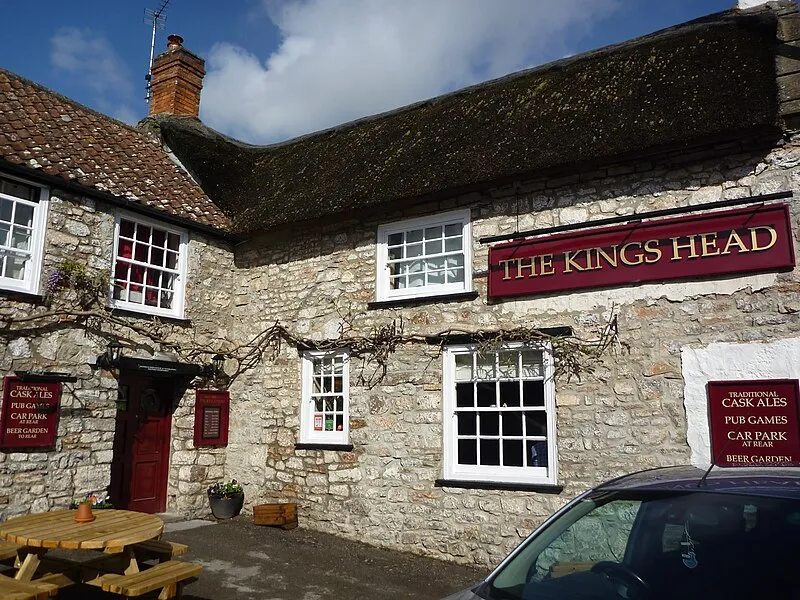 Photo of The Kings Head, via Wikidata/Wikimedia Commons
"There's a beam above the bar with initials carved by fishermen who never came home from the war," he says, running his finger along the scarred wood. "How do you put a price on that? How do you explain to an accountant that some things matter more than profit margins?"
The King's Head loses money every month, but Michael supplements the income with a mobile fish and chips van, works as a part-time taxi driver, and has turned the upstairs into an Airbnb. He's essentially running three businesses to keep one afloat, driven by a sense of duty that would have made perfect sense to his Victorian predecessors.
The Community Lifeline
For many landlords, the decision to keep going isn't romantic – it's practical. They've become the last safety net for communities that have been stripped of everything else.
Marjorie Thompson runs The Crown in a former mining village in South Wales where unemployment runs at 23% and the nearest GP surgery is an hour's bus ride away. The pub has become an unofficial social services hub, where she keeps an eye on vulnerable regulars and raises the alarm when someone doesn't appear for their usual pint.
"I know when Harold's pension comes through because he buys a round for the house," she explains. "I know when Janet's having trouble with her son because she sits in the corner nursing a half of bitter for three hours. When old Ted didn't show up for his Thursday dominoes game, I sent my husband round to check on him. Found him collapsed in his kitchen. Might have saved his life."
Marjorie's pub runs at a loss eleven months of the year, breaking even only during the summer when a handful of tourists discover the village's spectacular hiking trails. She could sell the building to a property developer tomorrow, but she won't abandon the dozen regulars who depend on The Crown for more than just beer.
The Changing Economics
The mathematics of pub ownership have become increasingly brutal. Energy costs have tripled. Business rates remain punitive. The smoking ban reduced custom. COVID restrictions delivered a knockout blow. Supermarket alcohol prices make a mockery of pub pricing.
But perhaps most damaging is the cultural shift that sees going to the pub as a special occasion rather than a daily ritual. The generation that treated the local as an extension of their living room is ageing out, replaced by younger customers who pre-load at home and arrive already half-drunk, if they arrive at all.
"The old-timers would come in at six and stay till closing," remembers Frank Wilson, who's run three different pubs over forty years. "They'd have four or five pints, play darts, put the world to rights. The young ones now have two drinks maximum, take a hundred selfies, and bugger off home to watch Netflix. You can't run a business on that."
Innovation Through Desperation
The survivors are adapting with the creativity of people who have no choice. Pubs have become coffee shops by day, co-working spaces for remote workers, venues for yoga classes and book clubs. Some serve as collection points for online shopping. Others host everything from divorce mediation to driving theory test preparation.
Lisa Patel transformed The George in suburban Birmingham into a community hub that happens to serve alcohol rather than a drinking establishment that occasionally hosts events. She runs a breakfast club for local schoolchildren, provides free WiFi for job seekers, and has partnered with the local library to offer computer training for pensioners.
"Traditional pub culture is dying, so we're inventing a new one," she explains. "The building's still here, the community still needs somewhere to gather, but we can't rely on beer sales to pay the bills. We have to be everything to everyone."
The Question That Haunts
Every landlord fighting to keep their doors open grapples with the same uncomfortable question: if the community values the pub so much, why isn't it full every night?
The answer is complex and painful. People love the idea of the local pub more than they love actually going to the local pub. They want it to be there when they need it – for celebrations, commiserations, and the occasional nostalgic pint – but they're not prepared to sustain it with regular custom.
"Everyone says they love the pub," reflects Dave Morrison, locking up The Railway Arms after another quiet Tuesday. "They share posts on Facebook about the importance of community, they sign petitions when pubs close, they'll have a drink here on Christmas Eve and tell me how important the place is. But where are they on a wet Wednesday in February?"
The Reckoning
The landlords keeping Britain's last locals alive aren't just serving drinks – they're preserving a way of life. They're the curators of community memory, the guardians of social spaces, the people who understand that some things matter more than spreadsheets.
But they can't do it alone. Every closed pub is a small death, a severing of community bonds that took generations to forge. Every landlord who gives up is another victory for the forces of isolation and disconnection that are reshaping modern Britain.
The question isn't whether we can save every struggling pub – we can't. The question is whether we'll wake up in time to save enough of them to preserve something essential about who we are as a people. Because once they're gone, they're gone forever. And no amount of nostalgia will bring back what we've lost through neglect.