The Collection Tin With the Broken Seal: When Every Pub Counter Quietly Funded the NHS Before the NHS Needed Funding
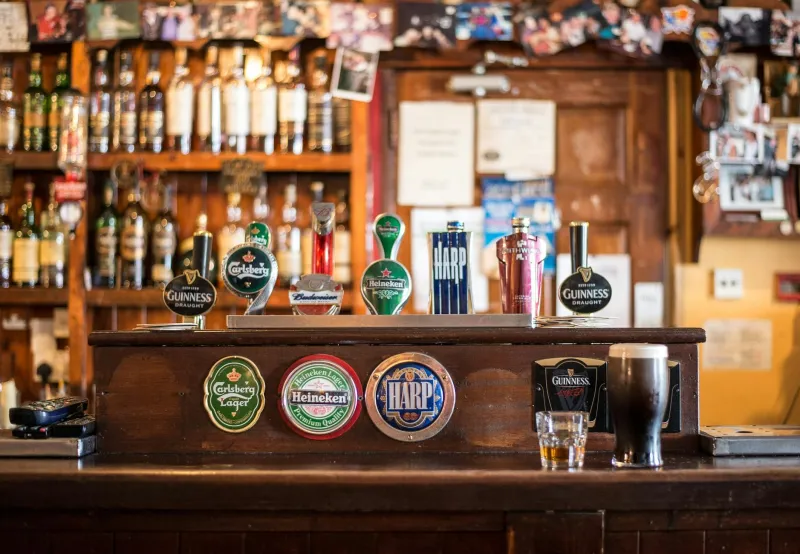
The Tin That Never Left
If you knew where to look – and if you'd been drinking in proper pubs long enough – you'd always spot them. Battered collection tins, usually with hand-written labels gone slightly yellow at the edges, sitting permanently beside the till like faithful old dogs that nobody had the heart to move. 'For Young Tommy's Operation.' 'Local Hospital Scanner Appeal.' 'The Widow Jenkins Fund.' They weren't there for show, and they weren't there for tax breaks. They were there because someone needed help, and the pub was where help happened.
These tins represented something profound about how Britain once worked – a quiet, unglamorous system of mutual aid that operated without fanfare, without committees, and without anyone taking credit. You'd drop your change in on the way out, sometimes without even reading what it was for, because that wasn't really the point. The point was that when your neighbours needed something, you helped. No questions asked, no virtue signalling required.
Before the Professionals Took Over
Long before Comic Relief turned charity into entertainment, before every good cause needed a celebrity ambassador and a social media campaign, the British pub operated as an informal welfare state that actually worked. The collection tin beside the till was connected to a network of genuine community knowledge that no algorithm has ever replicated.
 Photo: Comic Relief, via www.thenews.com.pk
The landlord knew which regular's kid needed an operation the NHS couldn't provide quickly enough. The barmaid heard about the family down the road whose breadwinner had been injured at the factory. The old boys in the corner knew that Mrs. Patterson's roof had finally given up after forty years of Yorkshire weather. Information travelled through the pub like electricity through copper wire, and help followed close behind.
There was no means testing, no form filling, no assessment of whether someone 'deserved' help. If you drank in the local and you were in trouble, the tin appeared beside the till and stayed there until the problem was solved. It was socialism in its purest form – from each according to their ability, to each according to their need, lubricated by mild bitter and administered with no fuss whatsoever.
The Dignity of the Anonymous Donation
What made the pub collection tin special wasn't just that it worked – it was how it preserved the dignity of both giver and receiver. You could drop a fiver in the tin for the local hospital scanner without anyone knowing whether you were flush with overtime pay or scraping together your last pound coins. The recipient never knew who had contributed what, so there were no awkward thank-you conversations or feelings of obligation.
This anonymity was crucial to how the system functioned. It meant that giving was purely voluntary and purely private, free from the social pressure and public recognition that motivates so much modern charity. You helped because it felt right, not because someone was watching. The pub created a space where generosity could flourish without performance, where doing good was just another part of the evening's routine.
When Every Cause Was Local
The genius of the pub collection tin was its relentless focus on the immediate and the personal. These weren't abstract global causes or distant tragedies – they were problems affecting people you might actually meet. The young lad who needed specialist treatment. The family whose house had flooded. The local sports club that needed new kit for the kids' team.
This wasn't charity tourism or emotional manipulation. It was mutual aid in its most practical form, based on the understanding that communities look after their own not because it's morally superior, but because it's the only way communities survive. The pub collection tin recognised that your first responsibility was to the people you shared a postcode with, and that helping your immediate neighbours wasn't selfish – it was sensible.
The Economics of the Pint
There was something beautiful about how the pub collection tin integrated charity into the natural rhythm of social life. You didn't have to set aside special time for good deeds or attend fundraising events that felt like work. You just lived your normal life – went to the pub, had a pint, chatted to your mates – and helping others became part of that routine.
The economics were perfect too. A few pence here, a bit of loose change there, the occasional pound note from someone feeling flush – it all added up to real money that could make a real difference to real problems. No administrative costs, no marketing budgets, no executive salaries. Just direct transfer from the pockets of people who could spare it to the needs of people who couldn't manage without it.
What Replaced the Tin
Today's charity landscape is professional, efficient, and utterly soulless. We have direct debits and standing orders, corporate sponsorship and celebrity endorsements, awareness campaigns and social media challenges. We have turned helping others into a form of entertainment, a way to signal our values, a tax-efficient investment strategy.
What we've lost is the quiet, unglamorous reality of neighbours helping neighbours without making a song and dance about it. The modern charity sector has professionalised compassion and in doing so has somehow made it feel less compassionate. When helping others becomes a performance, when every good deed needs to be shared and liked and commented on, something essential gets lost in translation.
The Trust That Built a System
The pub collection tin worked because it was embedded in a web of trust that took generations to build and could be destroyed in a moment. The landlord was trusted to know genuine cases from chancers. The regulars were trusted to contribute what they could afford. The recipients were trusted not to take advantage. The whole system depended on social relationships that were maintained through daily interaction, shared experience, and mutual dependence.
That web of trust has been systematically dismantled by decades of social change, economic disruption, and the gradual replacement of local institutions with national systems. We've gained efficiency and lost humanity. We've professionalised charity and depersonalised compassion. We've made helping others safer, more accountable, and infinitely less meaningful.
The Broken Seal
The collection tin with the broken seal wasn't a sign of poor security – it was a sign of absolute trust. Nobody worried about the money being stolen because everyone knew everyone, and everyone knew that stealing from a charity tin was beyond the pale. The broken seal was a testament to a functioning community where social pressure was more effective than any lock.
When that trust disappeared – when communities fragmented, when strangers replaced neighbours, when the pub stopped being the centre of local life – the collection tin became just another security risk. The broken seal became a liability rather than a symbol. And with it went something irreplaceable: the simple, powerful idea that looking after each other was just what decent people did.
The NHS is a magnificent achievement, but it was built on the foundation of communities that already knew how to care for their own. The pub collection tin was part of that foundation – the part that taught us that helping others wasn't the government's job or the church's job or some charity's job. It was everyone's job, done quietly, done locally, done without fuss. We replaced it with systems that work better on paper but somehow feel emptier in practice. And we wonder why community feels like something that belongs to the past.