The Ghost Round: How British Pubs Died One Unreplaced Drink at a Time
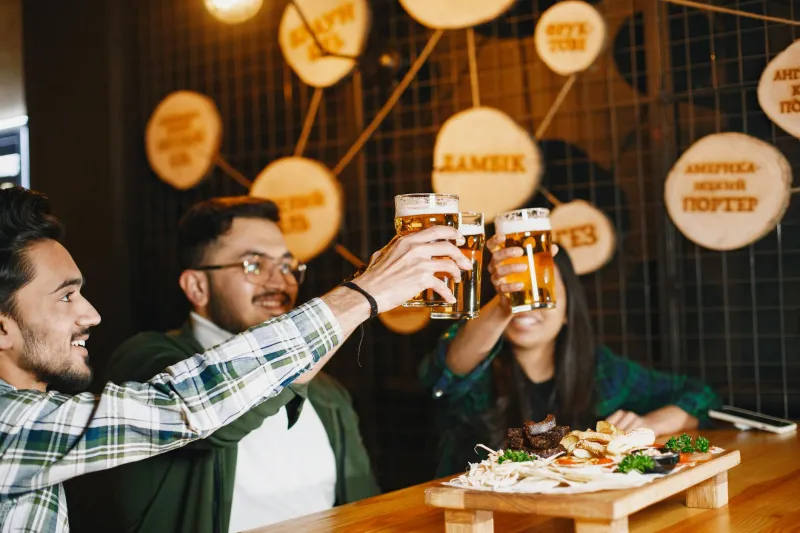
There's a particular silence that haunts British pubs these days – the absence of those four words that once held entire communities together: "Same again, everyone?"
Walk into any surviving local on a Friday night and you'll witness something that would have baffled our parents' generation. Groups arrive, each person orders their own drink, taps their card against the reader, and settles into their seat with the casual finality of someone who's already mentally calculated their exit strategy. No one's looking around the table, doing the mental arithmetic of whose turn it is. No one's feeling that gentle social pressure to stay for "just one more" because they haven't bought their round yet.
The round system – that beautiful, unspoken contract that bound British drinkers together – has become as extinct as the public phone box, and with it died something far more precious than we realised at the time.
The Invisible Chains That Kept Us Together
For generations, the round wasn't just about fairness; it was about commitment. When someone bought the first round, they were essentially posting bail for the entire group's evening. Everyone else became socially indebted, tethered to that table until honour was satisfied and the books were balanced.
This wasn't mere etiquette – it was social engineering at its most elegant. The round system meant that leaving after one drink marked you as either stingy or strange. It created what economists might call "sticky behaviour," ensuring that a quick pint after work could easily stretch into a proper session, complete with deepening conversations, shared laughter, and the kind of bonding that only happens when people are committed to being somewhere together for hours rather than minutes.
"Right, whose shout is it?" wasn't just a question about money – it was a roll call of belonging, a gentle reminder that everyone present had skin in the game.
Death by a Thousand Taps
Contactless payments struck the first blow. Suddenly, splitting the bill became effortless. No more fumbling for change, no more "I'll get you back next time." Each person could simply tap and go, severing the financial threads that once wove groups together.
The designated driver culture delivered the second punch. While nobody mourns drink-driving, the rise of the responsible DD created a new social category: the person who couldn't fully participate in the round system. One person nursing a single Coke all evening disrupts the beautiful mathematics of reciprocal drinking, making everyone else suddenly conscious of their consumption in a way that kills spontaneity.
Then came the craft beer revolution, with its £6 pints and bewildering variety. When everyone wants something different – the IPA enthusiast, the lager loyalist, the person who's "trying to cut down" with a half – the simple democracy of "same again all round" becomes impossible. Suddenly, buying a round requires a degree in beverage logistics.
The Sober-Curious Nail in the Coffin
The final blow came from an unexpected quarter: the wellness movement. As "sober curious" became a lifestyle choice rather than a medical necessity, pubs found themselves hosting groups where half the table was on elderflower presses and mocktails. The round system, predicated on rough equality of consumption and cost, simply couldn't survive this asymmetry.
When someone's pint costs £5.20 and their friend's sparkling water costs £2.80, the beautiful simplicity of "I'll get these" becomes a complex negotiation. The social lubricant that once made these calculations irrelevant – alcohol itself – was being voluntarily removed from the equation.
What We Lost in Translation
Without the round system, pub visits transformed from commitments into transactions. People began arriving with a predetermined limit – "just the one" – rather than surrendering to the evening's possibilities. The pub became a venue rather than a destination, a place you visited rather than a place you belonged.
The knock-on effects were profound. Conversations that might have deepened over the third or fourth round never got the chance to develop. Friendships that might have solidified during those extended sessions remained surface-level. The pub's role as the neighbourhood's living room – a place where you might arrive alone but rarely stayed that way – withered as the social mechanisms that encouraged mingling disappeared.
The Economics of Belonging
Pub landlords noticed the change immediately, though many couldn't pinpoint exactly what had shifted. Turnover per customer dropped as the average visit shortened from three or four drinks to one or two. The 8pm exodus that mystifies so many publicans isn't really mysterious at all – it's simply what happens when there's no social obligation to stay longer.
The round system had been the pub industry's secret weapon, a cultural practice that naturally maximised dwell time and spending without any hard sell required. Its death marked the beginning of the end for the traditional British pub experience.
Ghosts at Every Table
Today's pub-goers don't even realise what they've lost. They arrive, order efficiently, drink quickly, and leave cleanly – behaviour that would have seemed almost antisocial to previous generations. They've never experienced the gentle tyranny of the round, the way it could transform a quick drink into an impromptu celebration, the way it forced strangers to become temporary allies in the shared project of an evening out.
The ghost round haunts every table in every pub across Britain – the absent ritual that once made these spaces genuinely social rather than merely commercial. We replaced it with the efficiency of individual transactions and wondered why our locals started feeling like coffee shops with beer taps.
Perhaps it's time to raise a glass to what we've lost – though knowing modern Britain, we'd all probably insist on paying for our own.