The Great British Early Doors: Why Everyone's Gone Home Before the Telly News
The Phantom Rush That Never Comes
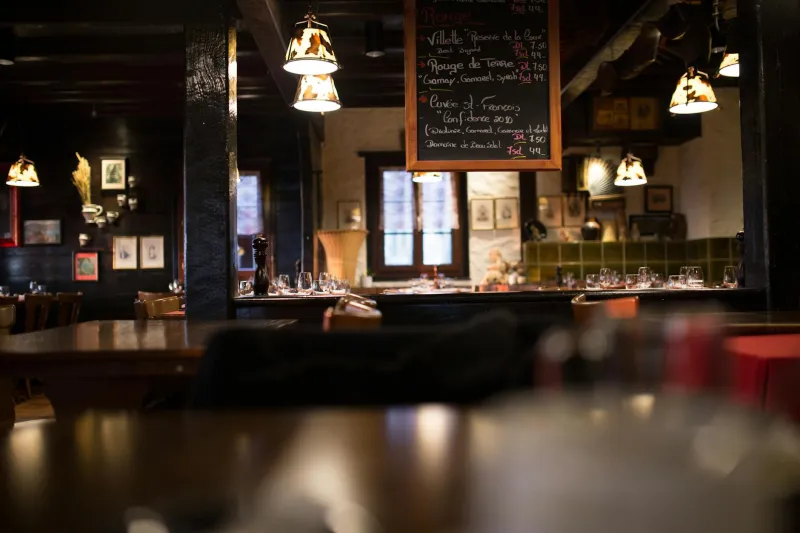
There's a haunting ritual playing out across Britain's pubs every weekend. The landlord polishes glasses behind an increasingly empty bar, glancing at the clock as it ticks past nine. The fruit machine blinks hopefully in the corner. A couple of die-hards nurse their pints, but the atmosphere that once crackled with possibility has fizzled out like a damp sparkler.
Twenty years ago, this would have been unthinkable. The evening was just getting started at nine o'clock. Last orders at eleven would spark that familiar stampede to the bar, wallets emerging from back pockets, voices raised over the din: "Same again, love!" The pub was Britain's living room, and nobody rushed home from their own living room.
The Netflix Effect and the Death of Lingering
So what changed? Ask any landlord worth their salt, and they'll point to a perfect storm of cultural shifts that have fundamentally altered how we socialise. The most obvious culprit is what we might call the "Netflix effect" – the seductive pull of on-demand entertainment that makes staying in feel more appealing than heading out.
"People used to come to the pub because there was bugger all else to do," explains Margaret Thompson, who's been pulling pints at The Crown in Stockport for thirty-seven years. "Now they've got more entertainment in their pocket than we ever had on the telly. Why would they stand around listening to Barry drone on about his loft conversion when they could be watching Vikings?"
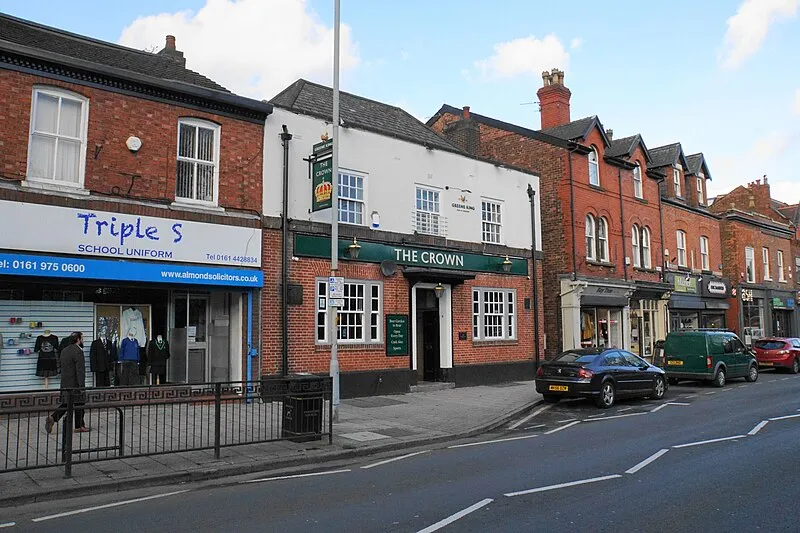 Photo of The Crown, via Wikidata/Wikimedia Commons
The streaming revolution coincided with another cultural earthquake: the rise of "pre-drinking" or "pre-loading." What started as a student money-saving strategy has become a national pastime. Groups now gather at someone's house, demolish a bottle of wine or a four-pack from Tesco, and venture out already half-cut – only to discover they're too tired, too drunk, or too broke to make a proper night of it.
The Supermarket Squeeze
The economics are brutal and undeniable. A pint that costs £5.50 in the pub can be replicated at home for roughly 80p if you buy the right lager from Lidl. For a family feeling the pinch of mortgage rates and energy bills, the maths is simple: why spend £30 on drinks when you can achieve the same social lubrication for a fiver?
But this misses the point entirely. The pub was never really about the alcohol – it was about the accidental encounters, the overheard conversations, the landlord who remembered your usual and asked after your mother. You can't buy that community spirit in a multipack, no matter how competitive the pricing.
The Pandemic Hangover
COVID-19 delivered a knockout blow to Britain's pub culture that we're still reeling from. Not just the obvious stuff – the lockdowns, the social distancing, the mask-wearing awkwardness – but something more subtle and pernicious. We got used to being alone.
For eighteen months, we were actively discouraged from gathering, from lingering, from the casual social contact that made pubs special. We adapted, as humans do, but in adapting we lost something essential. The muscle memory of community atrophied.
"It's like people forgot how to just... be together," observes James Mitchell, landlord of The George in Canterbury. "They come in now with a plan: one drink, quick catch-up, home by half nine. There's no spontaneity anymore. No one's prepared to see where the evening takes them."
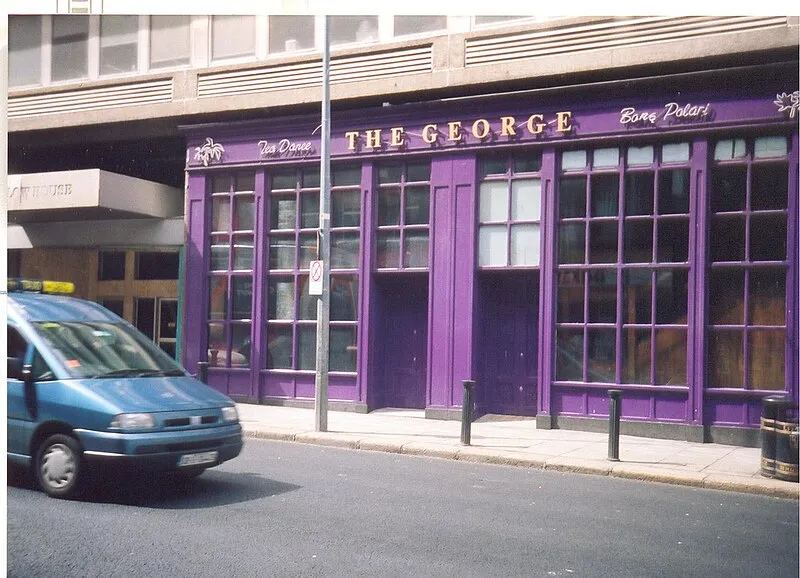 Photo of The George, via Wikidata/Wikimedia Commons
The WhatsApp Generation
Perhaps most damaging of all is the illusion of connection provided by social media and messaging apps. Why trek to the pub to catch up with mates when you can fire off a quick message in the group chat? Why risk an awkward silence when you can scroll through TikTok instead?
But WhatsApp gossip is a poor substitute for the real thing. You miss the facial expressions, the pauses, the way someone's voice changes when they're really worried about something. The pub forced us to be present with each other in a way that our digital alternatives simply cannot replicate.
The Ripple Effect
The early exodus creates its own momentum. If you're one of only three people left in the pub at half past nine, you start to feel like a saddo. The atmosphere becomes self-defeating. Pubs that once thrived on that magical alchemy of strangers becoming friends now echo with the hollow sound of chairs scraping against wooden floors.
Landlords find themselves caught in an impossible bind: they need customers to stay later to make the evening viable, but customers won't stay later because there's no one else there. It's a vicious circle that's strangling the life out of venues that have served their communities for centuries.
What We've Lost
The tragedy isn't just economic – though the closure rate of two pubs per day tells its own story. It's cultural. We've dismantled the infrastructure of spontaneous human connection and replaced it with scheduled video calls and emoji reactions.
The pub was where you learned to talk to people who weren't like you, where conversations meandered and friendships formed over shared frustrations about the weather or the football. It was democracy in action, community in its purest form.
Now we're all experts at curating our online presence but hopeless at the messy, unpredictable business of actually being with other people. We've gained efficiency and lost our souls.
A Glimmer of Hope?
Not everywhere has surrendered to the early doors culture. Some pubs are fighting back with quiz nights, live music, and events that give people a reason to stay. But these feel like desperate measures to recreate artificially what once occurred naturally.
The question isn't whether we can save Britain's pubs – it's whether we can save ourselves. Because a nation that can't be bothered to stay out past nine o'clock on a Saturday night might have lost more than its drinking culture. It might have lost its way entirely.