The Pub Quiz That Remembered Everything: How Britain's Greatest Night In Became a Night Out No One Bothers With

The Sacred Tuesday
Every Tuesday at half past eight, the Wheatsheaf transformed. The usual evening drinkers shuffled aside as teams assembled with the solemnity of medieval guilds claiming their territories. The Usual Suspects commandeered the corner table they'd occupied for seven years running. The Young Guns huddled near the dartboard, smartphones face-down in a pile like surrendered weapons. At the bar, Derek would sharpen his pencil with the precision of a surgeon, ready to unleash another evening of questions that had kept him up since Sunday planning.
 Photo: The Wheatsheaf, via www.thewheatsheafchiltonfoliat.co.uk
This wasn't just trivia. This was tribal warfare fought with biros and beer mats, where knowing the capital of Mongolia mattered less than knowing that Big Tony always struggled with geography but could name every FA Cup winner since 1970. The pub quiz was Britain's greatest leveller, the one place where the postman could humble the headmaster and where Sharon from the chip shop regularly thrashed the university students who thought their degrees made them clever.
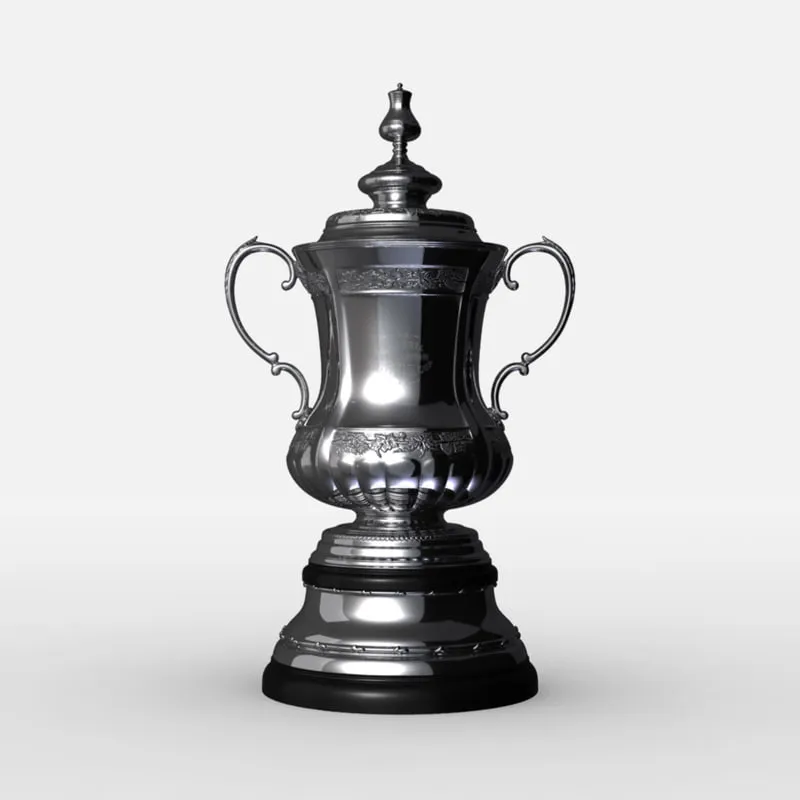 Photo: FA Cup, via static.turbosquid.com
When Everyone Knew the Rules
The unwritten laws were sacred. No phones, obviously – though this was honoured more in spirit than practice, with suspicious bathroom breaks becoming increasingly frequent as smartphones arrived. Teams of four maximum, though somehow the Rowdy Boys always managed to squeeze six around their table without Derek noticing. And the golden rule: you didn't poach players. Trying to lure Big Tony away from his Tuesday night allegiance was like suggesting he support a different football team.
The questions themselves were an art form. Derek understood his audience with the intuition of a master publican. Too easy and the regulars would grumble about dumbing down. Too hard and the casual teams would drift away, taking their drinks money with them. The sweet spot lay in crafting rounds that let everyone shine: sports for the lads, soaps for the ladies, local history for the old-timers, and always, always, a music round that spanned generations.
The Death of Appointment Television
But something shifted. First, it was the smartphones. Despite Derek's increasingly theatrical announcements about "no cheating," the honour system crumbled faster than a soggy digestive. Teams started arriving with ringers – mates who'd spent the afternoon memorising Wikipedia pages. The organic chemistry of regular versus newcomer, local knowledge versus book learning, began to dissolve.
Then came lockdown, and suddenly everyone was a quiz master. Zoom quizzes proliferated like digital dandelions, hosted by anyone with a laptop and an internet connection. Families gathered around kitchen tables for virtual competitions that felt more like conference calls than community events. The intimacy of the pub quiz – the shared glances when someone got an obvious answer wrong, the collective groan at a terrible pun question – evaporated into pixelated squares on a screen.
The App Generation
Worse still, trivia became instant gratification. Why wait until Tuesday when you could test your knowledge any time on your phone? Quiz apps promised the same intellectual stimulation without the commitment, the travel, or the need to split a taxi home. Kahoot conquered offices and classrooms, turning knowledge into a competitive sport where speed mattered more than wisdom.
The younger generation, raised on Google and accustomed to having every answer at their fingertips, struggled with the pub quiz's deliberate analogue pace. The theatrical pause before revealing answers, the agonising wait while Derek totted up scores with theatrical slowness – it all felt unnecessarily drawn out in an age of instant everything.
What We Lost in Translation
But here's what the apps and Zoom quizzes couldn't replicate: the pub quiz was never really about the questions. It was about the ritual. The weekly pilgrimage that brought together people who might never otherwise share a conversation. The accountant learned that the builder knew more about classical music than he'd ever imagined. The retired teacher discovered the young mum's encyclopaedic knowledge of 90s pop culture.
These weren't just teams; they were temporary families, bound together by shared frustration at Derek's pronunciation of foreign place names and united in their annual conspiracy to let the newcomers think they had a chance before unleashing their specialist knowledge in the final round.
The Empty Tables
Today, the quiz nights that survive feel like pale shadows. Teams book tables they don't turn up to. The questions are sourced from generic quiz books rather than crafted with local love. Derek retired, and his replacement runs everything off an iPad, efficiency trumping personality. The Usual Suspects still claim their corner table, but half the original team has moved away or lost interest. The Young Guns grew up and had children, trading Tuesday nights for bedtime stories.
What remains are scattered attempts to recreate the magic through themed quizzes and specialist nights, but they feel forced, artificial. The organic ecosystem that sustained the traditional pub quiz – the mix of regulars and casual players, the balance of competition and camaraderie – has been disrupted beyond repair.
The Last Bastion
Perhaps we didn't realise what we had until it was gone. The pub quiz was one of the last places where Britain's great social mixing still happened naturally. Where else could you find three generations, multiple social classes, and various educational backgrounds voluntarily sitting together, united in their determination to remember which year decimal currency was introduced?
It was appointment socialising in an age that increasingly rejects appointments. It was communal knowledge-sharing in an era of individualised information consumption. It was, quite simply, one of the last reliable ways strangers became neighbours, and neighbours became friends.
Now we have the internet's infinite quiz resources and the convenience of playing from our sofas. We've gained efficiency and lost community. We've traded Derek's terrible dad jokes for algorithm-generated content, and somehow, despite having access to more trivia than any previous generation, we know less about each other than ever before.