The Smoking Ban at 18: Did We Save Our Lungs and Lose Our Locals?
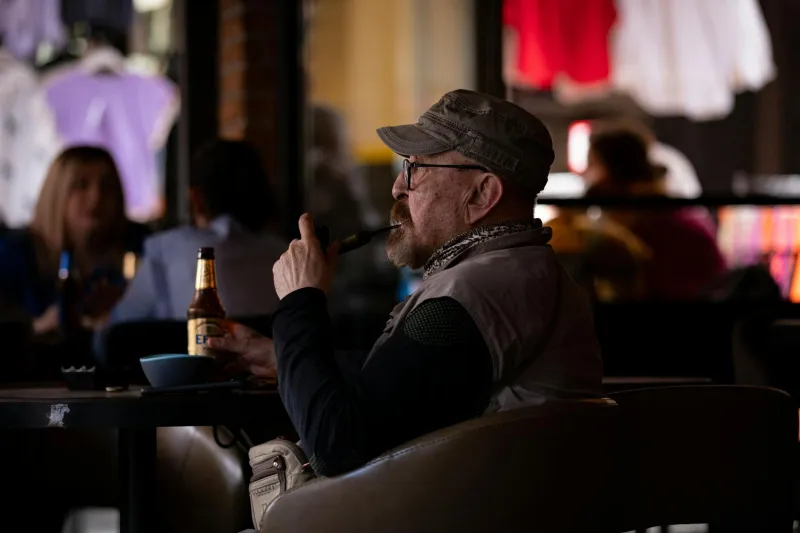
The Night Everything Changed
July 1st, 2007. The night British pubs went smokefree forever. If you were there—and millions of us were—you'll remember the strange atmosphere. Part celebration, part wake. Landlords nervously polishing glasses, regulars taking what they knew might be their last drag indoors, non-smokers cautiously optimistic about finally being able to taste their food.
Eighteen years on, it's worth asking: was it worth it?
Before the pitchforks come out, let's be clear. Nobody's arguing for a return to the days when you needed a gas mask to navigate the snug, or when bar staff went home reeking of other people's Marlboro Lights. The health benefits are undeniable, the comfort improvements real. But if we're being honest—really honest—we need to acknowledge that something else went up in smoke that night, something that pubs have never quite managed to replace.
The Numbers Don't Lie (But They Don't Tell the Whole Story)
The statistics are stark. In 2007, Britain had roughly 60,000 pubs. Today, we're down to fewer than 47,000. Correlation isn't causation, the experts remind us. The financial crash, changing drinking habits, supermarket pricing, streaming services—all played their part in the great pub exodus.
But talk to landlords who lived through the transition, and many will tell you the same thing: July 2007 marked a turning point. Not just in air quality, but in atmosphere. The ban didn't just remove smoke from pubs—it removed smokers. And with them went a chunk of the customer base, the conversation, and the community.
"We lost about thirty percent of our regulars within six months," recalls Margaret Thompson, who ran the Crown & Anchor in Middlesbrough until 2015. "Not all of them were heavy smokers, but they were social smokers. When their mates started drinking at home rather than popping out every twenty minutes, they followed."
The Unintended Exodus
Here's what the health campaigners didn't anticipate: the smoking ban wouldn't just change how people drank—it would change where they drank. Suddenly, a significant portion of pub-goers found themselves spending half their evening standing in car parks, huddled under patio heaters, or clustered around doorways. The convivial warmth of the bar was replaced by the British weather.
For many, it proved easier to stay home. Why endure the rain and cold when you could smoke freely in your own living room, with cheaper drinks and better heating? The supermarkets were already winning the price war; the smoking ban simply accelerated the retreat from public drinking.
"The smokers were often the life and soul," admits David Pearson, a non-smoker who frequented the same Nottingham local for fifteen years. "They were the ones who started conversations, bought rounds, stayed late. When they disappeared, the place felt... quieter. More sterile, somehow."
The Social Chemistry of Shared Vice
There was something about shared transgression that bonded people. Not the health risks—nobody was celebrating lung cancer—but the simple act of doing something slightly rebellious together. Smokers had an instant conversation starter, a reason to approach strangers, a ritual that broke down social barriers.
The smoking area became an unofficial networking zone, a place where hierarchies dissolved and strangers became friends over a shared lighter. Office managers chatted with cleaners, students debated with pensioners, all united by their common habit and their temporary exile from the main event.
When smoking moved outside, so did a lot of the conversation. The pub's social ecosystem was disrupted in ways that went far beyond public health metrics.
The Voices of Experience
Eighteen years provides enough distance for honest reflection. We spoke to people on all sides of the debate—landlords, regulars, bar staff, and health advocates—to get a fuller picture of the ban's impact.
Sarah Mitchell worked behind the bar at a Leeds pub throughout the transition: "My clothes stopped stinking, my eyes stopped watering, and I could actually smell the food we were serving. But the atmosphere changed overnight. Conversations that used to flow naturally got broken up by people going outside. The rhythm of the evening was different."
Tom Bradley, a former smoker who quit around the same time: "I supported the ban completely—I had young kids, and I wanted to be able to take them for Sunday lunch without worrying about passive smoking. But I'd be lying if I said the pubs felt the same afterwards. They felt more like restaurants, less like community centres."
Dr. James Harrison, who campaigned for the ban as part of ASH (Action on Smoking and Health): "The health benefits have been enormous—reduced lung cancer, heart disease, asthma attacks. But I understand the cultural concerns. We knew there might be social costs, but we felt the health benefits outweighed them."
The Great Indoors Experiment
Perhaps the most telling change was how the ban altered the fundamental nature of pub space. Pubs had always been indoor communities—warm, enclosed, intimate. The smoking ban effectively turned them into indoor-outdoor hybrids, with a constant flow of people moving between the bar and the beer garden.
This movement disrupted the traditional pub dynamics. Conversations were interrupted. Groups were split. The cosy intimacy that made pubs feel like extended living rooms was replaced by a more fragmented, restless energy.
Some pubs adapted brilliantly, investing in heated outdoor spaces and covered smoking areas. Others struggled with the new geography of their business, finding their carefully designed interiors suddenly half-empty while customers clustered in makeshift outdoor shelters.
The Bigger Picture
The smoking ban didn't happen in isolation. It was part of a broader cultural shift towards health consciousness, risk aversion, and regulated socialising. The same impulse that cleared the air in pubs also gave us mandatory calorie counts, minimum pricing, and increasingly complex licensing laws.
Each measure, taken individually, makes perfect sense. Collectively, they've transformed the pub from a place of spontaneous, slightly chaotic community gathering into something more controlled, more predictable, and—arguably—less vital to British social life.
What We Saved, What We Lost
The gains from the smoking ban are measurable and significant. Cleaner air, healthier workers, reduced passive smoking risks, and yes—many people did return to pubs who'd been driven away by smoke. Families with children, people with asthma, anyone who simply preferred their beer without a side of secondhand smoke.
But the losses are harder to quantify. How do you measure the value of uninterrupted conversation? The warmth of a truly enclosed community space? The social chemistry that comes from shared indoor rituals?
We saved our lungs, but we may have lost something harder to define—the particular magic that made British pubs unique in the world. The question isn't whether the ban was right or wrong, but whether we've found adequate ways to replace what was lost in translation.
Eighteen years on, the air is clearer, but the pubs are emptier. Whether that's a price worth paying depends on what you valued most about the British boozer in the first place. For some, it was always about the drink and the company. For others, it was about something more intangible—a sense of belonging to a space that was truly, completely, communally ours.
That space, for better or worse, went up in smoke on a summer night in 2007. We're still learning to live with the consequences.