The Carpet That Never Judged: How Britain's Pubs Lost Their Most Forgiving Floor
The Democracy of Stains
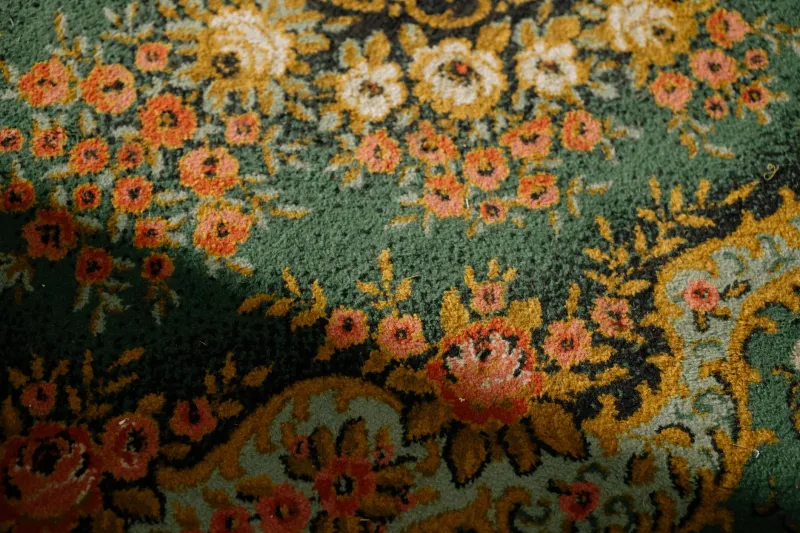
There was a genius to those carpets that nobody talks about anymore. You know the ones — those magnificent, swirling tapestries of burgundy, gold, and deep green that graced every proper British boozer from the 1970s onwards. They weren't accidents of taste or budget constraints. They were statements of intent, carefully chosen by landlords who understood something fundamental about human nature that we've somehow forgotten.
Those patterns weren't just patterns. They were camouflage for living. Every swirl and flourish was designed to hide the evidence of a thousand Friday nights — the spilled pints, the dropped crisps, the muddy boots of builders knocking off early, the wine that slipped from nervous first-date fingers. The carpet absorbed it all without complaint, without making anyone feel ashamed of being human.
The Art of Invisible Hospitality
Walk into a gastropub today and notice how your eyes immediately drop to the floor. Those reclaimed floorboards, those polished concrete surfaces, those industrial tiles — they're beautiful, certainly. They're also unforgiving witnesses to every stumble, every spill, every imperfect moment. They demand careful navigation, conscious behaviour, a certain self-awareness that the old carpets never asked for.
The landlords who chose those swirled carpets understood hospitality at a cellular level. They knew that true welcome isn't about perfection — it's about permission to be imperfect. Those carpets gave you permission to relax, to let your guard down, to be the slightly clumsy, occasionally messy human being you actually are rather than the composed person you're trying to present to the world.
When Shabby Meant Welcome
There's a particular kind of British genius in embracing the shabby. Not neglect — that's different — but a deliberate, almost defiant acceptance that life is messy and that's perfectly alright. Those pub carpets embodied this philosophy. They said: 'Come as you are. Straight from work with paint on your trousers? Fine. Muddy boots from the football? No problem. Nervous teenager on your first proper night out? The floor won't betray your inexperience.'
This wasn't about lowering standards — it was about raising humanity. The carpet created a level playing field where the city banker's spilled wine looked exactly the same as the scaffolder's dropped pint. Where nobody's clumsiness was more or less acceptable than anyone else's.
The Great Ripping Up
Somewhere in the 2000s, we decided those carpets had to go. Food hygiene, they said. Modernisation. Customer expectations. The gastropub revolution swept through Britain like a well-meaning hurricane, tearing up those forgiving floors and replacing them with surfaces that looked better in photographs but felt worse under your feet.
The new floors were honest, they claimed. You could see exactly what had happened, when it had happened, who had done it. But honesty, it turns out, isn't always the same thing as kindness. Those gleaming surfaces became silent judges, making every patron hyperaware of their own potential for mess.
The Unspoken Class War of Flooring
What nobody wanted to admit was that changing the floors changed who felt welcome. The reclaimed boards and polished concrete spoke to people who were comfortable being observed, who trusted their own grace, who had the confidence that comes with never having worked a job that left your boots genuinely dirty.
The old carpets had been radically democratic. They welcomed the electrician with plaster dust on his shoulders as warmly as they welcomed the office manager celebrating a promotion. The new floors, for all their beauty, sent a subtly different message: 'Please be careful. Please be conscious. Please be the kind of person who doesn't make messes.'
The Living Room We Lost
Those carpets understood something that modern pub design has forgotten: the pub was never meant to be a restaurant that happened to serve drinks. It was meant to be Britain's communal living room, and living rooms have carpets for a reason. They muffle sound, they warm the space, they absorb the evidence of actual living.
When families gather in living rooms, nobody worries about spilling tea on the carpet. When friends collapse onto sofas after long days, nobody frets about muddy jeans. The carpet handles it all with quiet dignity, just as those pub carpets once did.
The Sound of Silence
Anyone who's spent time in both old-carpeted pubs and new hard-floored ones will tell you about the acoustic difference. Those carpets didn't just absorb stains — they absorbed sound. They created the gentle hum of conversation, the comfortable murmur that made every exchange feel private even in a crowded room.
Hard floors bounce sound around like a pinball machine. Conversations become performances. Laughter becomes jarring. The gentle art of the quiet word, the shared confidence, the whispered joke — all casualties of our quest for easier cleaning.
What We Gained and What We Lost
The new floors are undeniably cleaner, brighter, more photogenic. They've helped transform British pubs into spaces that can compete with restaurants, that can attract diners who might once have been put off by those admittedly questionable carpet patterns.
But in gaining respectability, we lost something harder to quantify: the sense that the pub was a place where you could truly relax, where your imperfections were not just tolerated but absorbed into the very fabric of the building. Those carpets were more than floor coverings — they were a philosophy of radical acceptance made manifest in swirls of burgundy and gold.
Today's pub floors may be more honest, but the old carpets were more kind. And in the end, isn't kindness what we really needed from our local's living room?