The Jukebox Knew the Room: How Pub Music Died and Took the Atmosphere With It
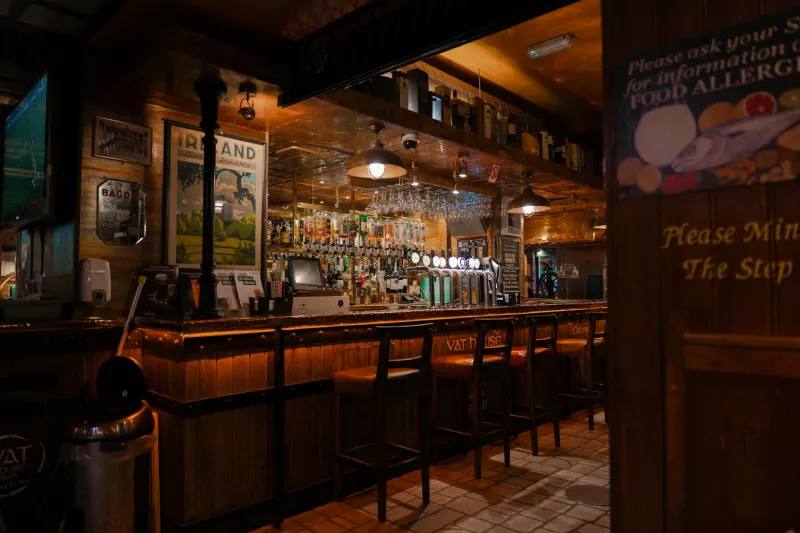
When the Music Mattered
There was a particular magic in the way a pub's jukebox could tell you everything about the place within three songs. Drop into The Crown on a Friday night, and you'd hear Thin Lizzy's 'The Boys Are Back in Town' bleeding through the chatter. Walk into The Railway Arms, and it was all Motown and Northern Soul, the regulars nodding along to tracks they'd been feeding coins into for decades. Each boozer had its own sonic fingerprint, as distinctive as the beer they pulled or the faces behind the bar.
That Britain has vanished, replaced by something far more sterile and infinitely less human.
The Democracy of the Coin Slot
The old jukebox wasn't just a music player – it was Britain's first social media platform. Every 50p coin was a vote, every song selection a public declaration. You'd watch the room's reaction when someone dared to play something outside the accepted canon. The collective groan when the office party crowd fed it a fiver's worth of Steps. The knowing smiles when the quiet bloke in the corner finally chose his tune – usually something unexpected that revealed depths nobody suspected.
It was democracy in action, messy and argumentative and utterly alive. The machine itself became a gathering point, punters huddled around its glowing face, debating choices, making alliances. "Put some proper music on," was both complaint and community-building exercise, drawing lines and crossing them in equal measure.
The Landlord's Mixtape Era
When jukeboxes started disappearing in the late nineties, some publicans understood what was at stake. They curated their own soundtracks, burning CDs or setting up primitive digital players with carefully chosen playlists. These landlords were the unsung DJs of British social life, reading their rooms like seasoned radio presenters.
Geoff at The Duke of Wellington knew to start Sunday afternoons with jazz standards, letting them drift into soul as the crowd thickened. Sandra at The Horse & Hounds had an uncanny ability to match the music to the mood – upbeat indie when the football was on, mellower fare when couples claimed the corner booths. They understood that music wasn't background noise but foreground feeling, the invisible thread that wove strangers into temporary communities.
The Algorithm Invasion
Then came the corporate takeover, disguised as convenience. Spotify Premium accounts and background music services promised endless catalogues and zero maintenance. What they delivered was the sonic equivalent of beige paint – inoffensive, predictable, and utterly forgettable.
These algorithmic playlists know nothing about rooms or people or moments. They can't read the tension when the local football team loses, or sense when the after-work crowd needs something to lift their spirits. They serve up the same sanitised indie-folk and coffee-shop jazz whether you're in a Victorian boozer in Bermondsey or a converted bank in Bath.
Worst of all, they've stripped away agency. Nobody owns these songs. Nobody chose them. They simply appear, as impersonal as hold music, creating a soundtrack for disconnection rather than community.
The Silence Between Songs
What we've lost isn't just the music – it's the conversation around it. The debates about whether 'Don't Stop Me Now' belongs in a proper pub. The way 'Come On Eileen' could unite three generations on a Saturday night. The sacred tradition of the landlord's "last song," chosen with the weight of ceremony to send everyone home.
These weren't just songs; they were shared experiences, communal memories in the making. When your mate's wedding song came on, the whole table would look over and smile. When the divorced bloke chose 'She's Always a Woman,' everyone pretended not to notice him wipe his eyes.
The Playlist Generation
Today's pub-goers have been trained to expect musical perfection – no scratched records, no CDs skipping, no arguments over what comes next. But perfection, it turns out, is the enemy of personality. The smooth, unobtrusive soundscapes that drift through modern pubs create no friction, spark no discussion, leave no impression.
We've traded the beautiful chaos of collective curation for the beige efficiency of algorithmic selection. In doing so, we've lost one of the pub's most powerful tools for creating the kind of accidental intimacy that turned strangers into friends and acquaintances into family.
The Sound of Nothing
Walk into most pubs today, and you'll hear music playing. But listen closer, and you'll realise it's saying nothing at all. It's the sonic equivalent of small talk with a stranger – pleasant enough but ultimately meaningless. The jukebox knew the room because the room fed it, shaped it, argued with it.
Now the room sits silent, scrolling through phones instead of flipping through song lists, consuming rather than creating the soundtrack to their evening. The music plays on, but nobody's listening. And in that silence, something essential about the British pub – its capacity to surprise, to provoke, to bring people together over shared tastes and good-natured arguments – has been lost forever.
The jukebox didn't just play music. It played the room. And when we unplugged it, we unplugged a little piece of our souls.