The Landlord Knew Your Name: How the Pub Remembered Everything a Database Never Could
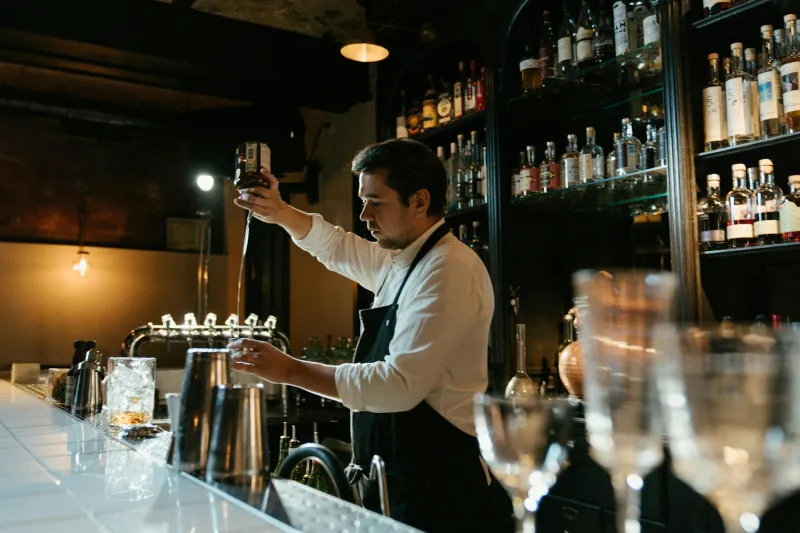
The Human Hard Drive Behind the Bar
There was a time when walking into your local meant being instantly recognised—not by facial recognition software or a loyalty card beep, but by a landlord who'd clock your mood before you'd even reached the bar. "Pint of Doom Bar and a packet of cheese and onion," they'd say, already reaching for the glass. "Rough day at work again?"
This wasn't customer service training or corporate hospitality guidelines. This was something far more sophisticated: institutional memory made flesh, a human database that could read between the lines of your order and respond accordingly. When old Ted behind the bar at the Red Lion knew that your usual bitter meant you were celebrating, but a switch to whisky meant trouble at home, he wasn't just serving drinks—he was operating an early warning system for community welfare.
The Algorithm of Care
Consider what a good landlord actually knew about their regulars. Not just drink preferences, but the rhythms of their lives. Mrs Patterson always had a gin and tonic on pension day. Young Dave switched from lager to orange juice when he was trying to impress a new girlfriend. The bloke from the council offices ordered doubles when budget meetings overran.
This knowledge wasn't stored in the cloud or backed up on servers. It lived in the synapses of someone who'd chosen to make their living by paying attention to other people's patterns, moods, and needs. The landlord's brain was a constantly updating file system of human complexity—one that could process not just what you ordered, but how you ordered it, who you were with, and what you weren't saying.
Compare this to today's digital personalisation. Your supermarket app knows you buy wine on Fridays. Your streaming service suggests shows based on your viewing history. But neither knows that you've been drinking more since your mother's diagnosis, or that you're avoiding certain programmes because they remind you of better times. The data is there, but the wisdom to interpret it with compassion is entirely absent.
The Unspoken Social Contract
What made the pub landlord's memory system so powerful wasn't just its comprehensiveness, but its discretion. Information was held in confidence, deployed with care, and never weaponised for profit. When landlord Jim noticed that one of his regulars had started drinking alone after his wife's funeral, the response wasn't a targeted advertising campaign for grief counselling—it was a quiet word, a longer chat, perhaps an introduction to another widower who'd found solace in the pub's community.
This was social welfare by stealth, mental health support delivered through the medium of mild concern over a pint glass. No forms to fill, no appointments to book, no algorithms deciding whether you qualified for help. Just human beings who'd made it their business to notice when other human beings were struggling.
The Death of Institutional Memory
When the local closed, all that carefully accumulated knowledge died with it. Decades of understanding about the neighbourhood's rhythms, relationships, and vulnerabilities simply vanished. No backup existed because none was possible—you can't download empathy or transfer emotional intelligence to a new host.
The chain pub that replaced it might have better WiFi and craft beer selection, but its staff turnover means no one stays long enough to learn the regulars' stories. The managers, trained in customer service rather than community care, can process transactions efficiently but can't read the subtle signs that someone's world is falling apart.
The Loneliness of Efficiency
We've traded the landlord's warm recognition for the cold efficiency of contactless payment and self-service apps. Order ahead, skip the queue, minimise human interaction. It's undoubtedly more convenient, but convenience was never the point of the pub experience.
The point was being known. Being seen. Having your presence acknowledged by someone who remembered not just your face, but your father's funeral, your daughter's wedding, your redundancy, your recovery. The landlord's memory wasn't just a business tool—it was a form of community infrastructure, as vital as the post office or the parish church.
What We've Lost in Translation
Today's pubs still serve drinks, but they've largely stopped serving the deeper human need to be remembered. The new landlords are pleasant enough, but they're managing a business rather than shepherding a community. They know profit margins and stock rotation, but they don't know that Sarah always orders wine when she's nervous, or that old Frank's jokes get darker when his arthritis is playing up.
This loss of institutional memory has left gaps in our social safety net that we're only now beginning to understand. Mental health services are overwhelmed partly because we've dismantled the informal support systems that used to catch people before they fell. The pub landlord who noticed changes in behaviour and gently intervened has been replaced by crisis hotlines and waiting lists.
The Irreplaceable Human Touch
No amount of artificial intelligence will replicate what we've lost. Machine learning can predict purchasing patterns, but it can't offer a sympathetic ear to someone whose marriage is falling apart. Big data can identify trends, but it can't provide the kind of non-judgmental sanctuary that a good local used to offer.
The landlord's memory was more than storage—it was interpretation, compassion, and community care rolled into one. When that human hard drive was wiped clean by closure after closure, we didn't just lose pubs. We lost a whole layer of social intelligence that had taken generations to develop and can never be restored.
The apps know our preferences, but they'll never know our pain. The databases track our habits, but they'll never track our healing. In our rush toward digital efficiency, we've abandoned the beautiful inefficiency of human attention—and our communities are poorer for it.