Where Your Local Used to Stand: The Empty Corners That Once Held Britain Together
The Archaeology of Lost Community
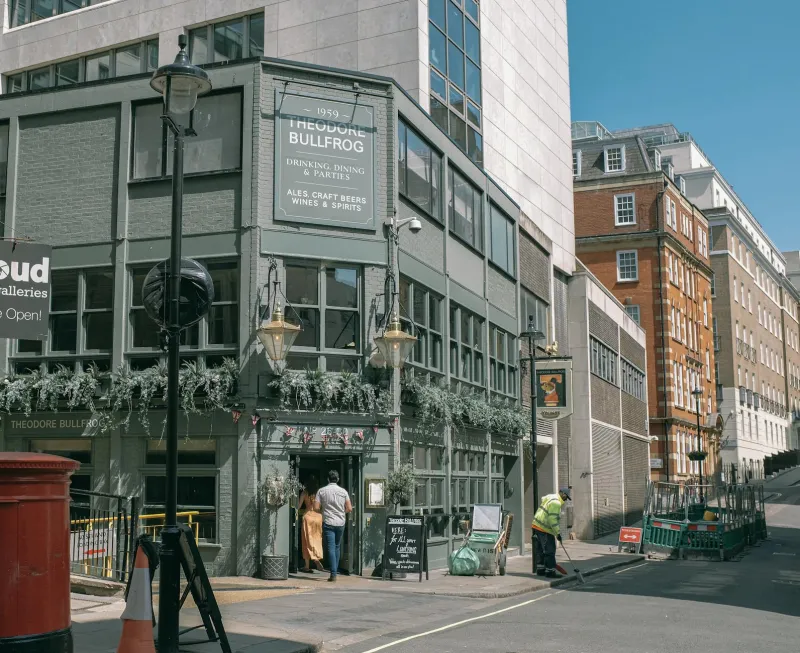
There's a particular sadness to spotting the bones of a dead pub. You know the signs: that distinctive Victorian bay window now flogging insurance policies, the tell-tale curved corner that once welcomed punters from two streets, the faded ghost lettering spelling out 'Saloon Bar' above what's now a Costa Coffee.
Every British neighbourhood tells the same story in bricks and mortar. Where once stood three or four locals within stumbling distance, now there's a Tesco Express, a barber shop that's never open, and a block of flats with names like 'Heritage Court' — as if calling it heritage makes up for demolishing the actual heritage.
The Great Conversion
The numbers are staggering, but statistics don't capture the human cost. Since 2000, Britain has lost over 12,000 pubs — that's roughly two closing every day for two decades. But it's not just about the numbers. It's about what replaced them and what that says about who we've become.
Take any street in Birmingham, Manchester, or Cardiff. The Red Lion became luxury apartments. The Crown and Anchor is now a nail salon. The Railway Tavern? That's a Domino's Pizza, because apparently we'd rather have our social life delivered than lived.
These weren't just drinking establishments. They were the nerve centres of working-class life, the places where births were wet, deaths were mourned, and everything in between was dissected over a pint. Each closure didn't just eliminate a business — it severed the arteries that kept communities alive.
What the Buildings Remember
The architecture tells the story better than any planning document. Those grand Edwardian pubs with their ornate facades and multiple bars weren't designed for quick transactions. They were built for lingering, for the slow burn of conversation that builds friendships and settles disputes.
Compare that to what's replaced them. Estate agents with their sterile windows full of property porn. Chicken shops with fluorescent lighting that screams 'eat fast and leave.' Conversion flats with private entrances that ensure residents never have to acknowledge each other's existence.
Even the successful pub conversions miss the point. Turn a boozer into a gastropub and you've created a restaurant that happens to serve beer, not a community space that happens to serve food. The difference matters.
The Social Geography of Isolation
When planners approved these conversions, they weren't just changing buildings — they were rewiring the social geography of Britain. A street with three pubs created natural meeting points, informal networks, shared experiences. A street with three estate agents creates... what exactly? Competition over commission rates?
The pub wasn't just where you went to drink. It was where you bumped into your old teacher, where your mate's dad held court, where the local know-it-all solved the world's problems every Tuesday night. It was democracy in action — messy, argumentative, but real.
Now we wonder why people feel disconnected, why community spirit has evaporated, why nobody knows their neighbours. We demolished the infrastructure of social life and replaced it with the infrastructure of transaction.
The Price of Progress
Every converted pub represents a choice we made as a society. We chose property speculation over social spaces. We chose convenience over community. We chose efficiency over the beautiful inefficiency of human connection.
The saddest part isn't that these buildings are gone — it's that we barely noticed them disappearing. Each closure was just another planning application, another 'improvement' to the local area. Only now, when the damage is done, do we realise what we've lost.
Reading the Street
Next time you walk through your neighbourhood, try to spot them — the phantom pubs hiding in plain sight. Look for the architectural clues: the way a building sits on a corner, the spacing of windows, the width of doorways designed for crowds rather than customers.
These buildings remember what we've forgotten: that community isn't something that happens online or in our heads. It needs physical space, shared rituals, and the kind of accidental encounters that only happen when people have somewhere to be together.
The pubs are gone, but their ghosts remain — reminders of a Britain that knew how to be social, not just sociable. The question is whether we'll learn to read their message before the last traces disappear entirely.