Running a Slate: The Day Pubs Stopped Trusting You and Britain Got a Little Colder
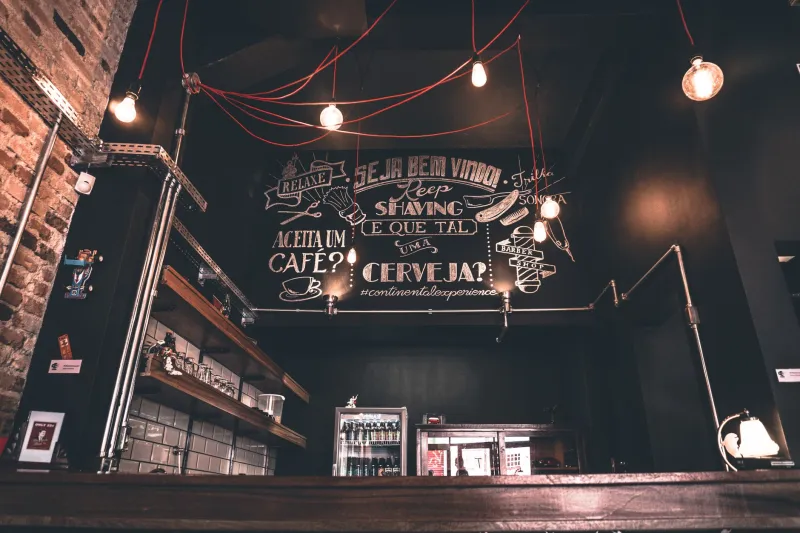
Somewhere in a skip outside a shuttered pub in Wolverhampton, there's probably a piece of chalk. Snapped, worn to a stub, or just discarded along with the blackboard it used to mark. On that board, for decades, were names. Real names. Dave. Sheila. Big Phil from the foundry. Each one followed by a tally — a running total of what was owed and, more importantly, what was trusted.
That board wasn't a debt ledger. It was a register of belonging.
What the Tab Actually Was
Ask anyone who grew up around British pubs in the seventies or eighties and they'll tell you the same thing: running a tab wasn't about being skint. It was about being known. The landlord didn't extend credit to strangers. He extended it to regulars — people whose faces he'd seen three times a week for years, whose kids he knew by name, whose funerals he'd likely attend.
The slate — or the tab, depending on which part of the country you're from — was a social instrument dressed up as a financial one. It said: I know who you are. I know you'll be back. We have an arrangement. It was the pub's version of a handshake deal, and in communities built on exactly that kind of informal trust, it worked perfectly well.
You'd have a couple of pints on a Wednesday when your wallet was thin, and you'd square it up come payday. Nobody made a fuss. Nobody ran a credit check. The landlord simply knew whether you were good for it, and that knowledge came from years of proximity — from being in the same room, week after week, watching you be a person.
When the Sums Stopped Adding Up
The decline of the pub tab didn't happen overnight. It crept in gradually through the nineties and accelerated in the two-thousands, driven by a combination of forces that, taken individually, each seemed reasonable enough.
Chain pubs arrived and brought head-office policy with them. You can't run a slate system when the person behind the bar changes every fortnight and answers to a regional manager in Milton Keynes. Corporate hospitality has no memory. The transaction replaced the relationship because the relationship had never been allowed to form in the first place.
Then came the card machine — a device that, for all its convenience, fundamentally reframed every exchange in the pub as a commercial transaction. Tap and go. Receipt in your pocket. No lingering obligation, no name on a board, no reason to come back on Friday specifically because you owe Terry a tenner and Terry will notice if you don't.
Insurance concerns played a part too. Licensing lawyers got involved. Someone somewhere decided that extending informal credit was a liability, and perhaps in a strict legal sense they weren't entirely wrong. But something real was lost in the risk assessment.
The Trust That Lived in the Arrangement
Here's what people miss when they talk about the tab purely in financial terms: the social function it performed was enormous, and it operated almost invisibly.
When a landlord let you run a slate, he was doing several things at once. He was providing a short-term safety net for working people whose wages didn't always align neatly with their social lives. He was signalling membership — you were the kind of person whose word meant something. And he was creating a thread of obligation that tied you back to the pub, to the community, to the ongoing story of that particular room.
Debt, in the right context and at the right scale, is a form of connection. Owing your landlord three quid meant you'd be back. And when you came back, you'd see the same faces, pick up the same conversations, and the community would continue. The tab was, in a strange way, one of the mechanisms by which regulars remained regular.
Strip that out, insist on payment at the point of service, and you've made the pub transactionally identical to every other place you might spend money. Why would you feel any particular loyalty to a venue that treats you exactly like a customer, rather than a person?
What Replaced It
The cruel irony is that trust-based credit didn't disappear from British life when it disappeared from pubs. It just migrated somewhere far less human.
Buy Now Pay Later schemes now let you defer the cost of a pair of trainers with a few taps on your phone. Credit apps offer instant borrowing at rates that would have made a Victorian moneylender blush. The financial infrastructure of informal trust has been replaced by algorithms that know your postcode and your credit score but have never once looked you in the eye.
The pub landlord who let you run a tab wasn't operating a financial service. He was operating a social one. He was saying: around here, we know each other well enough to extend a bit of grace. That grace — that willingness to absorb a small risk on behalf of someone you genuinely knew — was precisely the thing that made the pub feel like more than a venue.
The Chill That Followed
Spend any time in a modern pub — the ones that have survived, anyway — and you'll notice the temperature has dropped. Not literally. But in the way that every exchange is clean and complete and finished. No loose ends. No running totals. No reason, beyond personal inclination, to come back on any particular day.
The community that forms around obligation and memory and informal trust is a different community from the one that forms around shared geography and matching app recommendations. The first kind has roots. The second kind has followers.
We didn't just lose the pub tab. We lost the social architecture it supported — the web of small, unspoken commitments that turned a collection of individuals into something that functioned like a neighbourhood. When the chalk came off the board for the last time, it took with it a particular kind of faith: the belief that the person across the bar knew you well enough to take you at your word.
In a country that increasingly struggles to find that faith anywhere, it's worth pausing to remember exactly when and where we let it go.