The Unwritten Constitution of the Snug: How Every Pub's Secret Rules Made Britain More Civilised
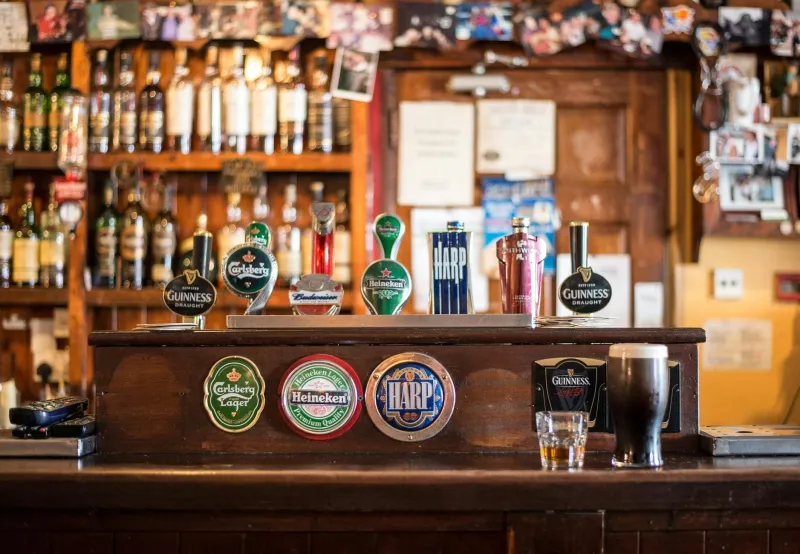
You couldn't Google them. They weren't written on any wall. No laminated sign behind the bar explained the intricacies of when you could join someone else's table, why certain seats remained mysteriously empty until 7:30 sharp, or the precise etiquette of buying rounds for strangers. Yet within a fortnight of becoming a regular anywhere, you'd absorbed a complex social operating system that had taken decades to evolve.
The Invisible Infrastructure
Every decent local operated on what sociologists might grandly call "tacit knowledge" — the unspoken rules that made communal life possible. These weren't arbitrary traditions or pointless ceremony. They were a sophisticated piece of social engineering that transformed a room full of strangers into something approaching a functioning community.
Take the business of seating. That corner table wasn't reserved for Old Bill because he'd paid for the privilege or because the landlord was doing him a favour. It was his because forty years of gentle precedent had established it as such, and the entire pub conspired to maintain this fiction. Newcomers weren't told about Bill's table — they simply found themselves guided away from it by a dozen subtle social cues until they learned to avoid it instinctively.
This wasn't exclusion; it was inclusion by degrees. The pub's unwritten constitution recognised that belonging couldn't be demanded or purchased — it had to be earned through the patient observation of how things worked.
The Grammar of Gesture
The real genius lay in how these rules were transmitted. No one sat you down with a handbook. Instead, you learned through a complex grammar of glances, nods, and gentle redirections. The barman's barely perceptible shake of the head when you approached the wrong end of the bar. The regular who caught your eye and nodded toward a different table when you were about to commit some invisible transgression.
This wasn't hostility — it was mentorship. The pub's social veterans were actively inducting you into a way of being that would make everyone's evening more pleasant. They were teaching you to read the room, to understand that the bloke in the corner wasn't being antisocial when he didn't join the general conversation — he was simply occupying a different social space within the same physical room.
The Democracy of the Round
Nothing illustrated the pub's invisible constitution more perfectly than the ritual of round-buying. Here was a complex economic and social system that operated entirely on trust and memory, with no written records and no enforcement mechanism beyond collective disapproval. Yet it worked with a reliability that would make blockchain enthusiasts weep with envy.
The rules were baroque in their complexity. You couldn't buy a round on your first visit — that would be presumptuous. But by your third or fourth appearance, failing to offer would mark you as either tight-fisted or socially obtuse. The composition of each round followed invisible hierarchies: the landlord might be included on Friday nights but not Tuesday lunchtimes. The village bore got bought for but rarely bought back, a social arrangement that everyone understood and no one discussed.
This wasn't just about alcohol distribution — it was about creating webs of mutual obligation that bound the community together. Every round was a small investment in social capital, a declaration that you trusted these people enough to believe they'd remember your generosity when their turn came.
The Etiquette of Interruption
Perhaps most sophisticated of all was the pub's handling of conversation. Unlike dinner parties with their rigid turn-taking, or modern social media with its shouting matches, the pub had evolved a fluid system for managing multiple overlapping discussions among people who hadn't chosen each other's company.
You learned when it was acceptable to join an ongoing conversation (usually after making eye contact with at least two participants). You discovered the art of the strategic retreat — how to extract yourself from a discussion that had turned tedious without causing offence. Most crucially, you absorbed the rhythm of pub talk: the comfortable silences, the way topics drifted and merged, the collective understanding that not every comment required a response.
This wasn't small talk — it was the social technology that allowed a dozen strangers to share space for several hours without anyone ending up with a black eye or a nervous breakdown.
The Enforcement Mechanism
What made these rules powerful wasn't punishment for breaking them — it was the reward for following them. Master the pub's unwritten code and you gained access to something precious: a community that knew your name, remembered your preferences, and created space for you in their evening ritual. Ignore the rules and you didn't get thrown out — you simply remained forever on the periphery, tolerated but never truly included.
This was social regulation at its most elegant. No bouncers, no formal complaints procedure, no appeals process. Just the gentle but inexorable pressure of collective expectation, applied with the precision of a master craftsman.
The Training Ground for Democracy
Those pub rules weren't just about making drinking more pleasant — they were a masterclass in how to live alongside people you hadn't chosen. They taught patience, observation, and the subtle art of reading social situations. They showed how communities could self-regulate without heavy-handed authority, how strangers could become neighbours through nothing more than shared space and mutual consideration.
Most importantly, they demonstrated that civilisation wasn't something imposed from above by laws and regulations — it was something that emerged from below when people had enough shared investment to create and maintain their own standards.
What Replaced the Rulebook
When the old locals closed or transformed into something else, we didn't just lose buildings — we lost finishing schools for community life. The gastropubs that replaced them operate on simpler principles: you book a table, you order food, you pay your bill, you leave. Clear, efficient, and utterly sterile.
The craft beer bars and wine bars that cater to the same social needs work on market principles rather than community ones. You're a customer, not a member. Your relationship is with the brand, not with the other people sharing the space. There are no unwritten rules because there's no community to write them.
The Lost Art of Belonging
We've gained efficiency and lost apprenticeship. We've gained choice and lost initiation. We've gained the freedom to drink where we like and lost the knowledge of how to belong anywhere. The pub's invisible constitution wasn't just about ordering drinks — it was about learning to be British in the most essential way: how to rub along with people who weren't quite like you, in a space that belonged to everyone and no one.
Somewhere in our rush toward transparency and explicit rules, we forgot that the most important social knowledge can't be written down. It has to be absorbed, practised, and passed on through the patient work of communities that have time to teach their secrets to strangers willing to learn.
The pub's unwritten constitution is gone now, along with the pubs that housed it. We're all customers now, and customers don't need to learn the rules — they just need to know how to pay.