The Back Room Barber, the Front Room Bookmaker: When the Pub Was Britain's Unofficial High Street
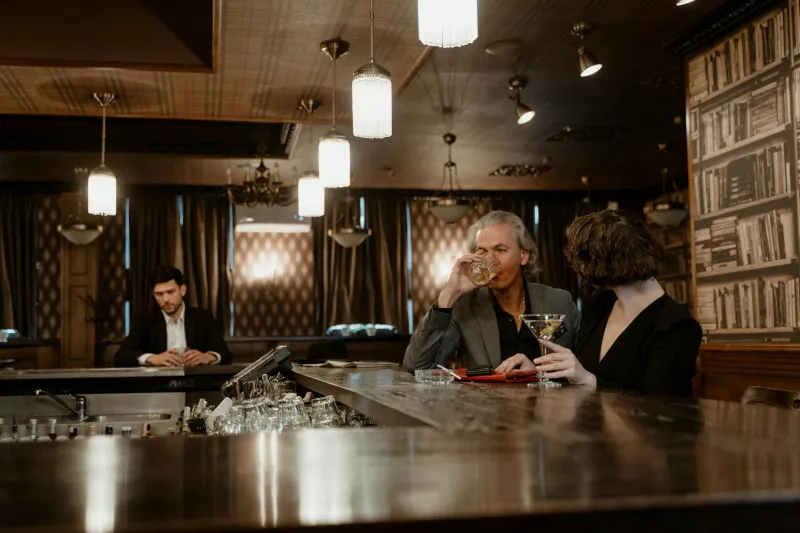
The Economy That Never Officially Existed
In the back room of The Crown on Marsh Lane, Eddie Thornton cut hair Tuesday through Thursday, two bob a trim, appointment by word of mouth only. In the snug at The Railway Arms, Big Jim took bets on anything with four legs and a jockey, keeping the odds in his head and the money in his jacket pocket. At The Wheatsheaf, you could buy a second-hand car from Tommy Walsh, get your watch repaired by Old Fred, and arrange for someone's nephew to fix your leaking roof – all before closing time.
This wasn't corruption or criminality. This was how working-class Britain actually worked for the better part of a century: an informal economy that operated in the spaces between official business hours, conducted by handshake agreements that were worth more than any contract, and lubricated by pints that sealed deals more effectively than any legal document.
The British pub wasn't just a place to drink – it was the unofficial high street for people who couldn't afford the official one, the marketplace for communities that had been priced out of the proper marketplace, the chamber of commerce for an economy that never appeared in any government statistics but kept half the country running.
When Trust Had a Currency
Before credit scores and background checks, before digital payments and paper trails, the pub operated as Britain's most sophisticated trust network. Your reputation was your credit rating, your word was your bond, and your ability to buy a round was the ultimate character reference.
Take Mickey Flanagan's car business, conducted entirely from the public bar of The George & Dragon in Bermondsey. Mickey never had a forecourt, never had an office, never had anything you'd recognise as a proper business. What he had was twenty years of drinking in the same pub, a comprehensive knowledge of South London's automotive needs, and an uncanny ability to match the right car with the right buyer.
"Mickey knew everyone and everyone knew Mickey," remembers Terry Walsh, who bought three cars from him in the 1970s. "You'd mention you needed a motor, and within a week he'd have found you exactly what you wanted at exactly the price you could afford. Never any paperwork, never any warranty, but if Mickey said it was a good car, it was a good car. His reputation depended on it."
The Unregulated Professionals
The pub's shadow economy wasn't amateur hour – it was staffed by skilled professionals who simply couldn't afford or didn't want the overhead of proper premises. Eddie Thornton had trained at Truefitt & Hill before the war, but couldn't afford to rent a shop when he came back from Normandy. So he set up in the back room of his local, where the rent was a couple of pints and the clientele was guaranteed.
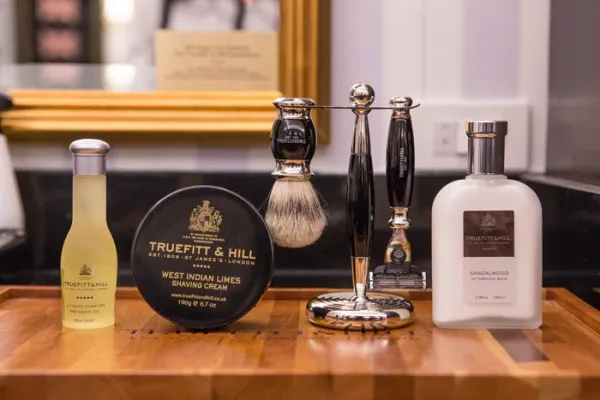 Photo: Truefitt & Hill, via www.dooddot.com
"Better haircuts than you'd get on the high street," insists Frank Morrison, who was a regular customer for fifteen years. "Eddie had proper scissors, proper technique, proper pride in his work. The only difference was you had to bring your own towel and there was usually a pint waiting for you when he finished."
The back room barbering business wasn't unique to The Crown. Across working-class Britain, skilled tradesmen used pub back rooms as workshops, treatment rooms, and consultation spaces. Cobblers mended shoes, tailors took in alterations, mechanics diagnosed engine troubles, and amateur dentists pulled teeth – all services that were either too expensive on the high street or simply unavailable to people who worked the same hours as the shops.
The Bookmaker's Art
Before betting shops were legalised in 1961, every neighbourhood had its Big Jim – the man who took bets on horses, dogs, and anything else people wanted to gamble on. These weren't back-alley criminals but respected members of the community who provided a service that was technically illegal but universally accepted as necessary.
"Jim knew the form better than anyone at Ascot," recalls Billy Thompson, who worked the docks and bet his wages every Friday. "He'd give you the odds, tell you which horses to avoid, and if you had a good week, he'd buy you a pint to celebrate. If you had a bad week, he'd extend credit until payday. Try getting that kind of service from Ladbrokes."
The pub bookmaker operated on intimate knowledge of his customers' circumstances. He knew who could afford to lose and who was chasing their losses. He knew when to cut someone off and when to extend credit. He was part mathematician, part psychologist, part social worker – and he did it all from memory, without a calculator or a computer in sight.
The Handshake Economy
What made the pub's informal economy work wasn't the lack of regulation – it was the presence of something more powerful than regulation: community accountability. Everyone knew everyone, everyone drank in the same places, and everyone's reputation was constantly on display.
"You couldn't afford to rip people off because you'd have to face them the next night and the night after that," explains Arthur Bennett, who arranged building work through The King's Head for thirty years. "Your business depended on your reputation, and your reputation was tested every time you walked through those pub doors."
The handshake agreement sealed with a pint wasn't a primitive form of contract – it was a more sophisticated form of contract, one that bound people through social relationships rather than legal threats. Breaking a pub deal didn't just cost you money; it cost you your place in the community.
When Everyone Had a Side Hustle
The pub economy recognised something that modern business has forgotten: that most people have skills and knowledge that extend far beyond their official job description. The postman who could repair watches, the bus driver who bred racing pigeons, the factory worker who could get you anything that had 'fallen off the back of a lorry' – the pub was where these unofficial skills found their market.
"Everyone had something on the side," remembers Joan Hartley, whose husband ran an unofficial taxi service from The Swan in Wigan. "It wasn't about getting rich – it was about getting by. The wages from the pit or the factory weren't enough, so you used whatever other skills you had to make ends meet. The pub was where you found your customers."
This wasn't tax evasion or benefit fraud – most of these transactions were too small and too irregular to register on any official radar. It was just working-class people helping each other out, using their spare time and spare skills to solve each other's problems.
The Death of the Shadow High Street
The pub's role as an unofficial high street died slowly, killed by a combination of regulation, gentrification, and social change. Betting shops made the pub bookmaker redundant. Shopping centres and out-of-town retail parks replaced local services. Credit cards and hire purchase agreements replaced handshake deals. Most importantly, communities fragmented to the point where the social accountability that made the system work simply evaporated.
"You can't run a business on trust when nobody trusts anyone anymore," reflects Tommy Walsh, whose second-hand car business moved from the pub to a proper forecourt in the 1980s. "And you can't build trust when people are strangers to each other, when they don't drink in the same places, when they move house every few years. The whole thing depended on stability, and stability is exactly what we lost."
What We Lost When the Deals Stopped
The death of the pub's informal economy wasn't just about the loss of cheap haircuts and dodgy car deals. It was about the loss of an entire way of organising economic life that prioritised relationships over regulations, community knowledge over professional qualifications, and mutual aid over market competition.
The modern economy is more efficient, more transparent, and infinitely more regulated than the handshake economy of the pub. It's also more impersonal, more expensive, and more exclusionary. We've gained consumer protection and lost community connection. We've professionalised everything and somehow made it all feel less professional.
The back room barber and the front room bookmaker represented an economic model that put community relationships at the centre of commercial transactions. When that model died, we didn't just lose some colourful characters and dubious business practices. We lost the idea that commerce could be personal, that business could be based on trust, and that the best deals were the ones sealed with a pint and a handshake.
In the end, the pub's shadow economy worked because it was embedded in a real community with real relationships and real accountability. When those things disappeared, no amount of regulation or consumer protection could replace what we'd lost: the simple, powerful idea that the best business is the business you do with people you trust.