The Beautiful Nothing: Why the Best Pub Moments Were the Ones Nobody Planned
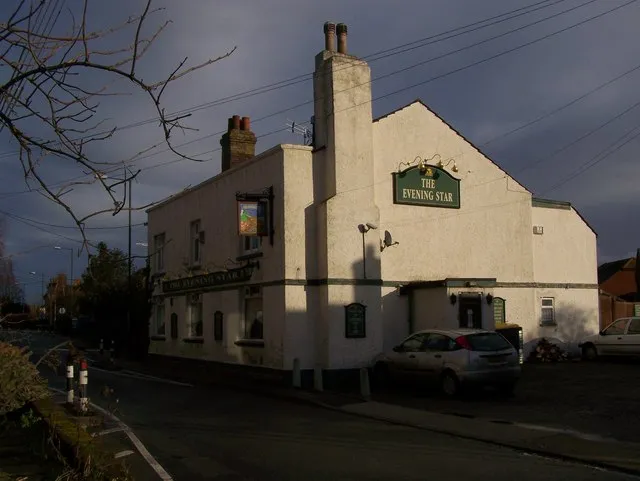
Photo: David Anstiss, CC BY-SA 2.0, via Wikimedia Commons
Ask anyone who grew up going to pubs in Britain what they actually remember, and it's rarely the organised bit. It's not the quiz question they got right, or the folk singer's best song, or the punch line of the joke that brought the room down. What they remember is the in-between. The twenty minutes after the quiz master called the break and before he started reading the answers. The gap between the second and third sets when the guitarist went outside for some air and everyone shuffled their chairs a bit and somehow ended up in a completely different conversation with completely different people.
The interval. The pause. The beautiful, unstructured, utterly irreplaceable nothing.
We have lost the art of it almost completely, and I think it's quietly breaking us.
What the Interval Actually Was
Let's be precise about what we're talking about, because it wasn't just a gap in the programme. The pub interval was a specific social phenomenon with its own internal logic and its own rules — none of them written down, all of them understood.
It began with a kind of collective exhale. Whatever had been happening — the quiz, the game, the performance, the argument about something on the telly — it stopped, and for a moment the room recalibrated. People stood up and stretched. Someone went to the bar. Someone else went to the loo. The seating arrangements, which had felt fixed, became suddenly fluid. A bloke who'd been marooned at the end of a table all evening found himself standing at the bar next to someone he half-recognised from the school run, and they started talking, and by the time the second half began they were on first-name terms.
This was not accidental. The pub, at its best, was engineered for exactly this kind of encounter. The layout, the standing room at the bar, the way the lighting encouraged proximity without demanding it — all of it created conditions in which unplanned conversation could happen between people who had not specifically sought each other out. The interval was simply the moment when those conditions were most fully exploited.
The Conversations That Only Happened Then
There is a category of conversation that can only occur in unstructured time. It can't be scheduled. It can't be initiated by a prompt or a question. It happens when two people find themselves with nothing particular to do and no particular reason to be talking to each other except that they're both standing there and it's easier to talk than not to.
These conversations are almost always the most valuable ones.
Not because they cover important subjects — they often don't. Someone's planning permission saga. A recommended mechanic in the next town. A memory of what the high street looked like before the Spar closed. A piece of local knowledge so specific and so useless that it could only ever be exchanged in exactly this setting. But the value isn't in the content. It's in the act of connection itself. The discovery that the person you've been nodding at for three years is actually interesting, or funny, or going through something difficult, or knows your cousin.
The pub interval was where acquaintances became friends, where strangers became acquaintances, and where the invisible social fabric of a neighbourhood was quietly darned and reinforced, week after week, without anyone noticing it was happening.
When We Started Scheduling Everything
Somewhere in the last two decades, we collectively decided that unstructured time was a problem to be solved rather than a resource to be enjoyed. The smartphone is the obvious villain here, and it deserves the accusation. The moment a gap appeared in an evening's proceedings, the phone came out. The interval that once sent people to the bar and into conversation now sends them to their notifications, their group chats, the reflexive scroll through content they won't remember five minutes later.
But the phone is a symptom as much as a cause. The deeper shift is in how we relate to unplanned time generally. We have become, as a culture, deeply uncomfortable with not doing something specific. An evening out is now a sequence of activities — dinner reservation, then drinks at a particular bar, then perhaps a club or a late venue — each one booked in advance, each one occupying a defined slot. The gaps between activities are transit time, not social time. You're moving from one thing to the next, not inhabiting the space between.
The old pub evening didn't work like that. You went to your local. Things happened — a quiz, a singer, a darts match, someone's birthday — but loosely, informally, without a running order. The event was almost a pretext. The real point was the room, and the people in it, and the unforeseeable things that happened when you put them together and gave them time.
The Pubs Didn't Help Themselves
It would be unfair to blame the customers entirely. The pub trade, under pressure from falling revenues and changing habits, made choices that accelerated the loss of unstructured time. Pub quizzes became more elaborate, more tightly run, more focused on keeping people engaged every minute lest they drift home early. Live music nights packed in more acts. Events were programmed back to back. The interval shrank, and then in many cases disappeared altogether.
This was understandable commercially. An empty twenty minutes is a twenty minutes in which people might decide they've had enough and call a taxi. Keep them busy, keep them buying. The logic is sound. The result is a pub evening that feels more like a managed experience than a community gathering — something that happens to you rather than something you participate in making.
The regulars noticed. They may not have articulated it in these terms, but they felt the difference between a pub that gave them room and one that filled every available moment. One felt like home. The other felt like a function room.
Learning to Be Somewhere Again
The pubs that survive — the ones that still feel like something worth saving — tend to be the ones that haven't forgotten this. They still have evenings with natural pauses in them. The quiz master who knows when to let a break breathe. The folk night that doesn't rush to fill every silence. The landlord who resists the urge to programme every hour and trusts that people, given a bit of unstructured time and a decent pint, will find their own way to each other.
It sounds simple. It used to be. We replaced it with itineraries and wonder why a Friday night out feels less satisfying than it did twenty years ago.
We didn't just lose the interval. We lost our tolerance for the kind of time in which real things happen — the slow, unhurried, unscheduled kind where you end up talking to someone you didn't expect to talk to about something you didn't expect to say. The kind that builds community not through organised effort but through simple, repeated, accidental proximity.
The bell for last orders used to feel like an interruption. Now it often feels like a relief — confirmation that the evening has a shape, that it will end at a predictable time, that there will be no awkward unplanned moments to navigate.
We should be more troubled by that than we are.