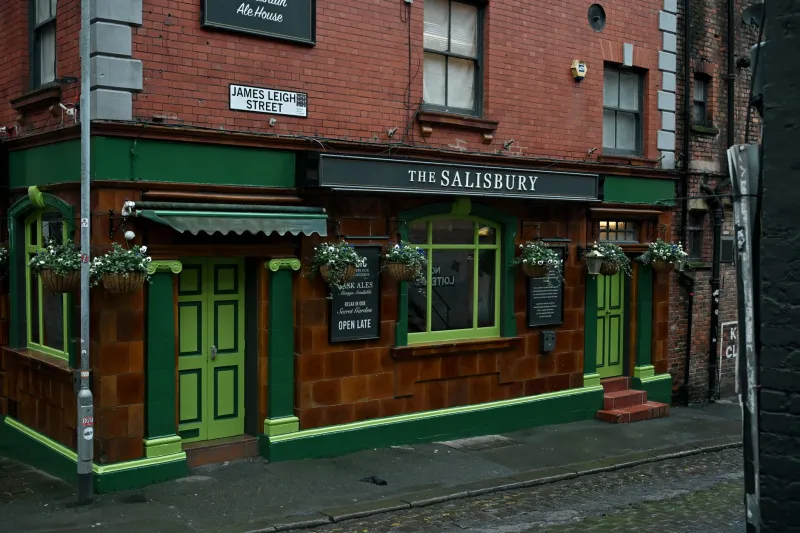
The statistics are bleak enough on their own terms. Britain has lost thousands of pubs in the past two decades — the precise figure varies depending on which survey you trust, but the trajectory is consistent and it points in one direction only. Every week, more doors close for the last time. More signs come down. More car parks get fenced off ahead of conversion into something the planners consider a better use of the space.
But the statistics don't tell you about the Tuesday night darts league in Rotherham that simply ceased to exist when the Anchor shut its doors. They don't mention the reading group in Shrewsbury that had been meeting in the same snug for eleven years before the brewery sold the building. They say nothing about the informal bereavement circle in a Lincolnshire village where half a dozen people who'd each lost a spouse would gather every Thursday, not because anyone had organised it, but because that's where they all ended up.
The numbers count pubs. They don't count what pubs contained.
What a Pub Actually Was
Before we can understand what's been lost, it helps to be clear about what the British pub actually was — not in the romantic, heritage-brochure sense, but in the functional, practical sense that mattered to the people who used it.
The pub was infrastructure. Invisible infrastructure, the kind that doesn't appear on any council spreadsheet, that generates no planning application and receives no grant funding, but without which the social fabric of a neighbourhood starts to fray at the edges in ways that are difficult to diagnose and almost impossible to repair.
It was the room where the football team met before the season and celebrated — or commiserated — after it. Where the allotment committee held its AGM. Where collections were gathered for families in difficulty. Where newcomers to a town found their first foothold in a community. Where the retired sat and remained part of something. Where the bereaved were never quite alone, even on the days when they didn't speak to anyone.
None of this was official. None of it was organised in any formal sense. It happened because the pub existed — because there was a room, warm and accessible, where the door was open and you were welcome regardless of whether you had anything particular to say.
The Anchor, Rotherham
The Anchor on Wellgate closed in 2019. It had been a pub for the better part of a century, and in its final years it was best known locally for two things: a particularly competitive Tuesday night darts league and a landlady called Maureen who had been pulling pints there since 1994.
The darts league had fourteen teams at its peak. Men and women from the surrounding streets who'd never have described themselves as athletes but who took the league with a seriousness that outsiders might have found baffling. It wasn't really about darts. It was about the rhythm it imposed on the week — the Tuesday fixture, the Thursday practice, the Saturday afternoon when someone's cousin came down from Barnsley and you had to show him the board was properly lit.
When the Anchor closed, the league tried to relocate. Found a working men's club three streets away that was willing to host. Lasted two seasons before the attendances fell away and the thing quietly dissolved. Without the specific room, the specific bar, the specific atmosphere that Maureen had built over twenty-five years, it turned out the darts had been almost incidental. What people had been coming for was the place itself.
The Lamb, Shrewsbury
The Lamb in the Castlefields area of Shrewsbury was a smaller pub — never more than forty people at capacity, which in practice meant it felt full at twenty-five. The sort of place that locals would describe, with genuine affection, as a proper local. No gastro pretensions. No craft beer wall. Just decent ale, a fire in winter, and a snug that seated eight if you didn't mind being cosy.
A reading group had met there on the first Wednesday of every month since 2008. Nobody could quite remember how it had started — something to do with two women who'd been discussing a novel at the bar one evening and decided to make it a regular thing. At its height, twelve people attended. It had no formal membership, no subscription, no website. You heard about it by being in the pub.
The Lamb was sold to a developer in 2021. The reading group attempted to move to a community centre, then to a church hall. Attendance halved within three months. By the following year it had stopped meeting entirely. The books were the same. The people were the same. But without the pub — without the particular alchemy of a proper drink in a proper room — the thing that made it worth going to had evaporated.
Invisible Grief Infrastructure
Perhaps the most quietly devastating story involves a village pub in Lincolnshire — the name and location withheld at the request of the people involved — where something remarkable had been happening every Thursday evening for the better part of a decade.
Six people, all of whom had been widowed within a few years of each other, had begun gravitating to the pub on Thursday evenings. Not because anyone suggested it. Not because a leaflet was produced or a support group was formally constituted. Simply because the pub was there, and they were lonely, and it turned out they were all lonely at the same time on the same evening.
They talked about their spouses. About grief. About the strange, disorienting experience of navigating the world alone after decades of partnership. They also talked about the football, the weather, the state of the village hall roof. The grief was not separate from the ordinary conversation — it was woven through it, which is precisely how grief functions in real life, and precisely what formal support services often struggle to replicate.
The pub closed in 2022. Two of the six have since moved away. The others still see each other occasionally, but the Thursday gathering — that specific, unplanned, irreplaceable thing — is gone. One of them described it to us simply: There's nowhere to go now that doesn't feel like an occasion.
What the Numbers Will Never Say
There is a case to be made — and it is made, regularly, by developers and planners and brewery accountants — that the market has spoken. That pubs which closed were not viable businesses, and that viable businesses do not close.
This argument treats the pub purely as a commercial enterprise and ignores entirely the social capital it housed. The darts league, the reading group, the Thursday gathering — none of these generated revenue. None of them appeared on any balance sheet. But their value to the communities that relied on them was, in any honest reckoning, immense.
When a library closes, there is at least a public argument. When a post office shuts, people write to their MP. When a pub closes, the planning notice goes up, the brewery counts its receipts, and the community loses something it will struggle to name, let alone replace.
The bolt on the door is never just the end of a business. It is the end of a room — the particular, irreplaceable room where a specific community had learned to be itself. And once that room is gone, the community doesn't find another one. It just becomes, quietly and without fanfare, a little less of a community than it was before.