The Tin That Remembered: How Britain's Pubs Once Ran the World's Most Trusted Lost Property Office
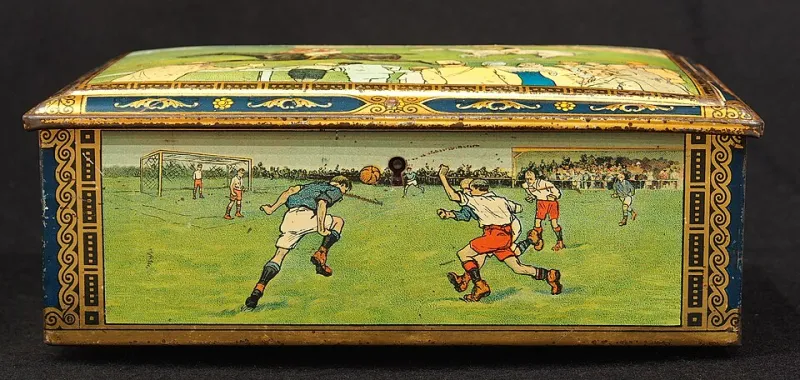
Photo: Alf van Beem, CC0, via Wikimedia Commons
The Tin That Remembered: How Britain's Pubs Once Ran the World's Most Trusted Lost Property Office
Margaret Holloway ran the Crossed Keys in Barnsley for twenty-two years. She had, by her own reckoning, returned somewhere in the region of four hundred pairs of reading glasses to their rightful owners, along with countless lighters, at least a dozen bus passes, three walking sticks, a hearing aid, two sets of dentures (on separate occasions, she was keen to point out), and — her personal favourite — a budgerigar in a travel cage that a man named Raymond had somehow managed to leave on the bench seat by the door on a Tuesday night in 1998.
 Photo: Crossed Keys, via www.shutterstock.com
 Photo: Margaret Holloway, via playsinternational.org.uk
None of this was her job, technically. There was no official policy. No sign behind the bar reading Lost Property Deposited Here. No form to fill in, no receipt to take away, no reference number to quote when you came back sheepishly the following morning. There was just a biscuit tin on the shelf below the optics — Roses chocolates, originally, the lid slightly dented where someone had once sat on it — and Margaret's memory, which was, by all accounts, formidable.
"You knew who'd been in," she told me when we spoke a few years before she retired. "You knew what they'd had, roughly where they'd been sitting, and you had a pretty good idea of what they were likely to have left behind. Someone comes in without their glasses one morning and you think: Tuesday, corner table, three pints of bitter, went out in a hurry when his wife rang. And nine times out of ten, you'd be right."
This is a story about a biscuit tin. But really, it's about something much larger.
The Unofficial Custodian
Every pub had its own version of the tin. Sometimes it actually was a tin — biscuit, Quality Street, the occasional tobacco caddy pressed into new service. Sometimes it was a cardboard box, or a shelf behind the bar designated by habit rather than signage, or a drawer beneath the till that had gradually filled with other people's carelessness over the years.
The contents were remarkably consistent across the country. Reading glasses were the perennial staple, usually the cheap sort from the supermarket, which suggested their owners had decided the loss was inconvenient but not catastrophic. Lighters in abundance — this was Britain, after all, and for many decades a large proportion of the adult population smoked. Single gloves, always single, their partners presumably lost at an earlier stage of the same journey. Bus passes. Phone chargers, in more recent years. The occasional wallet, which would be treated with considerably more care and urgency than a lighter.
And keys. Always keys. House keys, car keys, padlock keys whose purpose had long since been forgotten. Keys were the item that caused the most anxiety — for the person who'd lost them and for the landlord holding them. A set of house keys in the wrong hands is not a small thing. But in the pub tin, somehow, they were safe.
Trust as Operating System
What made the pub's lost property system remarkable — and what distinguishes it entirely from the formal lost property offices of train stations, airports, and shopping centres — was that it ran on trust rather than procedure.
There was no bureaucracy. You didn't need to prove the glasses were yours beyond describing them approximately correctly. You didn't need to show ID to claim your bus pass. The landlord used their judgement, informed by their knowledge of who you were, whether they recognised you as a regular, whether your description of where you'd been sitting matched up with their recollection of Tuesday evening.
This sounds, by modern standards, hopelessly informal. In an era of data protection legislation and liability insurance and customer service protocols, the idea of a pub landlord handing over a set of house keys based on nothing more than a hunch and a handshake seems almost reckless.
But here's the thing: it worked. Not perfectly — things were occasionally claimed by the wrong person, or sat in the tin for months before anyone came for them — but remarkably well, given the complete absence of any formal system. It worked because the pub operated within a web of social relationships that made dishonesty both difficult and costly. If you claimed something that wasn't yours, people would know. The landlord would remember. The community, which overlapped significantly with the pub's customer base, would find out.
The tin didn't need a procedure. It had a community.
The Landlord as Custodian
To understand the pub's lost property system, you have to understand the particular role that landlords and landladies occupied in their communities — a role that has almost entirely vanished from contemporary pub culture.
A good landlord knew their regulars the way a GP knows their patients: not just their names and faces, but their circumstances, their habits, their vulnerabilities. They knew who was going through a rough patch, who was celebrating something, who had a tendency to leave things behind after their third pint. This knowledge wasn't intrusive or unwanted. It was the natural product of spending decades in a room with the same people, listening more than you talked, paying attention.
This meant that the tin was curated by someone with genuine contextual knowledge. Margaret Holloway didn't just keep things behind the bar; she actively matched items to their likely owners, sometimes ringing people who she thought might have left something before they'd even realised it was missing. "I think you might have left your glasses on Tuesday," she'd say to someone who'd come in for their usual Friday pint. "They're here when you want them."
This is, when you think about it, an extraordinary level of care. It's the kind of thing we now expect from digital systems — proactive, personalised, anticipating needs before they're expressed — and we're faintly astonished when technology achieves it. But Margaret Holloway and thousands of landlords like her were doing it for free, powered by nothing more than attentiveness and genuine investment in the people around them.
When the Tin Was Quietly Retired
The biscuit tin behind the bar has been disappearing for years, and its decline tracks almost exactly with the broader decline of the community local. As pubs changed hands more frequently, as the managed house replaced the tenancy, as the landlord became a salaried employee rather than a resident custodian, the institutional memory that made the system work began to erode.
You can't run an informal lost property service without knowing your customers. And you can't know your customers if you've been in the job for six months, you're covering three different venues in the same company portfolio, and your primary KPI is the weekly wet sales figure.
The tin also became a liability in the modern sense — not a social liability, but a legal one. What if something went missing from behind the bar? What if someone claimed an item fraudulently? What if there were house keys in there and someone got burgled? Better, perhaps, to have a policy. Better to direct customers to the formal lost property procedure, which in many managed pubs means leaving a message with head office and waiting for a call back that may or may not come.
So the tin was quietly retired. And with it went something that was, on the face of it, quite minor — a small act of neighbourly safekeeping — but which was actually a thread in a much larger fabric of mutual responsibility and trust.
What the Tin Was Really About
Raymond came back for his budgerigar the morning after he'd left it, predictably mortified. The bird, a blue and white bird called Norman, had apparently been taken to the vet earlier that day and Raymond had stopped in for a steadying pint on the way home. Margaret had kept Norman behind the bar all night, feeding him bits of crisp and covering the cage with a tea towel at closing time.
She told me this story with great pleasure. It wasn't really about the budgerigar. It was about what it meant for a place to take responsibility for the people who passed through it — to say, implicitly, you left something of yourself here, and we kept it safe until you came back.
That's what the tin was. Not a lost property office. A promise.
And we've stopped making it.