Chalk Dust and Trust: The Day the Blackboard Menu Disappeared and Took Honesty With It
The Morning Ritual
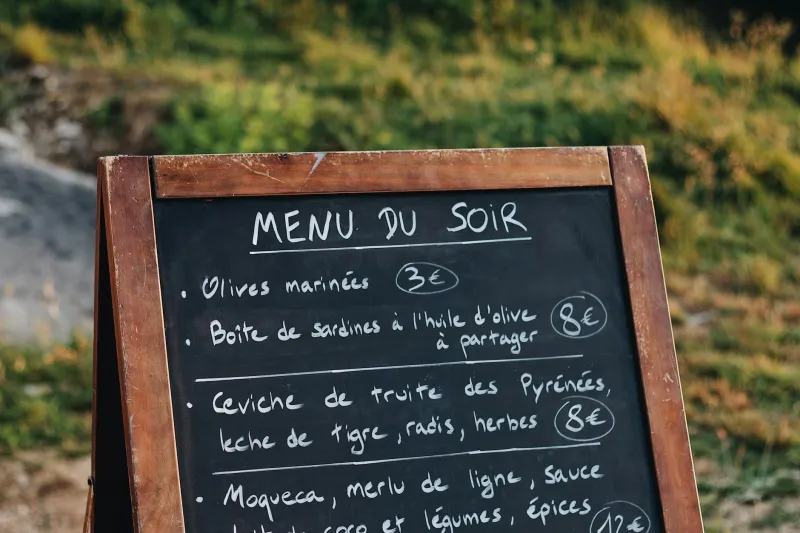
Every morning at half past ten, Betty would emerge from the kitchen of the Red Lion with a piece of chalk and a damp cloth. The blackboard by the bar—paint flaking at the edges, ghostly outlines of yesterday's offerings still visible beneath fresh black paint—awaited its daily transformation.
 Photo: Betty, via doctoolhub.com
 Photo: Red Lion, via img.freepik.com
"Steak and kidney pie - £2.50," she'd write in her careful cursive. "Bangers and mash - £1.80. Ploughman's lunch - £2.20." Sometimes there'd be a special: "Fresh cod and chips - £3.50 (whilst it lasts)." That parenthetical wasn't marketing speak—it was a promise and a warning wrapped in honest English.
By closing time, the board would be wiped clean, ready for tomorrow's fresh start. What appeared there each morning depended on what had come off the lorry, what was left in the cold store, and what Betty felt like cooking. It was menu planning as an act of daily improvisation, and it worked perfectly for forty years.
The Art of the Possible
The blackboard menu represented something we've entirely lost: the acceptance that not everything is available all the time. When the fish van didn't come on Tuesday, there was no fish on Tuesday's board. When the last portion of shepherd's pie went to the table by the window, Betty would walk over and rub it off the slate with her thumb.
This wasn't inefficiency—it was honesty. The blackboard made no promises it couldn't keep. It offered no options that existed only in some corporate headquarters' imagination of what a pub should serve. It was the daily negotiation between what was possible and what was wanted, written out in chalk for all to see.
Regulars learned to read the signs. If Betty was in a good mood, there might be her famous treacle tart listed at the bottom. If the delivery had been late, the board would be sparse—maybe just sandwiches and a warning that "kitchen closes early today." The blackboard became a barometer of the pub's daily rhythms, as reliable as the weather forecast and considerably more accurate.
The Trust Transaction
What made the blackboard menu work was an implicit contract between pub and patron that modern hospitality has forgotten entirely. When you ordered the "homemade soup of the day," you understood that it was whatever Betty had made that morning with whatever vegetables needed using up. You didn't expect a detailed description of ingredients, preparation methods, or allergen information. You trusted Betty to make something decent, and Betty trusted you not to make a fuss if it wasn't exactly what you'd imagined.
This wasn't recklessness—it was relationship. Betty knew her regulars' preferences and dietary quirks better than any database. She knew that old Tom couldn't handle spicy food, that young Sarah was trying to lose weight, that the couple from the corner cottage were vegetarians though they'd never made a song and dance about it. The blackboard might offer the same menu to everyone, but Betty's kitchen delivered personalised service without anyone having to tick boxes or fill out preference forms.
The Death of Daily Renewal
The beginning of the end came with lamination. Suddenly, pub menus became permanent fixtures—glossy, professional-looking documents that promised the same dishes every day of the year. The daily ritual of the blackboard was replaced by the quarterly menu review, conducted not by the person doing the cooking but by regional managers armed with profit margins and focus group feedback.
The laminated menu promised consistency, and it delivered—the same disappointing chicken tikka masala every Tuesday for six months, until head office decided that Mediterranean was the new Indian and switched the whole chain over to pasta dishes that bore no resemblance to anything ever served in the Mediterranean.
With lamination came the death of seasonality, locality, and spontaneity. No longer could a pub serve asparagus in May because the farmer down the road had a glut. No longer could Sunday's roast beef become Monday's cottage pie. The menu became a contract written in corporate headquarters and imposed on every outlet, regardless of what was fresh, available, or appropriate.
The QR Code Apocalypse
If lamination was the beginning of the end, QR codes were the final nail in the coffin. Now, even the physical menu has been digitised, replaced by a square of black and white pixels that directs you to a website designed by people who've never worked in a pub and optimised for metrics that have nothing to do with feeding hungry people.
The QR code menu is the ultimate expression of our disconnected age. Instead of looking at the blackboard whilst chatting to the person next to you, you stare at your phone screen in isolation. Instead of asking Betty what she recommends, you scroll through algorithmic suggestions based on your browsing history. Instead of accepting that the fish might be off today, you're presented with the illusion of infinite choice—until you try to order something and discover that half the menu isn't actually available.
What the Blackboard Knew
The blackboard menu understood something profound about human nature: that limitation breeds creativity, that scarcity creates appreciation, and that the best meals often come from making do with what's available rather than demanding everything you want. Betty's kitchen produced more memorable meals working from a slate that changed daily than most gastropubs manage with their encyclopaedic laminated offerings.
The blackboard also understood community. It was written by local people for local people, using ingredients sourced from local suppliers when possible. It reflected the rhythms of the agricultural year, the arrival of seasonal produce, the ebb and flow of supply and demand that connected the pub to the wider world without drowning it in global corporate blandness.
The Wisdom of Impermanence
There was something beautiful about the impermanence of the blackboard menu. Unlike today's permanent fixtures, it acknowledged that everything changes—seasons, suppliers, moods, circumstances. It built flexibility into the system rather than fighting against the natural variability of life.
When Betty retired and the Red Lion was taken over by a regional chain, the blackboard was one of the first things to go. In its place came a laminated menu offering "Traditional British Favourites" that were neither traditional nor particularly British, prepared not in Betty's kitchen but in an industrial facility fifty miles away and reheated to order.
The new owners probably thought they were modernising, professionalising, bringing the pub up to contemporary standards. What they actually did was sever the connection between the pub and its place, between the kitchen and its community, between the promise and the reality.
The Menu That Remembered
The blackboard menu was more than a list of available dishes—it was a daily love letter from the pub to its community. It said: "This is what we can do for you today, with what we have, as best we can manage." It asked for trust and offered honesty in return. It promised nothing more than it could deliver and often delivered more than it promised.
In losing the blackboard menu, we lost more than just a way of presenting food options. We lost a daily reminder that the best things in life—the most nourishing, the most satisfying, the most memorable—come not from having infinite choice, but from making the most of what's available. We lost the understanding that limitation can be liberation, that constraint breeds creativity, and that the most honest answer to "what's for dinner?" is sometimes simply "what we've got."
The blackboard menu taught us to trust our neighbours, to accept imperfection, to appreciate the moment. Its replacement—glossy, permanent, digitised—promises everything and delivers nothing but the cold efficiency of a world that has forgotten how to be human. In the end, that might be the saddest epitaph for the British pub: that we traded chalk dust for QR codes and called it progress.