The Cork Board That Knew Everyone's Business: How the Pub Noticeboard Was Britain's First Social Network
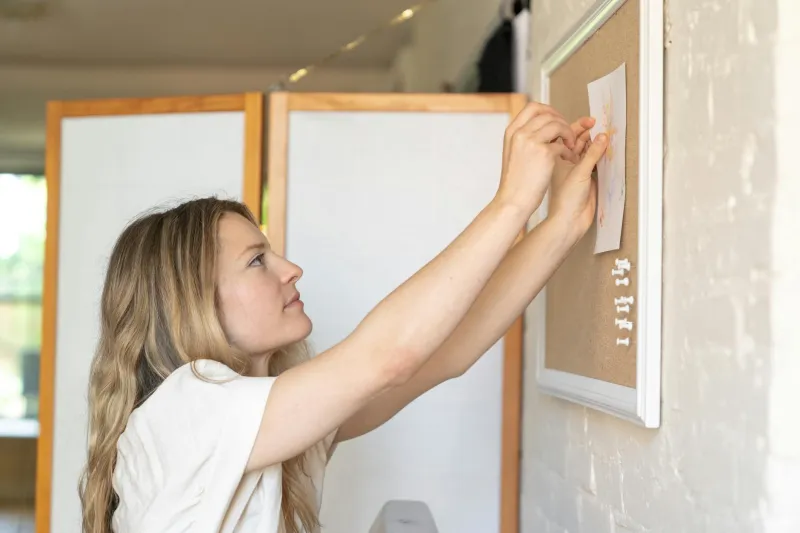
Walk into any surviving local today and you'll find a QR code stuck to the wall where the noticeboard used to hang. Scan it, they say, and you'll find everything you need to know about what's happening in the area. What you'll actually find is a Facebook page last updated in 2019 and an Instagram account with seventeen followers, none of whom live within five miles of the place.
The Democracy of Drawing Pins
The old cork boards weren't curated by an algorithm or moderated by community guidelines. They were pure democracy, armed with nothing more dangerous than a handful of drawing pins. Mrs Henderson's missing tabby cat shared space with the cricket club's fixture list. Someone's spare room advertisement sat next to a petition against the bypass. The village fête committee's desperate plea for tombola prizes nestled alongside a teenager's offer to walk dogs for pocket money.
Every piece of paper told a story, but together they told the story of a place where people still believed their neighbours might actually care about their problems. The noticeboard didn't just display information — it declared that this community had enough shared investment to warrant a common space for announcements.
The Archaeology of Everyday Life
Those boards were archaeological sites of ordinary life. Beneath the fresh notices, you'd find layers of history: last year's Christmas fair poster, a faded advert for a car sold months ago, the ghost of drawing pin holes from notices long since blown away. The really established boards had a patina of years — corners softened by countless hands, surfaces worn smooth by the gentle archaeology of community life.
The pub landlord was the unofficial curator, armed with the authority to remove notices that had outstayed their welcome. But even this was done with a light touch. Everyone understood that Old Frank's advertisement for runner beans would stay up until October, regardless of whether he'd sold them all by July. The board had its own rhythm, its own seasons.
More Than Information
What made these boards magical wasn't the information they contained — it was the conversations they started. You didn't just read about the parish council meeting; you found yourself discussing drainage issues with the bloke stood next to you. The lost cat poster became a five-minute chat about whether anyone had seen it. The football team's player wanted ad turned into a debate about Saturday's match.
The noticeboard was Britain's original social network, but it worked because it was rooted in a physical space where people had to look each other in the eye. You couldn't share someone's lost pet post with a single click, but you could promise to keep an eye out. You couldn't react with an emoji to the village hall's fundraising appeal, but you could dig into your pocket for a couple of quid.
The Handwriting on the Wall
There was something beautifully human about those handwritten cards. The careful cursive of the church secretary announcing the harvest festival. The barely legible scrawl of someone desperately trying to shift a three-piece suite. The neat block capitals of the parish councillor who'd clearly written the same notice seventeen times to get it right.
Each piece of handwriting was a personality, a glimpse into someone's life and priorities. The digital replacements offer none of this texture. A Facebook event for the village quiz night looks identical to one for a multinational conference. The human touch — literally — has been sanitised away.
The Network Effect
The genius of the pub noticeboard was its network effect, but not in the Silicon Valley sense. It worked because everyone who mattered — meaning everyone who lived locally and occasionally visited the pub — saw it. There was no algorithm deciding who got to see what. No privacy settings. No echo chambers. If you put something on that board, the entire community had a fair chance of seeing it.
This created a genuine commons, a shared space where the village's business was conducted in full view. Planning applications couldn't slip through unnoticed when they were pinned up next to the bar. Local councillors couldn't claim ignorance of community concerns when those concerns were displayed in the place where half the village gathered every Friday night.
The Replacement That Never Replaced
When the boards came down, we were promised something better. Digital solutions that would reach more people, be more efficient, more targeted. What we got instead was fragmentation. The cricket club moved to WhatsApp. The parish council went to Facebook. The lost pets found their way to neighbourhood apps that half the village had never heard of.
The information didn't disappear — it just scattered into a dozen different platforms, each requiring its own login, its own app, its own way of working. The 78-year-old who could navigate a cork board with ease suddenly found herself locked out of her own community's conversation.
What We Lost When We Logged On
The death of the pub noticeboard wasn't just about losing a way to advertise spare rooms or find missing cats. It was about losing a shared space where the community could talk to itself. Where the village's business was conducted in public, where strangers became neighbours over a shared concern about road safety or excitement about the summer fair.
We traded the beautiful chaos of that cork board for the algorithmic efficiency of digital platforms. We gained reach and lost intimacy. We gained convenience and lost serendipity. We gained the ability to target our audience and lost the magic of not knowing who might respond to our call for help.
The pub noticeboard knew something we've forgotten: that communities aren't built by connecting like-minded people, but by giving different people reasons to care about the same things. Those tatty pieces of paper, held up by bent drawing pins and faith, were doing more to hold Britain together than any social network has managed since.
Somewhere in a skip behind a closed-down local, there's probably a cork board still covered in the final notices of a community that didn't know it was saying goodbye. Mrs Henderson never did find that tabby cat. But for a brief moment, an entire village was looking.