Faces on the Wall: When Every Pub Kept Britain's Working-Class Memory Alive
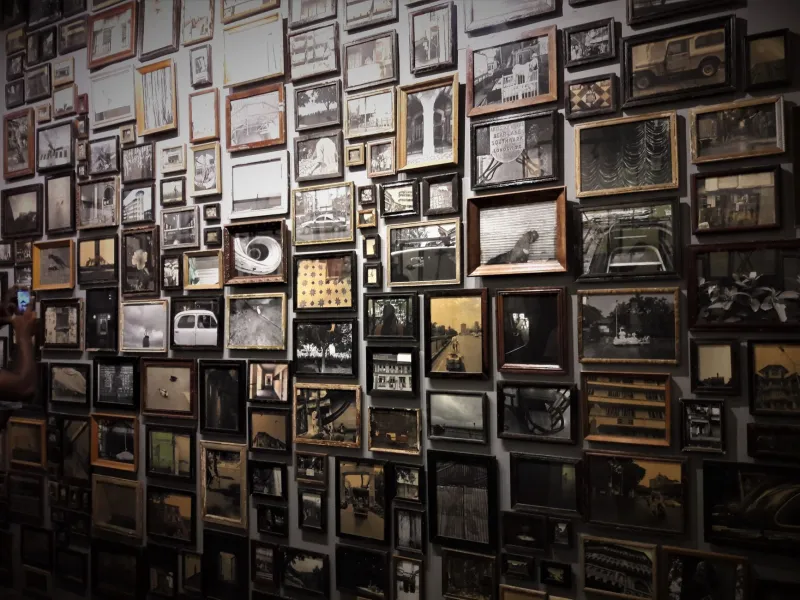
The Galleries Nobody Called Galleries
Every proper British pub had them: those black-and-white photographs climbing the walls like ivy, documenting decades of faces that regulars half-recognised but couldn't quite name. The darts team from 1963, all Brylcreem and serious expressions. The football eleven from some long-forgotten Sunday league. Wedding parties spilling out of the function room upstairs. Landlords with magnificent moustaches standing proudly behind bars that no longer existed.
These weren't curated exhibitions or heritage displays. They were living archives, accumulated over generations, each frame a small claim that these lives — these ordinary, working lives — mattered enough to remember.
The Historians Nobody Paid
The landlords who collected these photographs weren't trained archivists, but they understood something that proper historians often miss: that history isn't just what happens to important people in important places. History is also what happens to ordinary people in ordinary places, and those stories deserve preserving too.
Behind every bar stood an accidental curator, accepting photographs from families proud of their achievements, their celebrations, their moments of local fame. A promotion to team captain. A retirement after forty years at the same factory. A golden wedding anniversary. The landlord would find a frame, clear a space on the wall, and add another face to the collection.
These weren't professional decisions — they were acts of love, recognition, community. The pub wall became a democracy of memory where the bank manager's retirement photo hung next to the binman's darts trophy, where every face carried equal weight in the visual history of the neighbourhood.
The Museum That Served Beer
Walk into any traditional local and you were entering Britain's most democratic museum. No entrance fee, no guided tours, no explanatory plaques — just dozens of faces staring down from the walls, creating a sense of continuity that connected every pint to every pint that had come before.
The young couple on their first date would find themselves drinking beneath the gaze of couples who'd met in the same bar fifty years earlier. The new landlord would serve his first customers under the watchful eyes of his predecessors, their faces offering silent approval or gentle warning depending on how you read their expressions.
This wasn't nostalgia — it was something more powerful. It was proof that this place had meant something to people, that lives had been celebrated here, that achievements had been toasted here, that this wasn't just a business but a repository of human experience.
The Faces That Watched You Grow
Regulars would develop relationships with these photographs that bordered on the spiritual. The old-timer nursing his pint might glance up at his late wife's face, captured at some long-ago Christmas party, her smile still radiant thirty years later. The middle-aged man celebrating a promotion might catch the eye of his father, photographed in the same bar receiving his own long-service award decades earlier.
These weren't just photographs — they were witnesses. They watched you change from the nervous eighteen-year-old having your first legal pint to the confident thirty-something buying rounds for friends. They saw your celebrations, your commiserations, your ordinary Tuesday evenings when you just needed somewhere to belong.
The walls held your story even when you weren't conscious of having a story worth holding.
The Great Whitewashing
Then came the refurbishments. The gastropub revolution. The heritage makeovers. The consultant-driven transformations that promised to 'modernise the customer experience' and 'create a more contemporary dining environment.' Down came the photographs, swept away like yesterday's newspapers, replaced by carefully curated vintage prints of generic British scenes or abstract art that said nothing about anyone.
The faces that had watched over decades of local life were suddenly gone, replaced by images of steam trains that had never run through the area, or sepia-toned photographs of workers in industries that had never existed in the neighbourhood. Generic heritage replaced specific memory, professional curation replaced community accumulation.
The pub walls became beautiful, certainly. But they also became silent.
The Archive That Nobody Saved
What happened to all those photographs? Some ended up in skips, casualties of the great clear-out. Others were returned to families who might or might not have wanted them back — after all, they'd donated them to the pub because the pub felt like the right place for them to live, where they'd be seen and remembered by the community that had created them.
A few lucky collections ended up in local history societies or community centres, filed away in boxes where they'd be preserved but never seen. The democratic display of the pub wall — where every face was equal, where every story mattered — was replaced by the careful curation of the archive, where photographs were sorted by importance and relevance according to criteria that ordinary people had never applied.
The Silence of Improvement
The new pub walls are undeniably more sophisticated. The lighting is better, the design more coherent, the overall effect more photogenic. Food bloggers love them. Interior design magazines feature them. They create the kind of atmosphere that attracts diners who might never have considered eating in the old, photograph-cluttered locals.
But they're also quieter about the things that matter most. They don't tell you who came before you, who celebrated here, who belonged here. They don't suggest that your own life might be worth documenting, worth remembering, worth adding to the wall. They're beautiful, but they're not alive with memory.
The Democracy of Recognition
Those old pub walls practised a radical form of democracy: the democracy of recognition. Every face on the wall was a statement that this person's life had value, that their achievements mattered, that their presence in the community was worth documenting. The darts player got the same treatment as the mayor, the factory worker's retirement carried the same weight as the businessman's promotion.
This wasn't sentiment — it was politics. It was a quiet insistence that ordinary lives are extraordinary, that working-class achievements deserve celebration, that the community's memory should be shaped by the community itself rather than by professionals who might never have lived in the neighbourhood.
What We Lost in Translation
Modern pubs have found other ways to celebrate their communities. Social media walls, digital displays, community notice boards. But these new forms of recognition are temporary, ephemeral, easily updated and just as easily forgotten. The photograph on the wall had permanence, weight, the dignity of being worth framing and hanging.
The digital celebration is democratic too, but it's democracy of the moment rather than democracy of memory. The Instagram post gets its likes and disappears. The Facebook photo gets its comments and vanishes into the timeline. But the framed photograph on the pub wall claimed its space permanently, insisting that this moment, this person, this achievement would be remembered for as long as the pub remained.
The Archive We All Contributed To
Every regular was both curator and subject of these accidental archives. You might donate a photograph of your son's football team, or your daughter's wedding party, or your own retirement do. And in return, you became part of the visual history of the place, your face joining the gallery of local life that had accumulated over generations.
This was community archiving at its most natural and effective. No committee meetings, no funding applications, no professional standards — just the simple recognition that these moments mattered enough to preserve, and that the pub wall was the right place to preserve them.
When we lost those photographs, we didn't just lose decoration. We lost proof that working-class history was worth keeping, that ordinary achievements deserved permanent recognition, that the pub wall was Britain's most democratic gallery.
The faces are gone now, replaced by abstract prints and heritage pastiche. The walls are more beautiful, but they're no longer alive with memory. And Britain's working-class communities are left with one less place that insists their stories matter enough to remember.