Gone by Nine: The Night Britain Stopped Staying for One More
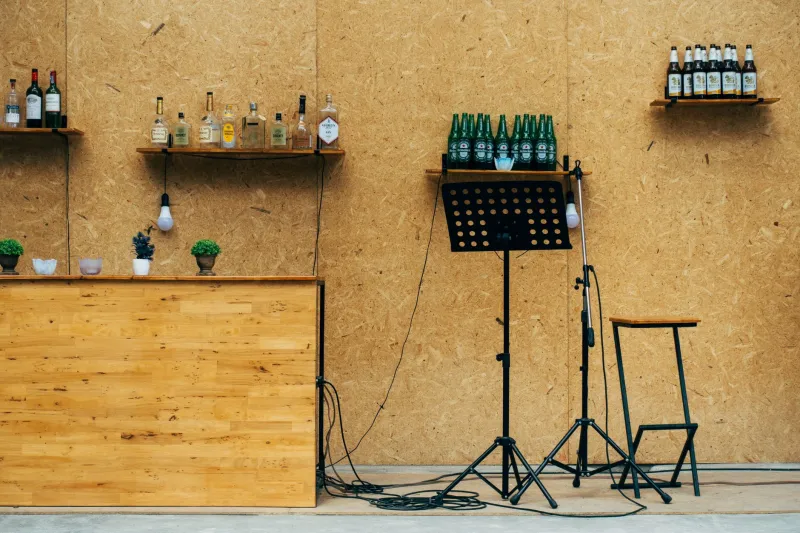
There's a particular kind of quiet that settles over a pub at half nine on a Friday that didn't used to exist. Not the comfortable quiet of a midweek lull, or the peaceful hush of a Sunday afternoon winding down. This is a different kind of silence — the sound of a room that should still be full, emptying itself before anyone's called last orders.
Landlords across the country have noticed it. Regulars have noticed it. Even the ones leaving early have noticed it, though they'd struggle to tell you exactly why they're heading for the door while there's still drink in their glass.
Something shifted. The question is what.
The Session That Disappeared
Cast your mind back twenty or thirty years. A Friday night in any decent local meant bodies pressed three deep at the bar from seven o'clock onwards, and the bell for last orders at eleven was less a signal to drink up and more a starting pistol for a final frantic round. The landlord didn't need to ask twice. You were there until you were told to leave, and even then you lingered on the pavement for another twenty minutes.
That culture — the long, unhurried, open-ended session — has largely vanished. In its place, something more managed and more finite has taken over. People arrive with a plan. They stay for a fixed window. Then they leave, often before the evening has properly found its feet.
Terry Aldridge has been pulling pints at the same Derbyshire pub for nineteen years. He's watched the shift happen in real time. "It's not that people don't come in," he says. "They do. Friday and Saturday, we're still busy at seven. But by nine, nine-thirty, I'm looking at a room that's half what it was an hour ago. Used to be the opposite — it'd build all night. Now it peaks and drops off like a wave."
When the Pub Became a Restaurant
Part of the explanation lies in what the pub has become, and what it's been quietly encouraged to become over the past two decades. The gastropub revolution — however much good it did for the quality of a ploughman's — fundamentally reframed the pub as a venue for eating rather than a place for drinking. And meals, unlike pints, have a natural conclusion.
You finish your food, you have a polite drink, and then the social logic of the evening suggests you go somewhere else or go home. The pub stops being the destination and becomes the first act. When the main event is a Sunday roast or a Friday night curry, the drinking is incidental. And incidental drinking doesn't last until eleven.
This isn't the landlords' fault. The economics of running a pub in the modern era have pushed many of them towards food because food keeps the margins alive when wet sales alone can't cover the bills. But the unintended consequence is a clientele that thinks of the pub the way it thinks of a restaurant — you book, you come, you eat, you leave.
The Living Room That Got Better
Then there's the other living room. The one at home.
For most of the twentieth century, the pub had a significant practical advantage over staying in: it was more entertaining. The telly offered three channels and an early close. The pub offered warmth, noise, company, and the unpredictable pleasure of other people. The competition wasn't even close.
That calculation has been completely reversed. A 65-inch screen, a streaming subscription with more content than anyone could watch in a lifetime, a decent sound system, and a fridge full of supermarket lager at a fraction of pub prices — the home entertainment offer is now, by almost every measurable standard, superior to anything a pub can provide on a quiet Tuesday.
So why go out at all? For many people, the answer increasingly is: for a specific reason, for a specific amount of time. Not to simply be somewhere and see what happens, which is how pub culture used to work, but to fulfil a social obligation and then retreat to comfort.
"People treat it like an outing now," says Sarah Booth, who runs a popular free house in Cheshire. "They come in, they have a lovely time, and then they go home to watch something. It's not that they're not enjoying themselves. It's that they've got somewhere better to be by ten o'clock."
The Destination Problem
There's a phrase that pub industry consultants use that tells you everything: the destination pub. The idea that a pub needs to offer something — a reason to make the journey, a hook, an experience — in order to draw people in.
The problem with destination pubs is that they require a decision. You have to want to go there specifically. You have to plan, perhaps book, probably drive. And things you plan are things you can also un-plan. The casual drift into the local on a Friday because it was on your way home, because Dave from the depot was usually in, because there was nowhere else obvious to be — that frictionless habit is almost entirely gone.
When the pub was simply there, as a fixture of daily life rather than an optional excursion, people stayed longer because leaving meant going back to something less interesting. Now it means going back to the sofa, the streaming queue, the phone. The pub has to compete for your evening against entertainment systems specifically engineered to keep you watching for one more episode.
It's not a fair fight.
What Last Orders Used to Mean
The bell at eleven wasn't just a signal to finish your drink. It was a marker in the social day, a shared punctuation point that the whole community oriented itself around. The fact that it came late — later than you probably needed it to, if you were honest — meant that the evening had room to breathe, to develop, to take unexpected turns.
Conversations that began at eight o'clock were still going at quarter to eleven because there was no reason to leave before you had to. And in that extended, unhurried time, things happened. Friendships deepened. Arguments got resolved. Plans got made. The chemistry of a pub at full stretch, late in the evening, produced a particular kind of social magic that simply cannot be replicated in a two-hour window before everyone heads home to Netflix.
We didn't just lose the late night. We lost everything that grew in it.