Ink on the Glass: The Handwritten Pub Notice That Knew More About Your Street Than Any Newspaper
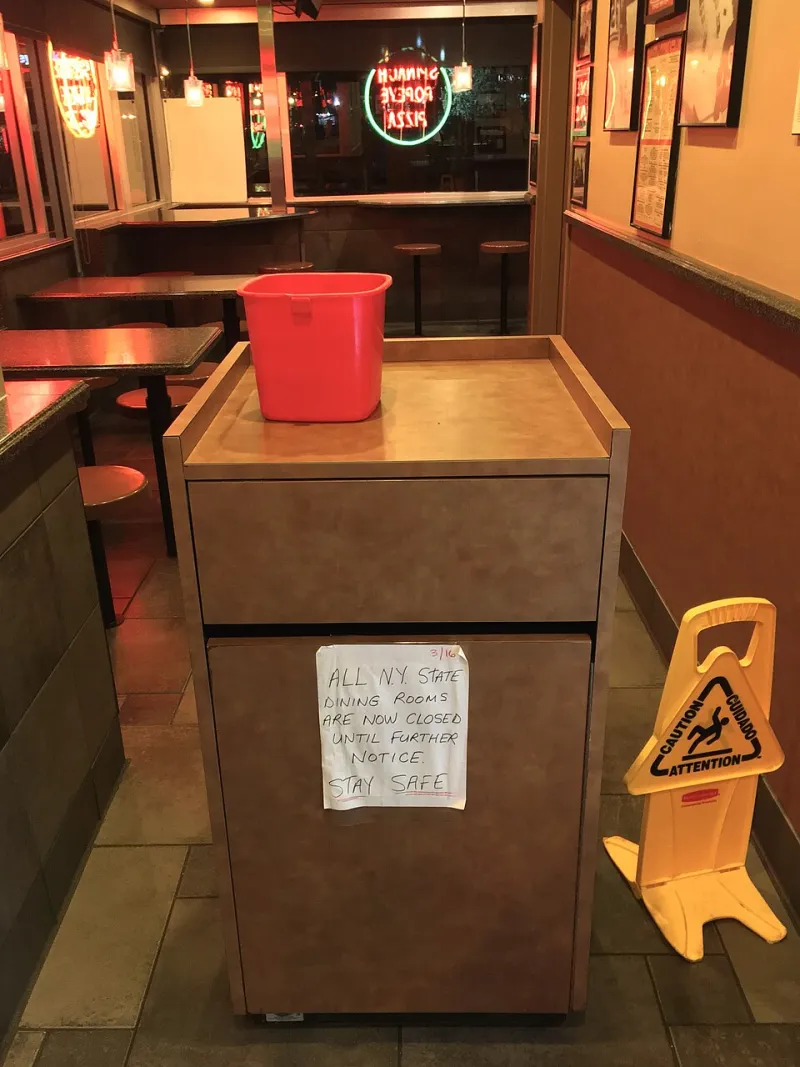
Photo: Andre Carrotflower, CC BY-SA 4.0, via Wikimedia Commons
I want you to picture something. You're walking down a high street — not the one it is now, with the payday loan shops and the vape outlets and the third estate agent in a row — but the one it was twenty or thirty years ago. And as you pass the pub, you do something entirely natural: you slow down slightly and have a quick squint at whatever's been taped to the inside of the window.
Maybe it's a sheet of A4, handwritten in marker pen, announcing that the pub will be showing the match on Saturday and doors open at midday. Maybe it's a smaller notice, written in biro on the back of a beer delivery receipt, letting you know that Sunday's meat raffle has been moved to three o'clock on account of the christening in the function room. Maybe it's something more sombre — A collection will be held Thursday in memory of Derek. All welcome — and you make a mental note to mention it to someone who knew him.
You didn't need to go inside. You didn't need to be a regular. You just needed to walk past, and the pub told you what was happening in your community.
That, in a single image, is what we've lost.
The Window as Noticeboard
The handwritten pub notice is one of those things that was so ordinary, so unremarkable, that almost nobody thought to document it. Social historians have written extensively about pub architecture, licensing law, the evolution of the beer garden. But the piece of paper taped to the window? Barely a footnote.
And yet it was one of the most important communication tools that working-class British communities possessed for the better part of a century. Before social media, before email, before even the widespread availability of photocopiers, the pub window was where you found out what was going on. Not just what was happening in the pub — though that too — but what was happening in the neighbourhood that the pub served.
Wakes were announced there. Fundraisers. Benefit nights for families who'd had a rough go of it. Local band gigs that would never make it into the listings section of the local paper. Amateur boxing nights. Talent contests. New Year's Eve arrangements. The annual summer trip to the seaside, with details of the coach departure time and the cost per head.
The window was a public service, and it was free to read.
The Particular Artistry of the Pub Notice
There was a craft to writing a good pub notice, though nobody would have called it that at the time. The best ones were economical — they told you everything you needed to know in as few words as possible, because space was limited and biro ink ran out. They used underlining and capital letters the way a modern designer might use hierarchy and bold type, to direct the eye to what mattered most.
Some landlords had a gift for it. Their notices had a voice — laconic, warm, occasionally funny — that reflected their own personality. Football Sunday. Kick-off 3pm. Behave yourselves. Others were more functional, almost bureaucratic in their precision. A few were barely legible, written in haste on whatever came to hand, which somehow made them feel more urgent and human.
The physical variety was part of the charm. Index cards. The backs of envelopes. Sheets torn from exercise books. Proper A4 if someone had been organised enough to plan ahead. The occasional laminated card for events that happened every year, slightly yellowed and curling at the edges. Each one told you something about the circumstances of its creation — whether the event had been planned weeks in advance or dreamt up that morning over a cup of tea.
What the Notice Knew That Facebook Doesn't
Here's the fundamental difference between a handwritten notice in a pub window and a post on a local Facebook group, or a community WhatsApp message, or whatever digital alternative you'd like to name.
The pub notice was there. Physically present on your route through the neighbourhood. You didn't have to seek it out, subscribe to it, or remember to check it. It intercepted you. It assumed you were part of the community it was addressing, because you were walking down the same street as the pub, and that was enough.
The digital alternatives require you to have already opted in. You have to know the Facebook group exists, join it, remember to look at it, and then navigate an algorithm that may or may not show you the relevant post depending on how many people have already liked it. The pub notice had no algorithm. It showed you everything, in the order it was stuck to the window, and it trusted you to decide what was relevant to you.
More than that, the pub notice was a shared object. Everyone who walked past saw the same thing. It created a common information landscape — a baseline of shared knowledge about what was happening in the neighbourhood — that is genuinely difficult to replicate digitally. When you bumped into someone at the bus stop and said did you see they're showing the match on Saturday, you knew they'd probably seen it too. It was a conversation starter built into the fabric of the street.
The Slow Disappearance
The handwritten notice didn't vanish overnight. It retreated gradually, as pubs acquired websites and then Facebook pages and then Instagram accounts, and the window notices were replaced by printed posters from the brewery marketing department — glossy, generic, interchangeable. The same poster advertising the same seasonal lager in the window of every pub in the estate agent's portfolio, telling you nothing about the specific pub, the specific community, or the specific events that made that particular local worth walking past.
Some pubs still do it — you'll occasionally spot a handwritten notice in a window, usually in a proper old-school local that hasn't been got at by a brand consultant. And when you see one, there's an almost involuntary reaction: you slow down and read it. Because some instinct, buried under years of digital noise, still recognises it as information that's meant for you.
The Community Pulse You Could Read From the Pavement
What the pub notice really represented was something quite profound: a community's willingness to communicate with itself in public, without mediation, without a platform, without anyone's permission.
You didn't need a smartphone to read it. You didn't need an account. You didn't need to be connected to anything except your own neighbourhood. You just needed to be walking down the street, which — if you lived there — you almost certainly were.
The loss of the handwritten pub notice is, in miniature, the story of everything that's gone wrong with community communication in Britain. We have more tools for connecting with each other than at any point in human history. We have less actual connection. We've traded the notice in the window — immediate, local, human, free — for platforms that harvest our attention and sell it back to us as engagement.
Somewhere, right now, there's a wake on Thursday that half the neighbourhood doesn't know about because the pub that would have announced it is a Tesco Express.
That feels like the right place to end.