The Midway Pint: How One Stop Between Work and Home Kept Britain Quietly Sane
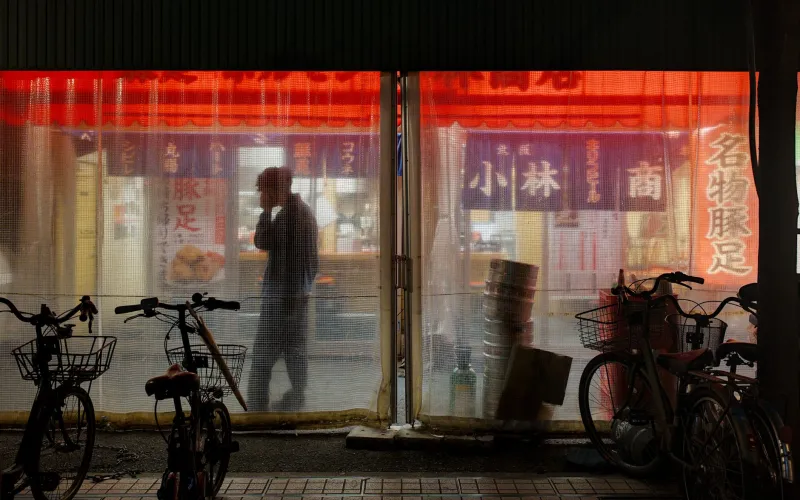
Ask anyone who worked in a mill town, a pit village, or a city office block before the turn of the millennium, and they'll likely tell you about the pub that sat halfway between the factory gates and the front door. Not the pub they went to on a Friday night. Not the pub for celebrations or commiserations. The other one — the quiet one, the functional one, the one that served a purpose so obvious nobody ever thought to articulate it.
You went in on the way home. You had a pint. You talked to whoever was there. You left. You were, by some mechanism that no one ever properly explained, slightly more ready to walk through your own front door than you would have been without it.
The Decompression Chamber Britain Built for Itself
The industrial towns of northern England, South Wales, and the Scottish central belt didn't build their pubs by accident. The geography of working-class life in the nineteenth and early twentieth centuries was mapped, in part, around the movement of workers — and the pub sat at specific points along that map with something approaching deliberate intent.
 Photo: Scottish central belt, via www.nachhaltiges-reisen.org
 Photo: South Wales, via image.slidesharecdn.com
A man finishing a shift at a foundry or a coalface didn't arrive home in a state that was immediately compatible with domestic life. He was dirty, he was exhausted, he was still carrying the noise and the weight of whatever the last eight hours had contained. The home — whatever its size and warmth — was not always equipped to absorb that transition instantly. His wife had her own day behind her. The children had needs that didn't pause for his readjustment.
The halfway pub understood this. It asked nothing of you except that you stand at the bar and be present. It didn't require conversation, though conversation was available. It didn't require you to perform a version of yourself that was ready for the evening ahead. It simply gave you twenty minutes — sometimes forty, sometimes an hour — in which you could exist in a state between one world and the other.
Calling it a decompression chamber sounds clinical. It wasn't clinical. It was a pint and a bit of quiet and the company of men who were doing exactly the same thing.
The Unacknowledged Institution
Speak to men who grew up in mining communities in County Durham or the South Wales valleys, and the halfway pint appears in their accounts of working life as naturally as the shift itself. It wasn't a secret, exactly, but it wasn't discussed either. It was simply part of the structure of the day — as unremarkable and as necessary as the walk itself.
 Photo: County Durham, via unitedstatesmaps.org
Women knew about it, of course. Most of them had grown up watching their own fathers do the same thing. There was a negotiated understanding that ran through generations of working-class marriage: you go in, you have your pint, you come home. Don't make it two pints. Don't make it a lock-in. Come home. The contract was rarely spoken aloud and rarely broken, because both parties understood what it was for.
What it was for, at its simplest, was the preservation of a workable domestic life. A man who came straight home from the pit — still agitated, still carrying the physical and psychological residue of eight hours underground — was harder to live with than a man who'd had forty minutes to let it settle. The pub wasn't a refuge from family life. It was, paradoxically, what made family life sustainable.
The City Commuter's Version
The tradition didn't belong only to heavy industry. Move forward a few decades, to the city offices of the 1960s and 1970s, and you find a different version of the same ritual playing out on the walk from the Tube station to the semi-detached in the suburbs.
The commuter's halfway pub was a slightly smarter affair — saloon bar rather than public bar, perhaps, or a place that served a passable cheese roll alongside the bitter. But the function was identical. You stopped. You had a drink. You talked to whoever was there, which might be the same three faces every Tuesday, or might be a shifting cast of people you recognised without quite knowing by name.
The conversation in these places tended toward the safely impersonal — football, the news, mild complaints about the bus service — but that was precisely the point. You weren't looking for depth. You were looking for a few minutes of low-stakes human contact that required nothing of you and gave you back something you couldn't quite name but definitely needed.
Management consultants have spent decades trying to understand why workplace productivity and mental wellbeing declined so sharply in the 1990s and 2000s. They produced frameworks and strategies and wellness initiatives and flexible working policies. None of them appear to have considered that the pub on the corner of Station Road, which closed in 1994 and became a Tesco Express, might have been doing more for the mental health of the local workforce than anything that replaced it.
What We Lost When the Route Changed
The halfway pub required a particular kind of commute to function — one that was made on foot, or at least partly on foot, through a neighbourhood that had its own geography and its own rhythm. The car commute killed it first. When you drive home, there is no halfway point that you can step into and step out of. There is only the drive, and then the driveway, and then the front door.
The working-from-home revolution has, in a different way, finished what the car started. There is no journey to interrupt. There is no distance between work and home because home is work, and the boundary between them — always porous — has now largely dissolved.
What's gone with it is the transition itself. The walk, the pause, the pint, the conversation. The small act of existing for twenty minutes in a space that was neither work nor home, that demanded nothing and provided just enough. We've replaced it with nothing, or with a scroll through the phone in the kitchen before dinner, which is not the same thing and everyone knows it isn't.
The Ritual Nobody Mourned
We tend to mourn pub closures in aggregate — the statistics, the economic arguments, the cultural loss in general terms. What we mourn less often are the specific, unremarkable rituals that those pubs contained. The halfway pint was never glamorous. It was never the stuff of nostalgia in the conventional sense. Nobody wrote songs about it or made films about it or put it on a heritage plaque.
But it worked. It was a small, practical, human solution to the problem of how you move between the different versions of yourself that a day requires. It cost very little, it asked very little, and it quietly kept a great many people functioning.
Somewhere between the car park and the wellness app, we forgot that sometimes the most useful thing a building can do is simply be there, halfway between where you've been and where you're going, with a pint on the bar and no questions asked.