Where Conversations Began: The Simple Bench That Civilised Britain's Streets
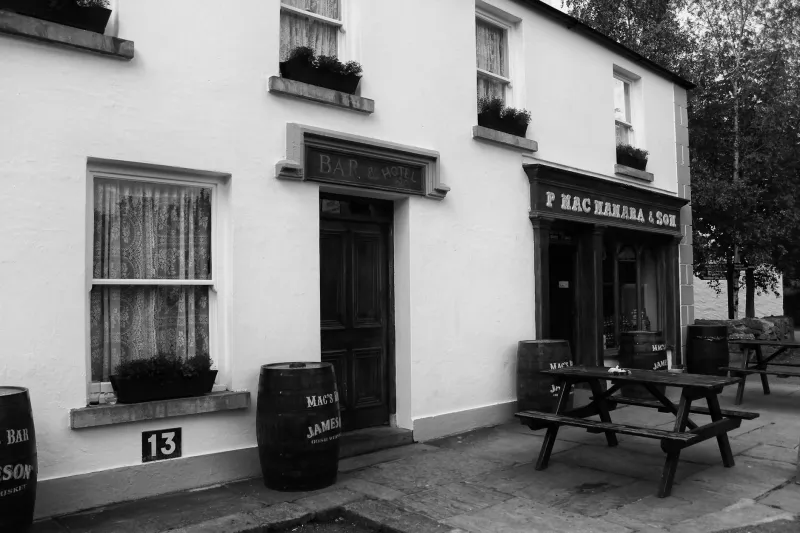
The Democratic Seat
It wasn't much to look at — a simple wooden bench, probably painted green or black, bolted firmly to the front wall of the pub with no ceremony or fanfare. No cushions, no umbrellas, no table service. Just a place to sit outside with your pint when the sun finally showed its face, or when the inside got too smoky, too loud, or too familiar.
The pub bench was Britain's most egalitarian piece of street furniture. It didn't discriminate by age, class, or spending power. The company director nursing a whisky sat next to the bin man with his bitter, both watching the same street, both equally entitled to the space. It was first-come, first-served democracy in its purest form — no reservations, no dress codes, no minimum spend requirements.
The Theatre of Ordinary Life
From that bench, you could watch Britain happen. The morning dog walkers establishing their territorial routes, the school run chaos that revealed which families were holding it together and which were barely hanging on, the evening commuters trudging home with their different weights of exhaustion. It was street-level anthropology, conducted with a pint in hand and no academic pretensions.
The bench became a viewing gallery for the small dramas that make up community life. You'd see the couple having the row they thought was private, the teenager trying to work up courage for something important, the old boy who walked the same route every day but was walking it a little slower this week. These weren't intrusions — they were the natural observations of people who shared the same patch of pavement, the same small corner of the world.
Where Awkwardness Became Conversation
The magic of the pub bench lay in its ability to transform strangers into temporary companions. Squeezed together on a narrow wooden seat, people had to acknowledge each other's existence. A nod became a comment about the weather, which became a conversation about the changes in the neighbourhood, which sometimes became the beginning of a friendship that lasted decades.
It was particularly powerful for the socially awkward — those who struggled with the confident swagger required for bar conversation but could manage the gentler interaction of shared bench space. Side-by-side sitting removed the intensity of face-to-face contact while still providing human connection. Many a shy soul found their voice on a pub bench before they ever found it inside.
The Courtship Corner
For generations of British couples, the pub bench served as neutral territory for those crucial early dates. Too public for serious misbehaviour, too relaxed for formal awkwardness, it struck the perfect balance between safety and intimacy. You could gauge compatibility by how comfortable the silences were, how naturally the conversation flowed, how well your drinking paces matched.
The bench witnessed thousands of first kisses, tentative hand-holdings, and nervous declarations of intent. It also saw its share of gentle letdowns and mutual realisations that some sparks simply weren't meant to catch fire. Either way, it provided a stage for romance that was quintessentially British — unpretentious, slightly weather-dependent, and always with the option of escaping inside if things went badly wrong.
The Wisdom of Wood and Wall
Older regulars treated the bench like an extension of their living room, a place to hold court with whoever happened to be passing. These unofficial mayors of the pavement dispensed local knowledge, settled minor disputes, and provided running commentary on everything from council planning decisions to the state of modern football.
Their presence transformed the bench from simple seating into a community institution. Newcomers to the area would find themselves drawn into conversations that began with directions and ended with invitations to the local quiz night. The bench became a bridge between the pub's indoor regulars and the wider neighbourhood, a place where the local's social circle expanded naturally and organically.
The Death of Simplicity
Today's pub outdoor spaces feel like pale imitations of what we lost. The branded 'beer gardens' with their matching furniture sets, the 'al fresco dining areas' with their laminated menus and table service, the sanitised 'outdoor terraces' with their carefully curated atmospheres — they're all trying too hard, promising too much, delivering too little.
The simple bench asked nothing of you except that you sit down. No booking required, no dress code enforced, no minimum spend demanded. You brought your own drink, made your own conversation, and left when you felt like it. This simplicity was its strength — it removed barriers rather than creating them, encouraged spontaneity rather than planning.
The Regulatory Retreat
The bench's disappearance wasn't entirely natural death — it was often assisted by the steady accumulation of regulations, concerns, and complications that make modern pub management such a minefield. Licensing restrictions, insurance concerns, anti-social behaviour fears, and the general risk-averse culture that pervades contemporary business all conspired against the humble bench.
Why maintain simple outdoor seating when you could create a proper 'dining area' that generates more revenue per square foot? Why risk the complications of unsupervised outdoor drinking when you could control the experience through table service and defined boundaries? The bench became a casualty of the professionalisation of British pub culture.
The Irreplaceable Loss
What we lost with the pub bench wasn't just a place to sit — it was a particular kind of social space that encouraged particular kinds of interaction. The forced proximity that led to unexpected conversations, the shared experience of watching the world go by, the democratic access that made outdoor drinking available to everyone rather than just those who could afford table service.
The modern alternatives, for all their comfort and commercial logic, can't replicate the pub bench's greatest asset: its complete lack of pretension. It was what it was — a wooden seat outside a pub — and that honesty created possibilities that more sophisticated outdoor dining experiences somehow miss.
The Memory of Simple Pleasures
Perhaps the pub bench's greatest legacy is reminding us that the best social innovations are often the simplest ones. No designer conceived it, no focus group tested it, no marketing department promoted it. It existed because someone, somewhere, thought it might be nice to sit outside the pub on a sunny day, and that simple human impulse created something beautiful.
In our rush to create Instagram-worthy outdoor spaces and Pinterest-perfect beer gardens, we forgot that sometimes the most profound social experiences happen on the humblest stages. The pub bench was Britain's street furniture at its finest — functional, democratic, and utterly without airs. We replaced it with something more profitable, and called it progress.