Nobody Lives Here Anymore: The Day the Pub Stopped Having a Heartbeat
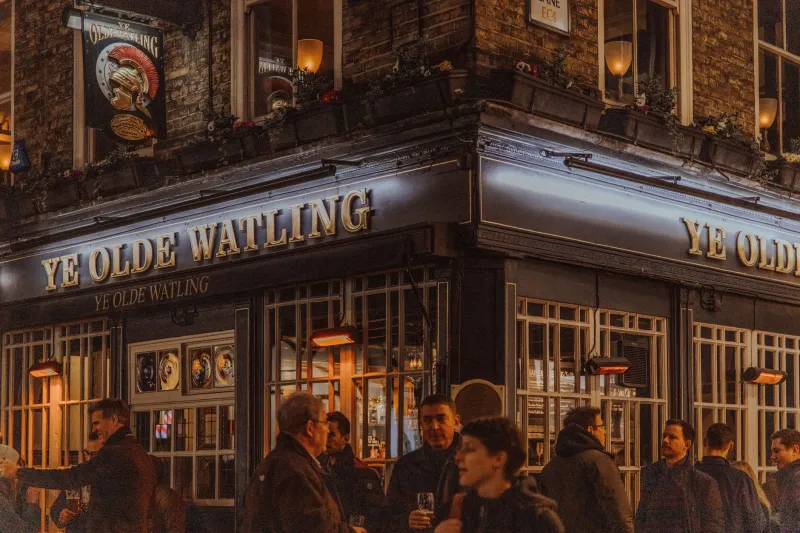
There used to be a light.
Not a sign, not a floodlit car park, not the blue flicker of a television through net curtains. Just a light — warm, ordinary, domestic — burning in the upstairs window of the pub after closing time. It meant someone was home. It meant the building had a pulse even when the doors were bolted. It meant that if something happened on the street outside — a fight, an accident, a neighbour taken ill — there was someone to knock for.
That light is gone from most British pubs now. The flat above the bar is either empty, converted to storage, or let to a tenant who has nothing to do with the place downstairs. The pub closes at eleven and becomes, immediately, just a building. Nobody lives there. Nobody is responsible for it in the way that only living somewhere makes you responsible.
This is not a small thing. This is, in fact, close to the whole thing.
The Landlord as Institution
The resident landlord — and his wife, who usually did at least as much of the actual work — was not merely a manager with accommodation. He was the human infrastructure of the pub. He knew who drank what before they reached the bar. He knew whose marriage was in trouble, whose son had just started an apprenticeship, whose mother had gone into a home. He knew because he was there — not for eight-hour shifts, but continuously, in the way that you're only ever truly present when a place is also your home.
This knowledge wasn't gathered deliberately. It accumulated the way all local knowledge does: through proximity, repetition, and the slow accumulation of small observations made over years. The landlord didn't keep notes. He just paid attention, in the way that people who genuinely care about their surroundings always do.
The result was a kind of informal intelligence service that served the community in ways nobody ever formally acknowledged. He knew who needed watching and who needed leaving alone. He knew when to extend credit and when that would be a kindness to nobody. He was, in the most practical sense, a custodian — not just of a licensed premises, but of the social fabric of the street.
How the Chain Came to Town
The erosion of this model happened gradually, then suddenly. The brewing giants had always owned tied houses, but the relationship between brewer and landlord was, for much of the twentieth century, still a human one. The tenant landlord paid rent to a brewery, sourced his beer from them, and in return ran the place as he saw fit. It wasn't perfect — tied tenancies could be exploitative, and the power imbalance was real — but it preserved the essential thing: a person whose name was above the door and whose home was above the bar.
The Beer Orders of 1989, introduced by the Thatcher government to break up the brewing monopolies, were intended to create more competition and better choice for drinkers. In practice, they accelerated consolidation in ways nobody fully anticipated. The major brewers divested their pubs, which were snapped up by newly formed pub companies — pubcos — with no brewing heritage and no particular attachment to the communities their estates sat in. The pub became, in the language of these companies, a managed unit.
Managed units have managers. Managers have shift patterns, KPIs, and line managers of their own. They are not, in any meaningful sense, the landlord. They may be perfectly pleasant, competent, and hardworking. They are also, almost by definition, temporary. The average tenure of a managed pub general manager is somewhere under two years. The average tenancy of a committed tied landlord, in the old model, was closer to a decade. In some cases, much longer.
What Two Years Cannot Build
Belonging takes time. Trust takes time. The kind of knowledge that turns a pub into a community institution — the knowledge of names, histories, patterns, and needs — cannot be assembled in a year or two and then transferred to the next incumbent like a set of keys.
This is the thing the corporate model has never understood, or perhaps has simply chosen not to value. The relationships that made a pub matter to its regulars were not a feature of the building or the beer range or the menu. They were a feature of the specific person behind the bar, accumulated over years of showing up, listening, and being present in the fullest sense of the word.
When that person left — or was moved on, or made redundant when the area manager decided the numbers didn't stack up — those relationships didn't transfer. They dissolved. The regulars might stay for a while, out of habit or loyalty to the building itself. But the thing that had made them regulars — the sense of being known, of mattering to someone who would notice your absence — was gone.
The Light in the Window
There are still resident landlords in Britain. Not many, but they exist — in free houses, in community-owned pubs, in the last of the genuinely independent locals that haven't yet been absorbed or closed. If you're lucky enough to drink in one, you'll recognise it immediately. The difference isn't in the décor or the beer. It's in the quality of attention.
Somebody knows your name. Somebody asks after your knee. Somebody mentions, without making a thing of it, that they noticed you weren't in last week. It feels, in the best possible way, like being a guest in someone's home — because you are. The pub is their home. That changes everything about how it's run and how it feels to be in it.
We have spent thirty years building a hospitality industry that is more efficient, more consistent, and more professionally managed than anything that came before it. We have also, in the process, removed the thing that made people want to be there in the first place.
The light in the upstairs window wasn't just a light. It was proof that somebody gave a damn. And the pubs that still have it — the ones where someone actually lives, actually cares, actually knows your name — are the ones that will outlast everything the pubcos have built.
You can manage a venue. You cannot manage a home.