The Nod That Nobody Gives Anymore: How Pubs Once Turned Strangers Into Locals
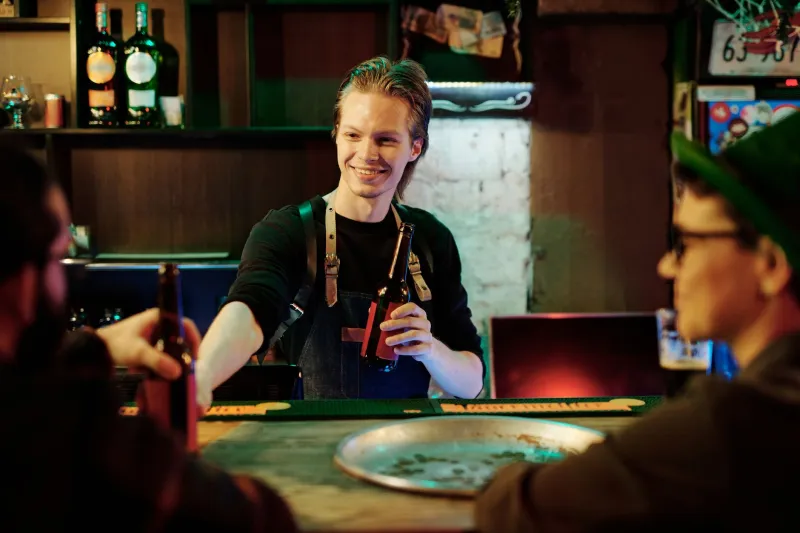
Margaret Holt moved to a village outside Shrewsbury in 1987, knowing nobody. She was thirty-two, recently divorced, starting over in a place where everyone seemed to have known each other since primary school. By her own admission, she wasn't sure it was going to work.
Then she walked into the local pub.
"The landlord — Derek, his name was — he clocked me on my second visit," she says. "Just said, 'You're the one who's taken the cottage on Birch Lane, aren't you?' And I said yes, and he said, 'Right, this is Pauline, she lives two doors from you, and this is Frank who does the allotments.' And that was it. I was in."
Within a month, Margaret had a regular stool, a standing invitation to the Thursday quiz team, and more genuine friends than she'd had in ten years of living in a city. She didn't join a club or attend a community event or sign up for anything. She just kept going back to the same pub.
"The pub did it," she says simply. "I didn't have to do anything. The pub just absorbed me."
The Alchemy That Nobody Documented
What Margaret describes is something that thousands of people across Britain experienced in the latter half of the twentieth century, and almost nobody thought to write down because it seemed too ordinary to be worth recording. The pub's capacity to take a stranger and, through a series of small, unremarkable interactions, turn them into a local was so reliable and so consistent that it was simply taken for granted.
Look at it more closely, though, and it was genuinely remarkable. No formal process. No committee. No welcome pack. Just a set of unwritten social protocols — the nod of recognition on the second visit, the first-name introduction from the landlord, the casual pull into a conversation that was already happening — that added up, over a matter of weeks, to belonging.
The landlord was central to this. Not as a manager or a host in any corporate sense, but as a human switchboard. A good landlord knew who was new and who was established, who might get on with whom, and when to make the introduction that would set things in motion. It wasn't a job description. It was just what you did when you were the keeper of a local.
The Regulars Who Did the Work
But it wasn't only the landlord. The regulars themselves were part of the mechanism.
In a pub with a genuine community, newcomers were a point of interest rather than an intrusion. Who's that? Where are they from? What brings them here? These questions weren't nosiness — they were the beginning of the integration process. A new face at the bar was an opportunity: for gossip, yes, but also for connection, for the slight expansion of the social world that keeps a community from turning inward and stale.
Barry Nokes spent forty years drinking in the same Sheffield local before it closed in 2019. He remembers the unspoken code around new arrivals with the precision of someone who'd lived it. "You'd let them settle in first," he says. "First visit, you'd leave them be. Second visit, you'd catch their eye, give a nod. Third visit, you'd say something — nothing heavy, just a comment about the game or the weather. By the fourth visit they were part of it without anyone having made a big deal about it."
The genius of this approach was its complete lack of pressure. Nobody pounced on the newcomer. Nobody made them feel assessed or welcomed in a way that required a response. The process was so gradual and so natural that the newcomer barely noticed it happening. One day they simply realised they were a regular.
What Changed
Modern pubs, even the good ones, have largely lost this capacity. Ask landlords why and you get a range of answers, none of them entirely satisfying on their own but all pointing in the same direction.
The transience of modern life is part of it. People move more often, commute further, and have social circles that are geographically scattered rather than rooted in a single neighbourhood. The idea of the local as your local — the one place within walking distance where your social world is concentrated — has been eroded by mobility and by the explosion of choice.
When your friends live in four different postcodes and you see them by arrangement rather than by proximity, the neighbourhood pub loses its role as the natural meeting ground. You don't need it to make friends with the people on your street because your friends aren't on your street.
The commercialisation of pub culture hasn't helped either. The shift towards table service, bookings, and a more restaurant-like atmosphere has subtly but significantly changed the social dynamics of the room. When you're seated at a table with your party, you're in a defined, closed social space. The bar — that great democratic strip of wood where strangers stood shoulder to shoulder and conversation flowed sideways — has been quietly demoted.
"You can't do the nod from a table," says Karen Whitfield, who runs a busy pub in Nottingham. "When everyone's seated and they've booked and they've got their menus, they're in their own bubble. I can introduce myself, I can be friendly, but I can't do what Derek used to do. The room doesn't work that way anymore."
The Stranger Who Stays a Stranger
The consequences of this loss are playing out quietly in communities across the country. New arrivals move into streets, into towns, into villages, and find no mechanism for absorption. There's no pub doing the quiet work of introduction. There's no landlord who knows everyone and can make the connection that changes things.
Instead, there are community Facebook groups full of people who've never met, and Nextdoor threads where neighbours argue about parking without knowing each other's names. There are streets where people have lived for a decade and remain, in any meaningful sense, strangers.
This isn't a small thing. The capacity to integrate newcomers — to make them feel that they belong, that they have a place, that the community has room for them — is one of the things that determines whether a place is genuinely a community or just a collection of houses.
The pub did this work for generations. It did it without fanfare, without funding, without anyone asking it to. It just happened, in the space between the bar and the tables, in the nod and the introduction and the pulled-in conversation, every evening that the doors were open.
Margaret Holt still lives in that village outside Shrewsbury. Derek the landlord has been gone for twenty years. The pub closed in 2021.
"I don't know how someone would do it now," she says. "Move somewhere new and find their people. I genuinely don't know. I was lucky. I had Derek."