Two Rooms, One Street: The Vanished Geography of the Public Bar and the Lounge
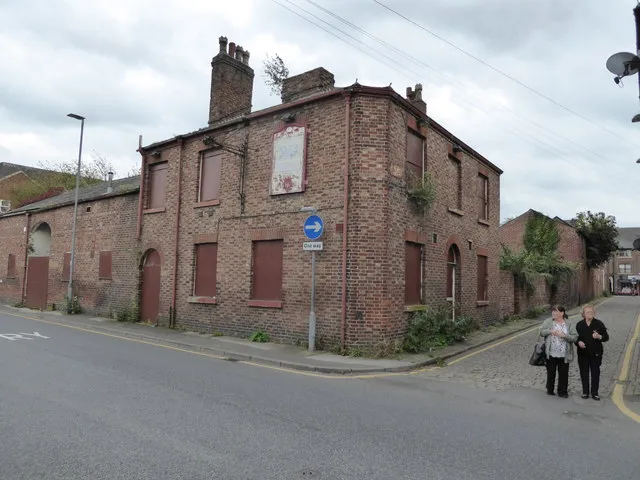
Photo: Jeremy Bolwell , CC BY-SA 2.0, via Wikimedia Commons
There is a pub I know, or knew, on a corner in a Midlands town. It had two doors on the same street, six feet apart, and they led to two different countries.
The left door took you into the public bar: bare boards, a dartboard, a fire that smoked, a telly bolted high in the corner, and a fug of cigarette smoke so thick in winter that the windows ran. The right door took you into the lounge: patterned carpet, padded benches, a proper fireplace, a vase of plastic flowers that never changed, and a silence so polite you could hear a crisp packet being opened three tables away.
Same building. Same landlord. Same beer, in the same glasses, at a different price.
A Doorway Was a Decision
We talk a great deal now about how divided Britain is, and usually we mean something political and abstract. But for most of the twentieth century, this country ran an extremely efficient class system at close quarters, and the pub was where you could see it working — not as a wound, but as a set of rooms.
Choosing your door was the first decision of the evening, and it wasn't a trivial one. It announced your trade, your accent, your clothes and your expectations in a single movement. The public bar was where you went in your work clothes, with your mates, to swear at the darts and argue about the football. The lounge was where you took your wife, your in-laws, or a young woman you were trying to impress. It was where you had a pint after a funeral.
And crucially — this is the bit people forget — nobody was obliged to choose one. Plenty of men drank in the vault on a Friday and the lounge on a Sunday. The rooms gave you range. They let you be a different version of yourself depending on the occasion, without ever leaving the building.
Two Prices, Two Worlds
The price differential was a penny or tuppence a pint, sometimes less. It sounds absurd now. But it was the most honest piece of pricing British retail ever devised: the lounge cost more because the lounge had carpet, chairs with backs, table service in some houses, and a fire that didn't smoke. You paid for the room, not the beer.
And because you paid for the room, the rooms stayed honest. The public bar could be loud and cheap and slightly rough, because that was its whole purpose. The lounge could be quiet and carpeted and a bit stiff, because that was its purpose too.
The Snug, the Vault and the Off-Sales Hatch
What the two-door pub really offered was a menu of degrees of company. The public bar for the full crowd. The lounge for a conversation. The snug — that little panelled cupboard of a room with room for four and a hatch to the bar — for the things that couldn't be said in front of anyone else. The vault, often standing room only, for the quick one before the bus.
Add the jug-and-bottle hatch, where a kid could be sent with a jug for a pint of mild to take home, and you had an entire social ecosystem running through one set of walls. Different rooms for different purposes, all sharing a cellar, a landlord and a set of glasses.
That is not segregation. That is infrastructure.
The Wall That Came Down
From the sixties onwards, the brewers discovered open plan. Knock through, raise the ceiling, rip up the boards, lay one enormous carpet, install one enormous bar, and call it a 'lounge bar' or, worse, a 'family room'. It was cheaper to staff, cheaper to heat, easier to sell, and it looked marvellous in the trade press.
Nobody was ever asked. There was no public inquiry into the demolition of the public bar. It simply happened, decade by decade, pub by pub, until a generation grew up who had never pushed open the left-hand door and had no idea it had ever existed.
The open-plan pub was sold as democratic. Everyone together, no divisions, one room for all. What it actually produced was a room that had to suit everybody and therefore suited no one. The darts crowd got turfed out of the way of the diners. The diners got a Sunday roast to the sound of twenty men shouting at a screen. The man who wanted a quiet word with his brother had nowhere to have it, so he stopped coming.
What Open Plan Actually Cost Us
Here is the conservative case against knocking the wall through, and I'll make it plainly: society is held together by institutions that give people a place to be ordinary together at a level they can cope with. The separate bars did that. They allowed a man to be sociable without being overwhelmed, to belong to a pub without having to perform for the whole room.
Remove the choice of rooms and you remove the choice of company. What's left is one big space with the telly on, and a clientele self-selecting for noise tolerance.
The Case for a Wall
I am not asking for a return to a penny price difference or a saloon bar with a dress code. Those days are gone and much of what went with them deserved to go.
But there is a reason Victorian and Edwardian publicans built pubs as a series of rooms, and it wasn't snobbery — it was an instinct for how human beings actually behave. We are different people at different hours. We want the crowd, and then we want the corner. The old pub understood that and gave us both, six feet apart, behind two doors on the same street.
The next time you walk into a knocked-through open-plan pub and feel, vaguely, that there's nowhere to sit — this is why. There's plenty of room. There's just nowhere to be.