The Confessional With a Beer Tap: When the Pub Held Britain Together in Its Worst Moments
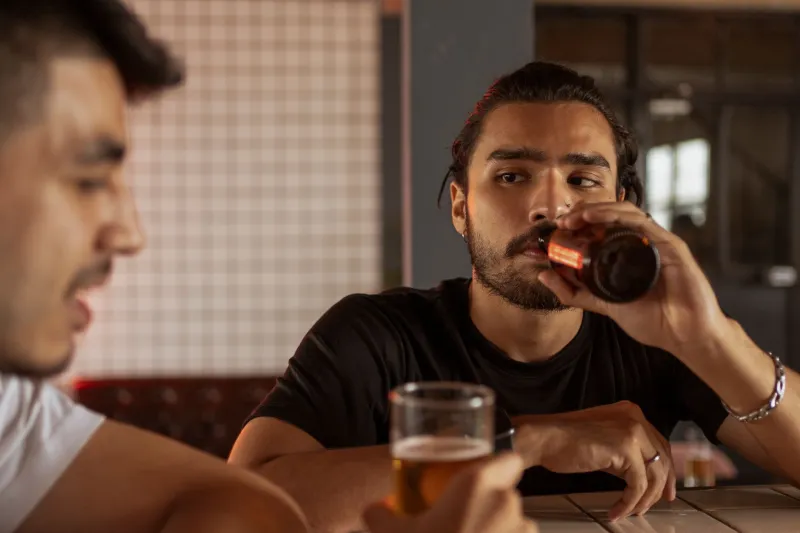
There's a scene that played out in pubs across Britain for the better part of three centuries, and almost nobody thought to document it because it seemed too ordinary to record. A man — it was usually a man, though not always — would come through the door at an unusual hour, sit at a particular spot at the bar, and order without making eye contact. The landlord would pour without asking questions. And for the next hour, or two hours, or however long it took, the pub would do what no other institution in British life has ever quite managed: it would simply be there.
No referral required. No six-week waiting list. No intake form asking you to rate your distress on a scale of one to ten. Just a glass, a counter, and someone on the other side of it who'd seen enough of life to know when to talk and when to say nothing at all.
The Third Space We Never Appreciated
Sociologists have a term — the "third place" — for the spaces in our lives that are neither home nor work. Pubs, libraries, barbershops, community centres: the locations where we exist as something other than employees or family members, where we're simply ourselves among others. The theory holds that these spaces are essential to psychological health, to civic life, to the sense that we belong to something larger than our immediate households.
British pubs were the supreme example of this, and their particular genius was that they provided something even most third places don't: genuine, consistent, longitudinal knowledge of the people who used them. Your landlord didn't just know your name. He knew your history. He knew you'd been through a rough patch two years ago and come out the other side. He knew which of your mates to call if things got serious. He knew, sometimes, before you'd said a word, that something was wrong.
That kind of knowledge takes years to accumulate. It cannot be replicated by an app, a chatbot, or a stranger on the end of a helpline, however well-meaning.
What People Actually Said at the Bar
Speak to anyone who worked behind a pub bar for any length of time and they'll tell you the same thing: you hear everything. Redundancies, affairs, bereavements, health scares, children gone wrong, marriages falling apart at the seams. Not delivered as formal disclosures, but woven into conversation, dropped into the gaps between rounds, sometimes barely spoken at all — just present in the way a person held themselves or stared at their glass.
The pub created the conditions for these revelations almost by accident. The slight formality of sitting at a bar — the physical barrier, the transactional relationship with the person serving — gave people just enough distance to say things they couldn't say face to face across a kitchen table. The ambient noise provided cover. The drink loosened the specific kind of British reserve that keeps real feeling locked away for years at a time.
And crucially, the regulars around you were neither strangers nor intimates. They were something rarer and more useful: known quantities. People who had no particular stake in your crisis, who weren't going to tell your wife or your mother, who could absorb what you said and reflect something back without the weight of family obligation distorting everything.
The Landlord as Accidental Counsellor
We've never properly acknowledged what we asked of pub landlords. Not just the long hours and the physical labour and the financial risk — though all of that was considerable — but the emotional work. The sustained, attentive, non-judgmental witnessing of other people's lives in their most difficult passages.
A good landlord developed, over years, a set of skills that any professional counsellor would recognise: active listening, the ability to hold silence without filling it, knowing when a person needed to talk and when they needed distraction, understanding the difference between someone having a hard week and someone genuinely in trouble. They did all of this without training, without supervision, and without any particular recognition that what they were doing was valuable.
Because it wasn't framed as support. It was framed as hospitality. And that framing — that comfortable fiction — was precisely what made it work. Nobody wanted to feel like a patient. Everyone could accept being a customer.
The Gap Left Behind
The closure of local pubs has been discussed almost entirely in economic and cultural terms: the loss of heritage, the damage to high streets, the disappearance of community anchors. These things matter. But the mental health dimension of what we've lost rarely gets the attention it deserves.
Britain has, by most measures, a serious problem with loneliness, with male emotional isolation in particular, and with the unwillingness of people — again, men especially — to seek formal help when they're struggling. We've built a mental health infrastructure that depends on people identifying themselves as struggling and actively reaching out. For large numbers of British men, that's a barrier they simply won't cross.
The pub crossed it for them. Not by design, not with any particular therapeutic intent, but because it was there, and it was familiar, and it asked nothing except that you showed up. The informal, incidental, deeply human support that happened across pub bars for generations was doing work that we're now trying to replicate with crisis lines and online forums and workplace wellbeing initiatives — and finding, repeatedly, that it doesn't quite translate.
What We Chose Instead
We didn't consciously decide to dismantle this system. Nobody voted to close the confessional with the beer tap. It happened through a thousand individual decisions — to stay home, to cut back on spending, to let the local go under without quite fighting to save it — that seemed reasonable in isolation and catastrophic in aggregate.
What we chose instead was privacy. The ability to struggle quietly, invisibly, behind closed doors and glowing screens, without anyone who knew us well enough to notice that something was wrong.
For some people, that privacy is a relief. For many others, it's just another word for being alone.
The pub knew the difference. And it kept the door open regardless.