Glass in Hand, Eyes on Screen: The Night the Smartphone Took the Last Seat at the Bar
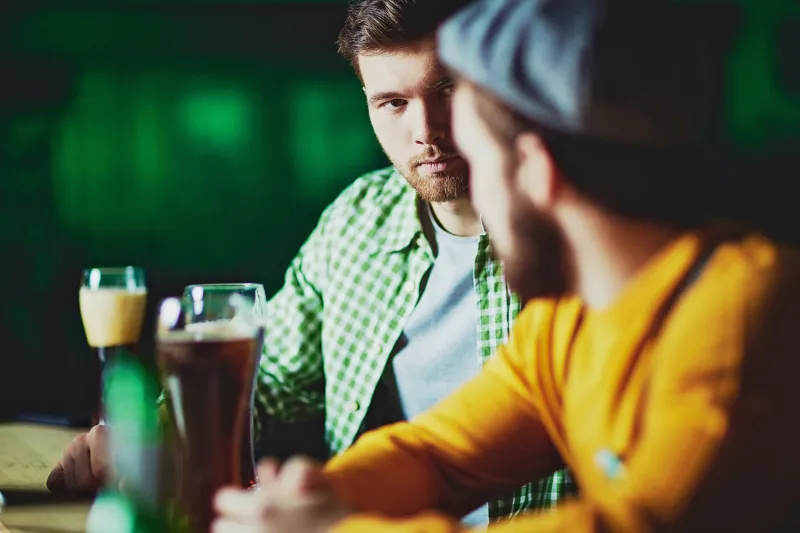
Picture the scene. A Friday evening, half seven. A pub that, ten years ago, would have been standing room only. The fruit machine flashes in the corner. The bar staff outnumber the customers. And at a table near the window, four people sit together in almost complete silence — not the comfortable silence of old friends at ease, but the disconnected quiet of four individuals each absorbed in the device in their hand.
They're in the pub. But they're nowhere near it.
This is the thing that's hardest to explain to anyone who didn't grow up with pubs as a genuine social institution: it's not that people have stopped going out. It's that they've found a way to go out and stay in at the same time. And the pub — the one place that was specifically designed to pull you into the present moment — is losing that battle badly.
What the Pub Was Actually Selling
The British pub was never really in the drinks business. Not primarily. The drinks were the ticket price. What the pub was actually selling was something far more valuable and far harder to replicate: enforced presence.
You walked through that door and you were there. The noise, the warmth, the particular cast of characters that populated your local on a given evening — all of it demanded your attention. You couldn't drift. You couldn't scroll. You had to engage with whatever was happening in the room, which meant engaging with the people in it, which meant — and this is the part we've almost entirely forgotten — being genuinely surprised by the direction a conversation might take.
That unpredictability was the whole point. The pub put you in a room with people you hadn't chosen from a curated list of contacts, forced you to navigate their moods and opinions, and occasionally — more often than you might expect — produced an evening that was genuinely memorable. Not because anything remarkable happened, but because you were fully present for the unremarkable things, and that turns out to be enough.
The Device That Offers Everything Else
The smartphone is, in almost every measurable sense, the pub's most effective competitor. And it isn't competing on price or atmosphere or proximity. It's competing on certainty.
The pub offers you a room full of unpredictable humans. The smartphone offers you a perfectly calibrated feed of content selected to match your existing preferences, a direct line to people you've already decided you like, and the option to disengage from anything uncomfortable with a single swipe. As a proposition, it's almost impossible to argue against.
Except that it's making us lonelier. And more anxious. And less capable of tolerating the kind of low-level social friction that, it turns out, is precisely what builds the relationships worth having.
The pub was never meant to be comfortable in the way a sofa is comfortable. It was meant to be alive — noisy, occasionally irritating, full of people saying things you didn't expect. That friction was the feature, not the flaw. The smartphone has convinced an entire generation that friction is something to be optimised away, and we're only beginning to understand the cost of that belief.
The Etiquette That Collapsed
There was a time — not so long ago, really — when pulling out your phone at the pub was considered mildly rude. Not in a formal, stated-rule sort of way, but in the unspoken social code that governs British public life. You were with people. You gave them your attention. That was simply what you did.
That code has dissolved almost completely, and its dissolution has had a cascading effect on pub culture that's difficult to overstate. Once it became acceptable to check your phone mid-conversation, the conversation itself changed. People started hedging their anecdotes, trailing off mid-thought, losing the thread. Why bother crafting a proper story when your audience might be half-reading a text message before you reach the punchline?
The art of pub conversation — and it was an art, however rough-edged — depended on mutual investment. You had to be genuinely listening, genuinely responding, genuinely present. The moment one person in the group opted out, the whole thing started to unravel. And once that became normal, the pub stopped being a place where conversations happened and became a place where people sat near each other while conducting their social lives elsewhere.
Eight O'Clock and Emptying
This, in part, explains a pattern that anyone who frequents pubs regularly will have noticed: the early exit. Pubs that once ran hot until last orders now start emptying around eight or nine in the evening, even on Fridays and Saturdays. The bell for last orders no longer triggers a rush to the bar. It triggers a search for coat and keys.
Part of this is economic — the cost of a round has climbed steeply, and people are making fewer of them. But there's something else happening too. The pub no longer has a monopoly on the feeling of being connected to other people. You can get a version of that feeling — thinner, more controllable, ultimately less satisfying — from your sofa, with your phone, at no cost and with no need to arrange a babysitter.
So people come out for a couple of hours, fulfil the social obligation, and retreat back to the curated comfort of their own feeds. The pub gets their bodies for the first part of the evening. The smartphone gets their minds for the rest of it.
Whether Any of This Can Be Reversed
A handful of pubs have tried. Phone-free evenings. Charging points removed. Signs politely requesting that devices stay in pockets. The results are mixed, and the resistance is telling — people don't like being asked to give up the thing that makes them feel safe in social situations, even when that thing is precisely what's making social situations feel unsafe in the long run.
The more honest answer is probably that the pub can't win this fight on its own. The smartphone is a structural problem, not a venue problem. It's rewired the way people relate to boredom, to silence, to the unpredictable company of strangers. The pub was built for people who were comfortable with all three. Increasingly, we're not.
What the pub offered — real presence, genuine encounter, the unscripted conversation that goes somewhere you didn't expect — is precisely what's missing from modern life. We just keep looking for it in the one place guaranteed not to provide it: a screen, held at arm's length, in a room full of people doing exactly the same thing.