First Pint, First Name: The Quiet Magic That Turned a Stranger Into a Regular
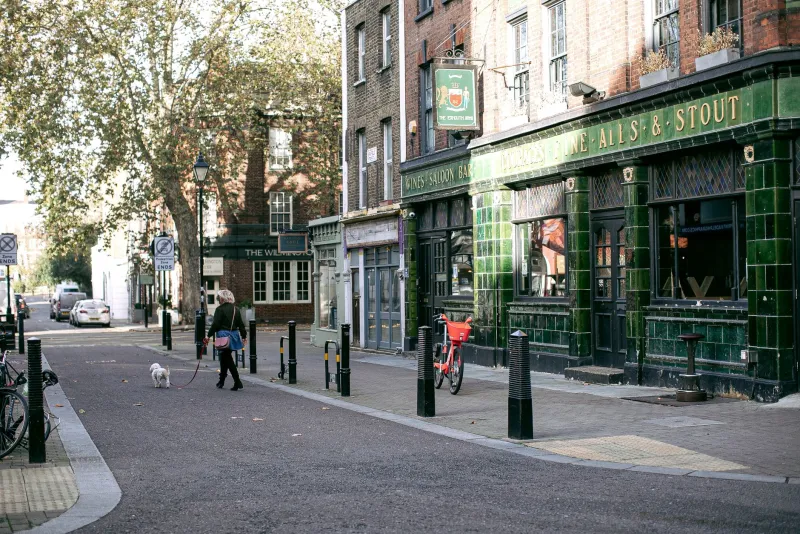
Moving house is, by most accounts, one of the more stressful things a person can do. New streets, new neighbours, new routines. The faces are unfamiliar. Nobody knows your name. You could walk to the shops and back and not exchange a single word with another human being. For the first few weeks, a new place can feel less like a home and more like a very elaborate waiting room.
For most of the twentieth century, there was a remedy. It wasn't advertised, and nobody officially recommended it. But it worked, reliably, in towns and villages and city streets all across Britain. You found your local. You went in. And you waited to stop being a stranger.
The Ritual of the First Visit
Anyone who's done it knows exactly how it feels. You push the door open — slightly too hard or not hard enough, because you don't know the weight of it yet — and for a moment, the room notices you. Not aggressively. Not hostilely. Just... notices. The barman clocks you. A couple of heads turn. You walk to the bar, order something, and find a seat.
That's the whole of it. That's the initiation. There's no formal welcome, no name badge, no introductory leaflet about the pub's history and values. You just sit there, drink your drink, and exist in the same space as people who belong here. And something, almost imperceptibly, begins.
The second visit is easier. By the third, someone might nod. By the fifth or sixth, someone asks if you've just moved in — because they haven't seen you before, and in a proper local, that means something. By the tenth, you might have a usual. By the twentieth, you're part of the furniture. Nobody voted on it. Nobody sent a welcome email. It just happened, through the accumulated weight of shared space and small exchanges.
An Integration Machine That Never Knew It Was One
The pub never described itself as a community hub. It didn't have a mission statement or a diversity strategy or a set of inclusion targets. It was just a room with beer in it. And yet, for generation after generation, it performed a social function that no council initiative has come close to matching.
Think about what the pub actually required of a newcomer. Not much. You had to be willing to show up. You had to be willing to spend a modest amount of money. You had to behave yourself in a broadly acceptable way. That was essentially it. In return, you were gradually, organically absorbed into a social network that had taken years to build — without filling in a form, without joining anything, without performing your suitability for belonging.
This was, when you think about it, genuinely remarkable. Britain has never been a country famous for welcoming strangers. We're reserved by nature, suspicious of the overly familiar, allergic to forced jollity. And yet the pub — which is one of our most distinctively British institutions — managed to absorb outsiders with a quiet efficiency that would be the envy of any social policy team.
The trick was that it was never forced. Nobody was assigned a buddy. Nobody was expected to introduce themselves or explain where they'd come from. The integration happened sideways, in the gaps between other conversations, through proximity and repetition rather than intention. That's precisely why it worked.
The Geography of Belonging
There's a specific kind of belonging that the pub created — different from friendship, different from neighbourliness, different from community in the abstract sense. Call it situational belonging. You were part of this room. You had your corner, or your bar stool, or your usual spot by the window. People knew your face. The barman knew what you drank. That was enough. It was a low-stakes, low-maintenance form of social connection, and it was exactly what a newcomer needed.
Because the first thing a stranger loses when they move somewhere new isn't friendship — that takes time to build. What they lose immediately is the sensation of being known. Of being a recognisable person in a particular place. The pub restored that feeling faster than almost anything else could, and it did so without demanding emotional investment that most people weren't yet ready to give.
You didn't have to open up. You didn't have to explain yourself. You just had to be there, regularly enough that your absence would eventually be noticed. That was the bar — in every sense of the word.
The Welcome Pack That Never Worked
Councils and housing associations have spent decades trying to replicate this. Welcome packs full of leaflets about local services. Neighbourhood Facebook groups. Community events in church halls. Coffee mornings. New residents' evenings at the local library.
None of it quite does the job. Not because the intentions are wrong — they're often admirable — but because they can't recreate the essential conditions the pub provided. They're all, in one way or another, events. Scheduled, bounded, slightly effortful things you have to decide to attend. The pub wasn't an event. It was a place that was simply there, every evening, requiring nothing more than the decision to walk through the door.
And events, however well-meaning, tend to attract people who are already confident enough to attend events. The new arrival who's quietly struggling, who doesn't want to explain that they've just moved here and don't know anyone — they're not going to the welcome coffee morning. They might, eventually, drift into the pub on a Wednesday evening because it's close and they needed to get out of the house.
That's who the pub caught. The people who weren't ready to be integrated officially. The ones who needed the side door in.
Where Does the Stranger Go Now?
This is the question that nobody in local government seems to be asking, even as the pub closures mount up. When a local shuts, it doesn't just remove a drinking venue. It removes the mechanism by which new residents become residents in the full sense — known, connected, part of somewhere rather than merely living in it.
The answer, for most people, is nowhere particularly useful. Online, perhaps. Into the algorithmic warmth of a neighbourhood app where passive-aggressive threads about parking outnumber genuine connections by about twenty to one. Into the office, if they're lucky enough to have one worth going to. Into a gym, maybe, or a running club, if they're that sort of person.
None of these are the pub. None of them offer the same combination of accessibility, informality, regularity, and gentle social pressure that turned strangers into regulars across a century of British community life.
The pub didn't save everyone. It didn't reach everyone. It wasn't perfect, and we shouldn't pretend otherwise. But it was there, every evening, with its door open and its lights on — and for a particular kind of lonely newcomer on a particular kind of quiet evening, that was everything.
Now the door is closed. And we're only beginning to understand what that means.