Last Orders at Half Eight: The Slow Fade of Britain's Saturday Night
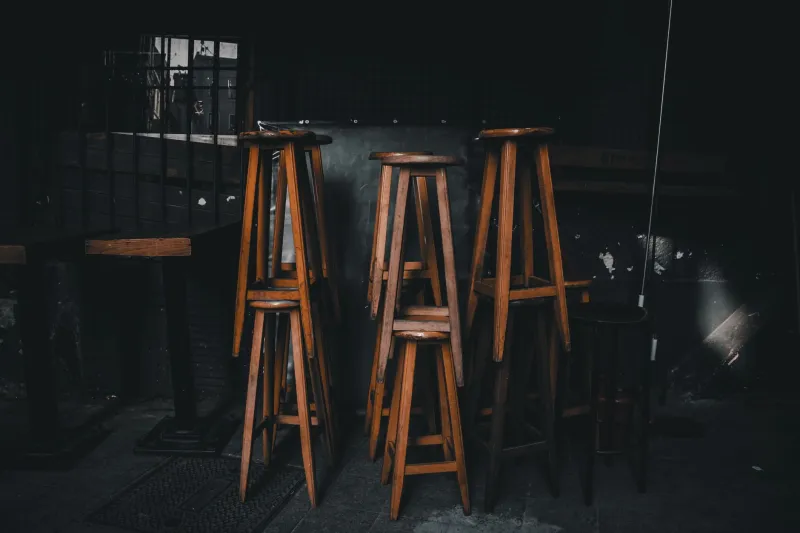
There's a particular silence that falls over a pub around half past eight on a Saturday evening these days. Not the comfortable hush of a quiet Tuesday, when a handful of regulars nurse their pints in easy companionship. This is a different kind of quiet — the kind left behind by people who were there an hour ago and simply... went home.
Anyone who spent their weekends in a British pub during the eighties or nineties will remember how different it felt. The place would fill steadily from seven, hit a kind of glorious, shoulder-to-shoulder peak around nine, and then hold that pitch — loud, warm, occasionally chaotic — until the landlord's bell cracked through the noise and triggered that familiar, good-natured scramble for one last round. Closing time wasn't a suggestion. It was a dramatic event.
Now? Walk into most pubs at ten o'clock on a Friday and you'll find a barmaid wiping down tables that nobody's sat at for an hour.
The Numbers Don't Lie, But They Don't Tell the Whole Story Either
The statistics on pub closures get quoted regularly — around twenty a week at the peak of the crisis, thousands gone in the last two decades. But the pubs that remain open are experiencing their own quieter emergency, one that doesn't show up in property listings or planning applications. They're open, but they're emptying out earlier and earlier, and the revenue that once came from a long, lively Saturday night is simply no longer there.
Landlords will tell you, if you catch them in an honest moment, that the trade has shifted almost entirely into a narrow window between five and eight. After that, it drops off a cliff. They're running a pub for three hours and keeping the lights on for another three just in case.
So what happened?
The Deliveroo Effect
Part of the answer is embarrassingly mundane. The rise of home delivery culture — not just food, but alcohol — has made staying in genuinely competitive with going out in a way it never was before. You can now have restaurant-quality food and a decent bottle of wine on your sofa within forty minutes, watching whatever you want, at a fraction of the cost of a night out. For a generation raised on convenience and increasingly squeezed by the cost of living, that's not a lazy choice. It's a rational one.
But convenience alone doesn't explain the emotional shift. People used to want to be in the pub, even when staying in was perfectly possible. The draw wasn't purely about drink. It was about the room itself — the noise, the company, the sense that something might happen.
The Death of the Spontaneous Evening
One thing that's genuinely changed is our relationship with spontaneity. The pub used to be the place you ended up — the default destination that required no planning, no booking, no commitment beyond walking through the door. You'd bump into people you knew, fall into conversations you hadn't anticipated, and find yourself still there two hours later having completely forgotten you'd only popped in for a quick one.
Modern social life doesn't work like that anymore. We schedule things. We make plans via WhatsApp group chats and then often cancel them via the same group chat. When we do go out, we're frequently checking our phones, half-present in the room and half-present somewhere else entirely. The pub was built for the kind of open-ended, unstructured socialising that we've largely stopped doing. It's a venue designed for an activity we've forgotten how to perform.
There's also the question of the early-evening meal culture that's taken hold. Where previous generations would eat at home before going out, plenty of people now treat the pub visit itself as dinner — a meal and a couple of drinks, done and dusted by eight. The pub has been repositioned in many people's minds as a dining venue rather than a social one, and dining venues have closing times built into their rhythm.
What Gets Lost After Dark
Here's what's worth sitting with for a moment: the pub, historically, did its most important work late. Not its most profitable work — that might have been the early evening rush — but its most socially significant work. The conversations that mattered, the confessions that needed making, the friendships that deepened past the point of pleasantry — these things happened at ten o'clock, eleven o'clock, in the last half hour before the bell rang and the spell broke.
The pub at half past eight on a Saturday was a place where the day was still being processed, where the week was being talked through, where people were still in the early stages of unwinding. The pub at half ten was where the real stuff happened — the honesty, the laughter that made your stomach hurt, the quiet moment with someone you hadn't properly spoken to in months.
We've lost that window almost entirely. And we've replaced it with nothing.
The Community That Clocked Off
There's a broader point here about what happens to a neighbourhood when its pub stops functioning as a late-evening gathering place. The pub after dark was where different parts of the community overlapped — where the bloke from the factory sat next to the bloke from the office, where age groups mixed in ways they rarely do now, where the social geography of a street or an estate became briefly, beautifully flattened.
When that space empties at eight, those overlaps stop happening. People retreat to their separate lives, their separate screens, their separate delivery orders. The community doesn't dissolve overnight, but it quietly stops practising the skills it needs to stay one.
We built the pub over centuries as a place to be together after dark. We're losing the habit of using it, and we're doing it so gradually that most of us haven't even noticed the bell has already rung.