The Last Round of the Regulars: When Familiar Faces Stopped Coming Back
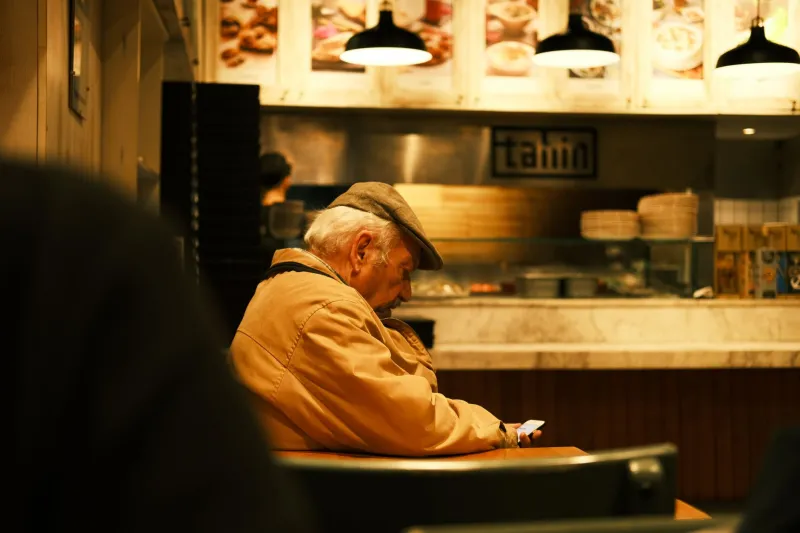
There's a man I'll call Terry. He's in his late sixties, and he's been drinking in the same Midlands pub since 1978. He knows which barstool creaks, which pump pulls slightly short, and which corner gets a draught when someone opens the fire door. He knows the landlord's mother's name. He knew the landlord's father.
Terry is, in the language of the trade, a regular. And Terry is, in the language of anyone paying attention, a dying breed.
Not because Terry is going anywhere just yet. But because when Terry eventually stops coming — retirement to the coast, a health scare, the simple arithmetic of age — nobody is waiting to take his seat. The stool won't stay warm. It'll just be empty.
What a Regular Actually Was
The word has been flattened by overuse into something that just means frequent customer, but that misses the point almost entirely. A pub regular wasn't merely someone who came in often. They were someone the pub was organised around. Their preferences were known. Their moods were read. Their presence or absence on a given evening was noticed and, if prolonged, enquired about.
In return, the regular gave the pub something no passing trade could match: continuity. They were the institutional memory of the place. They remembered the previous landlord, the old layout, the team that won the quiz three years running. They introduced newcomers to the atmosphere without being asked to. They were, in the truest sense, part of the fabric.
Multiply Terry by twenty, and you have a functioning local. A pub with a heartbeat.
The Generational Handover That Didn't Happen
For most of the twentieth century, the transition from one generation of regulars to the next was more or less automatic. Young men and women came of age, found their local, and began the slow process of becoming known. Within a few years, they'd graduated from nervous newcomers to familiar faces. Within a decade, they were the ones introducing their newcomers to the place.
That handover has broken down, and it's worth being honest about why.
Part of it is economic. The price of a round in 2024 is not a casual expense for someone in their twenties managing rent, energy bills, and a student loan repayment. When your grandad became a regular in 1975, four pints on a Friday evening represented a manageable slice of a working wage. The same four pints today, in many parts of the country, will set you back the better part of £25. The maths simply doesn't work the same way anymore.
But economics alone doesn't explain it. Plenty of younger people spend freely on experiences they value. The deeper problem is that the pub, as an institution, has struggled to communicate its value to people who didn't grow up watching their parents use it.
What Was Never Passed Down
Pub culture, at its best, was transmitted informally and intergenerationally. You learned how to be in a pub by being brought to one — by a parent, an older sibling, a mate who'd got there first. You learned the etiquette, the rhythms, the unspoken rules about when to talk to strangers and when to leave them alone. You learned that the pub rewarded patience and penalised neediness. You learned, slowly, that the point wasn't the drink.
That transmission has been interrupted. Families that once made the Sunday lunchtime pub visit a weekly ritual have largely stopped. The licensing laws that once allowed children into pub gardens and certain bar areas were tightened and then relaxed and then complicated to the point where many landlords simply preferred not to deal with it. The result is a generation that grew up without a working model of what a pub actually is.
To them, it looks like an expensive bar with sticky floors and limited phone signal. Which, stripped of its cultural context, is roughly what it is.
The Pubs That Tried and the Ones That Didn't
Some landlords have understood the problem and done something about it. Quiz nights, community events, local sports screenings, food offers aimed at younger budgets — these aren't gimmicks when they're done properly. They're attempts to rebuild the conditions under which new regulars can form. To give people a reason to come back on a Wednesday when nothing particular is happening.
Other pubs have retreated upmarket, reasoning that if they can't fill the bar with volume, they'll compensate with margin. Better food, craft beer, stripped wood floors and Edison bulbs. And that works, up to a point. But it tends to produce visitors rather than regulars. People who come for the menu, not the room. People who are perfectly pleasant but will never know the landlord's mother's name.
An Empty Stool Is a Warning
The regulars who remain are, in many cases, the last thread connecting a pub to what it used to be. When they go, the institutional memory goes with them. The stories, the context, the sense of accumulated time that makes a pub feel like somewhere rather than just anywhere.
The hospitality industry talks endlessly about footfall and covers and revenue per square metre. It rarely talks about what it means when the same face stops appearing at the bar. It rarely asks what was lost.
Terry will finish his pint, nod to the landlord, and head home at half nine. He's done it ten thousand times. One day he won't. And the stool will creak for a while in the draught from the fire door, and then it'll just be part of the furniture.
We should be worried about that. We're not worried enough.