The Umbrella Stand That Never Emptied: When Lost Property Meant You Belonged Somewhere
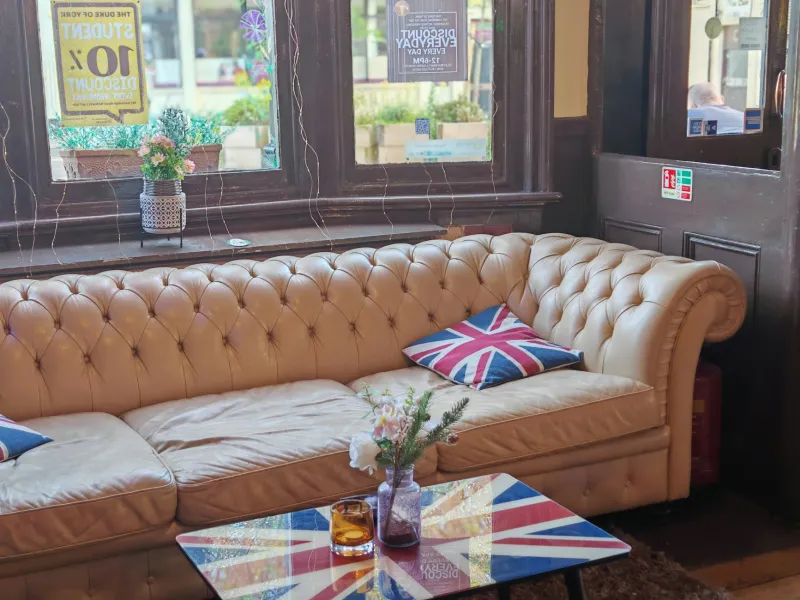
The Corner That Collected Lives
There was always a corner. Sometimes it was a wicker basket wedged between the till and the optics, other times a proper wooden stand that had seen better decades. Every proper local had one: the place where forgotten things went to wait.
Umbrellas mostly, their black canopies folded like sleeping bats. Reading glasses with smudged lenses that had witnessed a thousand crosswords. Scarves that still held the faint scent of their owners' perfume or aftershave. A leather glove, always just one, as if its partner had made a break for freedom. The odd cardigan, usually beige, usually belonging to someone's mum.
The landlord would dutifully collect these orphaned items, adding them to the collection with the optimism of a man who believed people would come back for things they'd left behind. They rarely did.
When Forgetting Meant You'd Return
But that was rather the point, wasn't it? You could afford to forget your brolly at The Crown because you knew you'd be back on Thursday for the quiz, or Friday for a quick one after work, or Sunday for the roast. The umbrella wasn't really lost — it was just early for your next visit.
 Photo: The Crown, via cdn.cliqueinc.com
Mrs Patterson's reading glasses lived behind the bar at The Red Lion for three months. She'd peer over them during the evening news, leave them on the table when she popped to the loo, and discover their absence only when she got home to Coronation Street. "I'll fetch them tomorrow," she'd tell herself, and she usually did. The glasses became part of the pub's furniture, a small declaration that this was her place, her people, her second living room.
 Photo: The Red Lion, via clipart-library.com
Young Danny Fletcher left his Arsenal scarf after the 1989 title win celebration. It stayed draped over the lost property basket for two seasons, a red and white flag of belonging. When he finally retrieved it, he'd already left three more items in its place — a process of accidental colonisation that marked his territory better than any regular's stool.
The Archaeology of the Everyday
Peer into any pub's lost property collection and you were looking at the archaeology of ordinary lives. The quality of the umbrellas told you about the neighbourhood — were they the sturdy telescopic ones that suggested office workers, or the flimsy ones that came free with petrol? The reading glasses revealed the age of the clientele, their prescriptions growing stronger with each passing year.
There were stories in those forgotten objects. The expensive fountain pen that suggested someone had been celebrating a contract signing. The child's mittens that meant families still brought their little ones for Sunday lunch. The house keys that implied a level of trust so profound that losing them wasn't cause for panic — someone at the pub would have them safe.
Barry, who ran The Wheatsheaf for thirty-two years, kept a proper ledger of unclaimed items. Date found, description, rough guess at the owner. "Blue umbrella, broken spoke, smells of Old Spice — probably Big Jim." His handwriting tracked the seasons: more umbrellas in winter, more sunglasses in summer, more scarves during the months when people still dressed properly for the pub.
The Trust Economy
What we're really talking about here is trust. Not just the trust to leave something behind, but the deeper trust that it would be there when you needed it. The pub operated on a different economic system entirely — one where value wasn't measured in pounds and pence but in the certainty that your place would hold your things, your people would remember your stories, and your local would still be your local when you walked through the door.
The lost property corner was the physical manifestation of this trust. It said: we know you'll be back because this is where you belong. Your umbrella is safe because you are safe. Your glasses will wait because we will wait.
Compare this to today's world of contactless everything, where we're trained never to leave anything behind, never to assume we'll return to the same place twice. We've become a society of people who carry everything with them because nowhere feels permanent enough to store even an umbrella.
The Empty Corners
Walk into a surviving pub today and look for the lost property corner. Chances are, there isn't one. Not because people have stopped forgetting things, but because they've stopped having anywhere worth returning to. The chain pubs don't bother with the service. The gastropubs are too polished. The few remaining locals don't have enough regulars to justify the space.
When The King's Head closed in 2019, the final inventory included forty-three unclaimed umbrellas, seventeen pairs of reading glasses, and a child's teddy bear that had been waiting for its owner since 2003. They went to the charity shop, anonymous objects divorced from their stories, their significance lost with the community that gave them meaning.
The umbrella stand that never emptied was more than just storage — it was proof that people had somewhere to call home outside their actual homes. It was evidence of a social contract that said: this is your place, these are your people, and your belongings are safe here because you are safe here.
In losing our locals, we didn't just lose our living rooms. We lost the corners where we could afford to forget ourselves, secure in the knowledge that we belonged somewhere solid enough to find ourselves again.